A few years ago, I attended a feminist gathering in Winnipeg, Manitoba. The gathering was something of a watershed moment in my life up to that point and I treasure many experiences from it. The ones I hold dearest are those that sharply challenged my thinking, particularly my limited understanding of Aboriginal identities, experiences, and oppressions.
At the beginning of the gathering, an organizer brought out a large canvas with an outline of Canada drawn on it, including rough provincial demarcations. She explained that the purpose of the canvas was to facilitate creative information sharing; attendees would be invited to write stories of community-based feminist actions on the canvas and indicate where they took place within Canada.
Within Canada — as soon as the organizer uttered those words, a member of the audience sharply called out “Turtle Island!” and supportive applause followed her interjection.
Turtle Island is what many Aboriginal peoples call North America. For that attendee to insist on naming the land on the canvas as part of Turtle Island, not just Canada, was important and more than mere semantics. Her action, and the support it received, made it tacitly clear that Aboriginal contexts, perspectives, and experiences would not be sidelined or silenced during this gathering.
By the end of that first day, the canvas had begun to be filled by notes and drawings. Scrawled across the entire breadth of the drawing of Canada was the word UNCEDED, written in bold capital letters. It was another action insisting that the truths of Aboriginal peoples be represented alongside more mainstream conceptions of Canada.
The naming of Canada as part of a Turtle Island and as land that had not been yielded by its traditional Aboriginal owners were simple, yet radical, gestures. They challenged basic assumptions (like the assumption that Canada is simply and straightforwardly Canada, rather than something more complicated and problematic) and erasure (like the belief that provinces are important borders to note, but traditional Aboriginal territory boundaries are not). These actions challenged assumptions we were making in terms of whose history and identity the gathering would centre and give authority to.
I came away from my time at that gathering with a greater understanding of how to be an ally to Aboriginal peoples in my social justice efforts, and with a more complicated understanding of Canada as a nation. The memory of responses to the map of Canada has remained particularly clear in my mind, as it represents the moment where I began to realize just how narrow — how colonial — my thinking about Canada had been.
The memory of the map always comes back with a vengeance around Canada Day.
Canada Day is considered a celebration of Canada’s birthday, as the holiday takes place on July 1, the date in which three British colonies (Nova Scotia, New Brunswick, and the Province of Canada) joined together to form a self-governing federation of provinces. We get a day off work to celebrate national history, identity and achievements. Pride in being Canadian is front and centre. This year was no different; on Monday, municipalities hosted their usual festivities and Facebook was a sea of Canadian flag profile pictures.
However, since my experience in Winnipeg, I have to wonder: what does it mean for us to celebrate the date that three colonies joined as Canada’s birthday? What does it mean for our primary celebration of nation to revolve around but never name colonialism?
Most importantly, I have to ask: what does it mean for Canadians to celebrate our nation in such a way when colonialism is an ongoing oppression experienced by Aboriginal peoples?
That’s the truth that isn’t discussed, or even acknowledged, often enough: colonialism isn’t a historical event that Aboriginal peoples endured and survived, but an oppressive force that continues to this day.
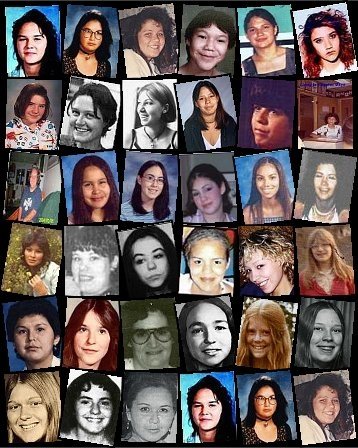
Aboriginal men and women in New Brunswick were only enfranchised in 1963. The last of the residential schools closed in 1996 and Aboriginal communities are still coping with intergenerational trauma from that horrific institution. In 2011, it was reported that there were more Aboriginal children in the care of government (via foster and group homes) than were ever in the residential school system. Aboriginal men and women are incarcerated at disproportionately high rates. Aboriginal communities face consistent housing emergencies. Over 600 Aboriginal women in Canada are missing or murdered and no federal inquiry into this issue has been ordered to date.
Many will contest whether any of the above has to do with colonialism, particularly the rates of Aboriginal children in care, the representation of Aboriginal persons in the prison system and the missing and murdered Aboriginal women. The fact of the matter, however, is that these crises are directly related to and enabled by the continued marginalization of Aboriginal peoples within Canada. This marginalization is part and parcel of an ongoing process of colonialism. We’re still on the land, controlling it with our rules, and Aboriginal peoples are still suffering because of it; that’s colonialism, folks.
Am I suggesting that we abandon Canada Day, if not Canada itself? No. “We’ve accepted that you’re not leaving,” quipped a young Aboriginal leader at the Winnipeg gathering, when asked by a non-Aboriginal woman about moving forward in light of Canada’s colonialism. Like the reaction to the map on the canvas, her answer stuck with me. We can’t undo the colonization that occurred, but we can decolonize the state we find ourselves in now — and this work of decolonizing cannot be done solely by Aboriginal peoples. It’s in this spirit that I offer this simple gesture: a column asking non-Aboriginal folks to consider complicating their understanding of Canada and colonialism.
Beth Lyons is the associate director of YWCA Moncton.
This article first appeared in the Times & Transcript.


![Is a Moncton company helping to build jet fighters bombing Gaza? [video]](https://nbmediacoop.org/wp-content/uploads/2024/06/ApexMay192024-120x86.jpg)