• About
  • Join the Co-op / Donate
  • Contact
Tuesday, December 16, 2025
Subscribe
No Result
View All Result
The Brief
NB POD
NB MEDIA CO-OP
Events
Share a story
  • Articles en français
  • New Brunswick
  • Canada
  • World
  • Environment
  • Indigenous
  • Labour
  • Gender
  • Politics
  • Culture
  • Videos
  • NB debrief
  • Articles en français
  • New Brunswick
  • Canada
  • World
  • Environment
  • Indigenous
  • Labour
  • Gender
  • Politics
  • Culture
  • Videos
  • NB debrief
No Result
View All Result
NB MEDIA CO-OP
No Result
View All Result
Home Environment

Maine Legislature approves ban on aerial spraying of herbicides in forests

by Susan Sharon
June 15, 2021
Reading Time: 1min read
Maine Legislature approves ban on aerial spraying of herbicides in forests

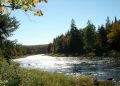
The Penobscot Experimental Forest in Maine, a location of research on mixed wood forests. Photo from the Forest Service of the United States Department of Agriculture.

The Maine Senate has joined the House in approving a bill sponsored by Sen. President Troy Jackson and backed by environmental and public health organizations to ban the aerial spraying of toxic herbicides in forestry applications. The bill now heads to the governor’s desk for final action.

In timber management, herbicides are used to control vegetation that may compete with more valuable species like spruce and fir. Foresters say aerial application is the most efficient way to do the job and that the practice is used sparingly in Maine, on less than four per cent of harvested acres each year.

But critics point to growing evidence that glyphosate, which is the central ingredient in aerial herbicides, can be toxic to humans and animals. Glyphosate has been declared a “probable carcinogen” by the World Health Organization and has been banned in several countries as well as by states and municipalities, including Sen. President Troy Jackson’s hometown of Allagash.

Jackson says he’s hopeful Gov. Janet Mills will sign the bill into law to protect the health of people working and living in northern Maine. She has ten days to sign it, veto it or allow it to become law without her signature.

Susan Sharon is the Deputy News Director for Maine Public where this article was first published. 

Tags: forestglyphosateherbicidesMaineSusan SharonTroy Jackson
Send

Related Posts

Could a neurotoxin researched on Guam hold clues to New Brunswick’s mystery brain condition?
Environment

Influential article claiming glyphosate isn’t carcinogenic retracted by scientific journal

December 4, 2025

A "hallmark paper" arguing that glyphosate isn't carcinogenic has been retracted by the peer-reviewed journal Regulatory Toxicology and Pharmacology, 25 years...

Housing summit heavily weighted towards business interests: critics
Environment

Delays on herbicide restrictions show province aims to protect industry, says Green MLA [video]

September 15, 2025

Green Party MLA Megan Mitton says she isn't satisfied with answers from government officials about delays in the implementation of...

Delayed restrictions on herbicide prompt failing grade from environmental group [video]
Environment

Delayed restrictions on herbicide prompt failing grade from environmental group [video]

September 10, 2025

After last year's provincial election, Premier Susan Holt instructed several of her newly-minted Cabinet ministers to restrict aerial herbicide spraying,...

New Brunswick’s not-so-mysterious illness
Environment

New Brunswick’s not-so-mysterious illness

May 22, 2025

It’s amazing how media and science mix so poorly when one subordinates itself to the other. One single study published...

Load More

Recommended

Tantramar Council comes out against gas plant on the Isthmus

Tantramar Council comes out against gas plant on the Isthmus

5 days ago
Pabineau First Nation’s path toward economic reconciliation and climate justice through wind energy

Pabineau First Nation’s path toward economic reconciliation and climate justice through wind energy

1 day ago
A historical map of New Brunswick titled "Indigenous Mi’kmaq, Wolastoqewiyik, Peskotomuhkatiyik & Panáwahpskewoyak Canoe & Portage Routes." The map displays a dense network of rivers (Canoe Routes in blue) and land trails (Portage Routes in red) across the province, with the Wolastoq (Saint John River) and its tributaries being prominent. It also shows Watershed Heights of Land.

Colonial courthouse is wrong venue to address Indigenous land title

3 hours ago
Wolastoqey Nation flag flying against a blue sky, featuring a colorful circular emblem of the sun, land, and water on a white field.

New Brunswick judges side with Irvings, other timber firms on Aboriginal title claim

3 days ago
NB Media Co-op

© 2019 NB Media Co-op. All rights reserved.

Navigate Site

  • About
  • Join the Co-op / Donate
  • Contact
  • Share a Story
  • Calendar
  • Archives

Follow Us

No Result
View All Result
  • About
  • Join the Co-op / Donate
  • Contact
  • NB POD
  • Events
  • Share a Story
  • COVID-19
  • Videos
  • New Brunswick
  • Canada
  • World
  • Arts & Culture
  • Environment
  • Indigenous
  • Labour
  • Politics
  • Rural

© 2019 NB Media Co-op. All rights reserved.

X
Did you like this article? Support the NB Media Co-op! Vous avez aimé cet article ? Soutenez la Coop Média NB !
Join/Donate