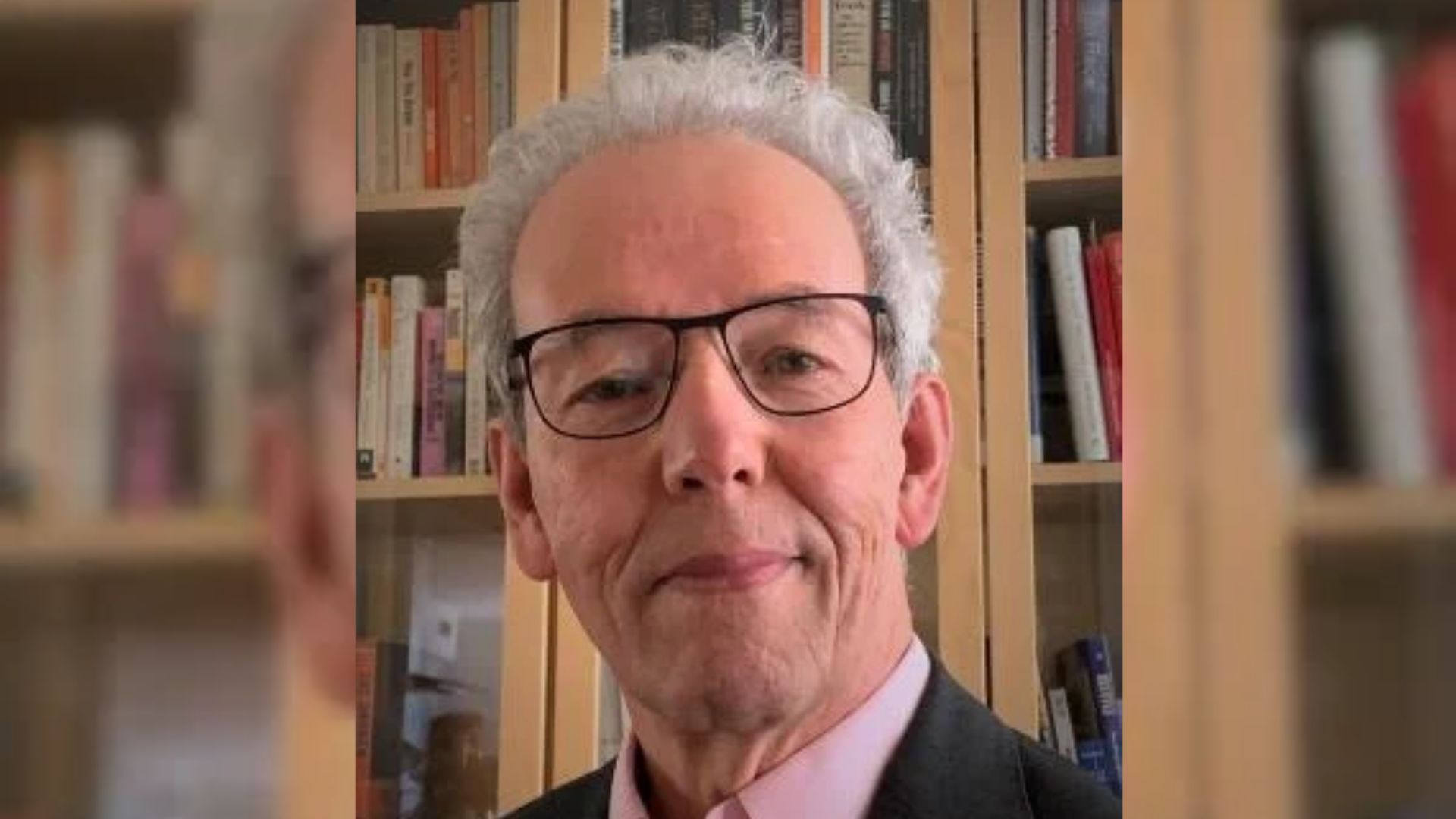
There is an increasing disparity between university’s academic freedom statements and its actions. These comments were made during a talk held October 8 titled “Strengthening academic freedom in the corporatized university” by James Turk.
A researcher on academic freedom, Turk is the director of the Centre for Free Expression at Toronto Metropolitan University. Previously, he was executive director of the Canadian Association of University Teachers (CAUT) from 1998 to 2014.
At the outset, Turk reminded the audience of the four main components of academic freedom: teaching, research (scholarship, creative work, librarianship), intramural (freedom to criticize the university), and extramural (freedom to criticize the wider society).
By the 1990s, the unionized university faculty associations across Canada had all “developed statements on academic freedom” in their collective agreements. In Turk’s opinion, most universities have strong policies about supporting “radical” thinking and ideas.
However, Turk noted there is a growing disconnect between these statements and universities’ actions. The disparity between the statements and the rhetoric is incredible, Turk declared.
As an example, Turk shared Nancy Olivieri’s case from the mid-1990s. Olivieri was a professor of Pediatrics, Medicine, and Public Health Sciences at the University of Toronto. When a medical trial went wrong, the pill making company tried to block her publication of the negative trial results, with the support of the university’s administration. With the union’s support, Olivieri was able to settle, find another job and was completely vindicated.
Turk also discussed the case of David Healy, a British professor of Psychiatry, whose research on anti-depressants (SSRIs) had found suicidal and homicidal ideation as side effects to taking the SSRIs. He was about to publish a book with Harvard University Press and got a job at the University of Toronto after a talk where he detailed the findings.
Healy was fired by the University of Toronto before even starting in his position, for his controversial ideas. After being reinstated, he refused to take the position and subsequently gave a talk in Toronto to 900 people titled “The speech that cost me my job.”
Attacks on academic freedom have only grown since then, and because of highly controversial divisive political issues.
In 2009, York University was to hold a Social Sciences and Humanities Research Council (SSHRC)-funded conference titled “Israel/Palestine: Mapping Models of Statehood and Paths to Peace.” The minister responsible asked SSHRC to review the decision to fund this conference, the first time a funding decision had such interference.
CAUT did an investigation of this situation and University of New Brunswick scholar Jon Thompson wrote the book, No Debate: The Israel Lobby and Free Speech at Canadian Universities in 2012.
More recently, researcher Valentina Azarova, an international law professor from Germany, had her job offer cancelled because of her research on Palestine.
CAUT censored the University of Toronto for this decision in 2020. Although this spurious decision was reversed, Azarova subsequently refused to come work in Canada.
Since the beginning of the Palestinian genocide, things have also taken a turn for the worse.
For Turk, the University of Alberta has “arguably one of the strongest academic freedom statements” in the country. However, in 2024, the University of Alberta’s Palestine solidarity encampment was violently shut down 36 hours after the students set it up, despite being peaceful.
For Turk, this was “absolutely disgusting. He added: “we are in the process of carrying out a Charter challenge against the university for what it did.”
Turk says that there are also many administrative policies in universities that “undercut what is in the Academic Freedom policies.” For example, Harassment and Discrimination policies and Student Codes of Conduct may affect the respect for academic freedom.
In fact, the definition of academic freedom is becoming “increasingly narrow,” especially as defined by Universities Canada, an organization of university presidents.
The corporatization of Canadian universities is being fuelled by lower funding. There is data from the U.S. about the growth of Contract Academic Staff in universities since 2005 but it is harder to come by in Canada. According to Turk, statistics in Canada show that “more than half of all faculty are not tenured so it’s difficult to protect their academic freedom.”
There is a also a growth in university-third party collaborations throughout Canada, where universities are working with industry partners. CAUT is asking questions about these collaborations and the role of academic freedom in these arrangements. In their review, many agreements have no specific protection for academic freedom, in fact, 7 of 12 agreements examined did not. This is alarming.
For Turk, there are also legal issues that cloud the purpose of academic freedom because there is little understanding of the application of academic freedom in the university context.
Turk discussed a case at Laurentian University where an arbitrator had found the university as an institution to have academic freedom. In another case, at the University of Manitoba, an arbitrator talked about the “acceptable limits” of academic freedom. This is not how academic freedom is widely understood.
Turk was explicit when he suggested arbitrators who don’t understand and have experience with academic freedom should not be used to treat academic freedom grievances.
For Turk, other issues curtailing academic freedom are the “hollowing out of collegial governance” and “self-censorship” by academics who want to get funded.
Turk cautioned that universities should have “specific collective agreement language” on academic freedom in their collective agreements to preserve these rights. He gave examples of detailed language and cautioned about the use of words like “responsible,” an “empty linguistic vessel,” according to Michael Lynk.
The UNESCO Recommendation concerning the Status of Higher Education Teaching Personnel should be accepted by Universities Canada, according to Turk. This would be a direct engagement to protect academic freedom.
The Jon Thompson Lecture on Academic Freedom is an annual speech run by the Association of University of New Brunswick Teachers to commemorate the union work done by Jon Thompson, who passed away in 2025.
Sophie M. Lavoie is a member of the NB Media Co-op’s editorial board.


![University security closely monitored pro-Palestine activists, documents show [video]](https://nbmediacoop.org/wp-content/uploads/2024/11/20231129_131826-350x250.jpg)

![Massive increase in military spending imposed by U.S. with little media pushback [video]](https://nbmediacoop.org/wp-content/uploads/2026/10/AlexCoshSept232026-120x86.jpg)