![Mi’kmaq senator pushing for end to ‘second-generation cut-off’ gains traction, but feds signal opposition [video]](https://nbmediacoop.org/wp-content/uploads/2025/11/S2Nov132205-2.jpg)
A Mi’kmaq senator is pushing for legislative changes that would eliminate the second-generation cut-off from the Indian Act.
It’s a rule that effectively removes Indian status — a legal category linked to certain rights — following two consecutive generations with one non-status parent. On Tuesday, Sen. Paul Prosper’s amendments to Bill S-2 were approved by a senate committee in a 10-1 vote.
“I chose to champion this amendment because I believe there is nothing more vital to the survival of First Nations than this change,” he told the Standing Senate Committee on Indigenous Peoples.
“The fact is that we cannot govern who First Nations fall in love with,” he said. “This change says, love who you love and do not worry, because your children will not fall by the wayside just because you choose to parent with someone not First Nation.”
A number of Indigenous-rights organizations and leaders across the Wabanaki region have thrown their support behind the initiative, including Mi’gmawe’l Tplu’taqnn Inc., the Mi’kmaw Grand Council, the Assembly of Nova Scotia Mi’kmaw Chiefs, and at least one Wolostoqey chief.
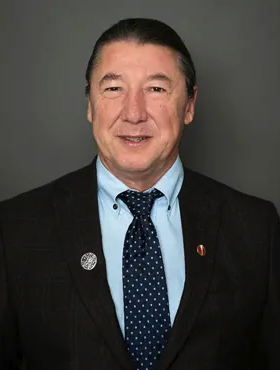
In an interview, Prosper said he’s concerned that the federal government will use “procedural tactics” to prevent the passage of the amended bill.
“It’s always been a plan, we know, for the federal government to get rid of Indian people, for them to slowly assimilate into the larger Canadian politic or society,” Prosper said.
“But it’s important to recognize that we’re talking about belonging, we’re talking about people’s lives, we’re talking about identity, we’re talking about culture, we’re talking about traditions.”
Ottawa has already signalled opposition to the changes introduced by Prosper to Bill S-2.
Bill S-2 is intended to restore status to some 3,500 people in response to a court case from B.C., said Sen. Pierre Moreau, the government’s representative in the Senate.
“This is the core of the bill and I question whether the amendments fall within its scope,” he told the committee on Tuesday.
He added that an April 30, 2026 deadline for those limited changes “must be respected,” and that the Minister of Indigenous Services has a duty to consult about the legislation.
He added that a “collaborative process” meant to address the second-generation cut-off is currently underway and will conclude in December.
The NB Media Co-op requested an interview with Minister of Indigenous Services Mandy Gull-Masty — the first Indigenous person to hold that position — but she wasn’t immediately available.
Prosper said research indicates that, based on patterns of intermarriage, the number of people with Indian status will eventually dwindle without changes to legislation that’s been on the books since 1985.
That’s when amendments to the Indian Act abolished the “marrying out” rule — as assimilationist policy that removed status from any woman who married a non-status person — among other changes.
Those amendments also created two tiers of Status Indians — 6(1), who can pass their status on to their children, and 6(2), who cannot pass status on to their children unless the other parent also has status.
“We’re talking four decades that this issue has existed,” Prosper told the NB Media Co-op. “Now is the time to act.”
Before his appointment to the Senate in 2023, Prosper was a regional chief for the Assembly of First Nation and chief of Paqtnkek Mi’kmaw Nation.
Last week, he held a news conference in Fredericton where several Indigenous leaders from the region renewed calls for second-generation cut-off to be eliminated.
“Forty-six per cent of my community members are 6(2) registered,” said Chief Allan Polchies Jr. of Sitansisk (St. Mary’s) First Nation).
“I’m on the brink — in at least 10, 20 years, I won’t have any registered Indians in my community…. Today we have the opportunity to change that.”
Mi’kmaq Grand Chief Norman Sylliboy also expressed support for Prosper’s amendments on behalf of traditional leadership.
Mi’gmawe’l Tplu’taqnn Inc. — a non-profit whose members include the nine Mi’kmaq communities in New Brunswick — echoed those calls in a letter to Mandy Gull-Masty, Minister of Indigenous Services.
“This long-standing issue, which continues to deeply impact our communities, has already been the subject of extensive study and review,” says the letter, dated Nov. 17.
“Over the decades, almost all of the studies on this subject recommend the second-generation cut-off be removed,” it continues.
“Mi’gmawe’l Tplu’taqnn has been meeting with Mi’gmaq community members in New Brunswick on identity and they still feel removing the second-generation cut-off is necessary to truly reflect the membership and citizenship in their communities. No further study separate from this Bill is required.”
Earlier this month, the Assembly of Nova Scotia Mi’kmaw Chiefs issued a similar letter to the Minister, also urging her eliminate the second-generation cut-off and to follow other recommendations from a 2022 report titled Make It Stop! Ending the remaining discrimination in Indian registration.
In Elsipogtog, most local residents who spoke to the NB Media Co-op expressed support for Prosper’s efforts.
“If you’re going to have a kid with a non-native person, your kid should be able to get status,” one local resident said as he paused outside the River of Fire grocery store.
“Because you’re still native. Your dad’s a native. Why wouldn’t you be a native?”
Another local resident underlined the divide between Indigenous people living on and off reserve.
“If you want status, come live on the res for a little bit and see if you want it then,” she said.
She added that people shouldn’t try to obtain status “for money purposes only… but if you’re into the culture and you’re into the people and the beliefs, then yeah, I’d be open to that.”
At a local community centre, one worker said he knows many people who face the prospect of lost status. “My nephew got cut-off from that eligibility,” he said.
But he also expressed concern that expanded eligibility could put a strain on the finances of First Nations, at a time when “there’s a lot of people struggling.”
Asked about those concerns, Prosper said he hopes that Ottawa would respond to a change in the law by increasing the resources available to First Nations
The amended Bill S-2 is expected to go report stage in the Senate next Thursday followed by third reading. If it passes, it will then go to the House of Commons.
David Gordon Koch is a staff reporter for the NB Media Co-op based in Moncton. Lisha Francis is a student at St. Thomas University who lives in Elsipogtog.
Updated Nov. 20, 2025 at 7:55 p.m.
![NB Update: What comes after the crisis in local journalism? [video]](https://nbmediacoop.org/wp-content/uploads/2025/06/LabourUpdateApr132025-350x250.jpg)
![Migrant workers’ labour conditions not on the table at Canada–U.S. lobster industry conference [video]](https://nbmediacoop.org/wp-content/uploads/2026/01/LobsterJan222026-5-350x250.jpg)


![NB Update: What comes after the crisis in local journalism? [video]](https://nbmediacoop.org/wp-content/uploads/2025/06/LabourUpdateApr132025-120x86.jpg)