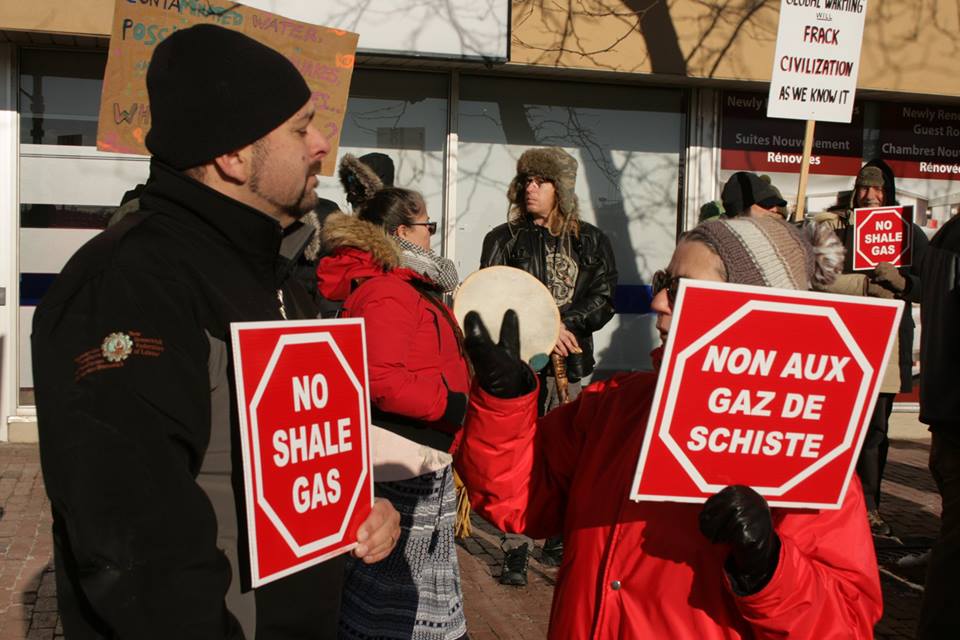
We are over 120 scientists and academics from all four universities in New Brunswick (Université de Moncton, University of New Brunswick, St. Thomas University, Mount Allison University), from various disciplines, expressing our solidarity with the citizen movement in Tantramar and the surrounding communities.
At a time when climate emergency demands a rapid transition to carbon-free energy sources, when proven and affordable solutions exist, and when the population can no longer afford another increase in the cost of living, this project appears scientifically, environmentally and economically nonsensical.

1. Choosing renewable energy: wind turbines, solar power and battery systems
The global energy landscape has changed dramatically. According to the International Energy Agency, almost all new electricity generation projects worldwide in 2024 will be based on renewable energy. Building a shale gas power plant today contradicts the global energy shift and New Brunswick’s climate commitments.
NB Power claims that this plant would be necessary to increase electricity generation capacity and ensure grid stability. However, cheaper solutions already exist. Battery storage can now meet peak demand at a much lower cost than thermal power plants. In addition, renewable energy projects come online much faster—between six and eighteen months for solar—and carry less risk of cost overruns. Today, renewable energy makes the most sense on purely economic term.
2. Choosing demand management strategies
Reducing electricity consumption costs much less than increasing production. However, demand management programs remain underdeveloped in the province. Ambitious energy efficiency initiatives could reduce demand by up to 400 megawatts by 2030.
In addition, active demand management strategies, such as time-of-use pricing and the use of smart thermostats, could reduce consumption peaks. These strategies are quick to implement, create local jobs and lower electricity bills for NB Power customers.
3. No to an American gas plant in New Brunswick
PROENERGY the company promoting the project, is headquartered in Missouri, and the gas burned in the proposed plant will come from the Marcellus and Utica shales in the United States. Against a backdrop of financial uncertainty surrounding customs tariffs, the proposed power plant will be entirely dependent on the United States for its construction, for its fuel, and for its operation.
Further, shale gas is a risky energy resource: several analysts anticipate a peak in North American production in the short term. Relying on this energy source exposes New Brunswick to future price fluctuations on global markets. In our view, energy security is better served by renewable resources produced locally, by and for New Brunswick communities.
4. No to more greenhouse gas emissions
The province has committed to reducing its greenhouse gas emissions by 1,700,000 tonnes by 2030 compared to 2020 levels. The proposed shale gas power plant could add up to 900,000 tonnes of greenhouse gases, cancelling over half the reductions.
In addition, methane—the main component of so-called ‘natural’ gas—is a powerful greenhouse gas. Leaks throughout the production and distribution chain exacerbate this problem, to the point that some analyses estimate that a gas-fired power plant might be as harmful to the climate as the coal-fired power plant in Belledune.
5. No to pollution threatening human and animal health
Burning gas produces various pollutants that increase the risk of respiratory and cardiovascular diseases, neurological disorders and premature mortality. These effects primarily affect children, seniors, pregnant women and those already living with health problems.
Such pollution will put additional strain on our health system already under immense pressure. It will also affect the health of 165 species of rare or protected animals in the area.
6. Showing strong leadership in clean energy
Investments in energy efficiency, renewable energy and battery storage generate more local and sustainable jobs, particularly in rural areas, than large-scale centralized fossil fuel projects, while reducing greenhouse gas emissions and protecting public health.
For all these reasons, we are calling for this shale gas power plant project to be suspended immediately and for investments to be redirected towards solutions for the future: renewable energy and energy efficiency.
Signed by over 120 scientists and academics from all four universities in New Brunswick: Mount Allison University, Université de Moncton, University of New Brunswick and St. Thomas University
Complete letter to the Premier and complete list of signatories available here.


![‘We’re still here, and we will always be here’: Mi’kmaq language program fosters pride [video]](https://nbmediacoop.org/wp-content/uploads/2026/09/MikmaqCampAug142026-120x86.jpg)