
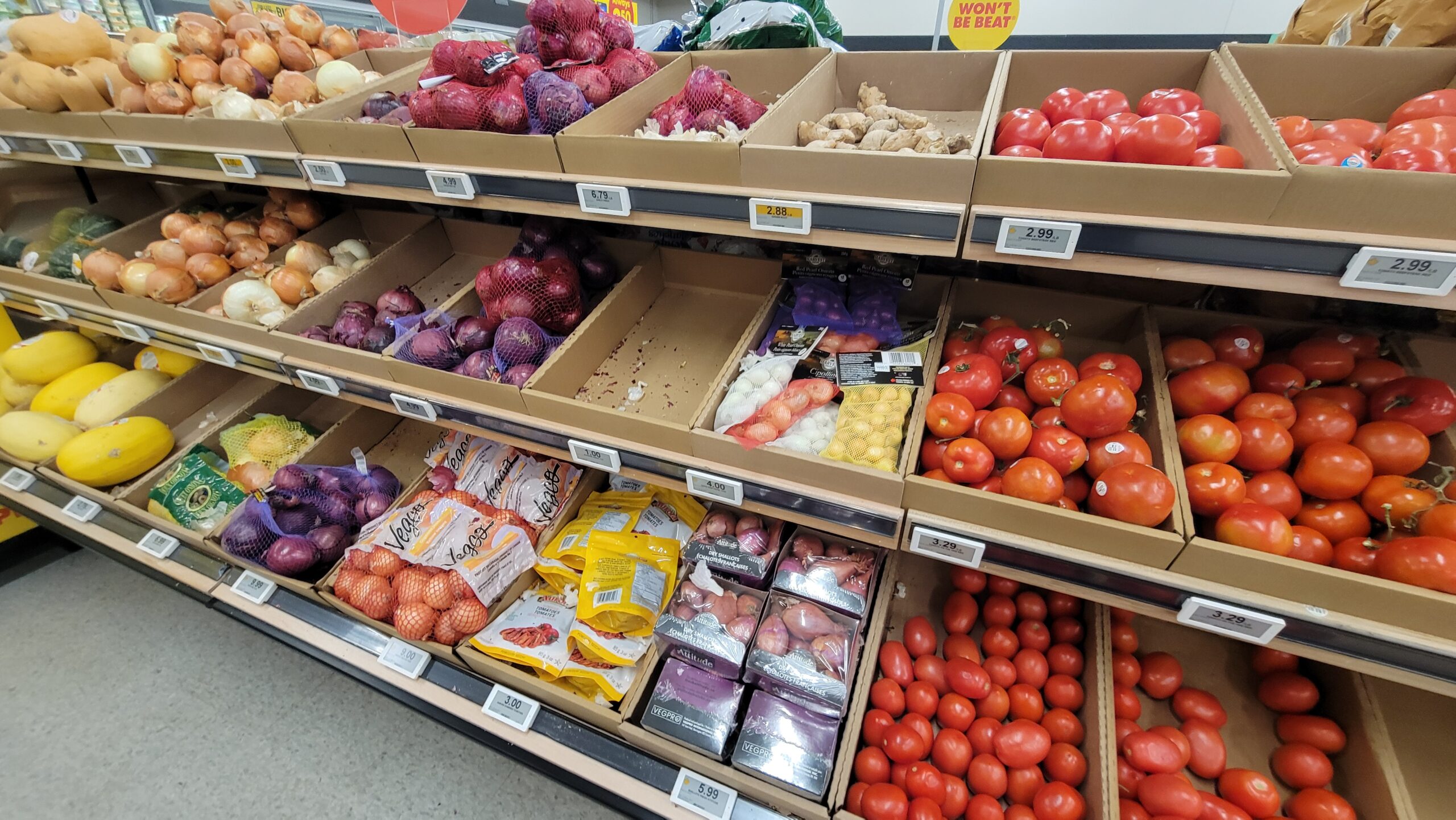
According to new research, more than 46,000 Fredericton residents lack physical access to a grocery store within a walkable distance.
The report titled, Could You Be Living in a Food Desert? A Case from Fredericton, NB, outlines the extent of food deserts in Fredericton. The report was published by Seth Russell and Monika Korzun in partnership with Food for All NB.
Using Geographic Information System (GIS) mapping, the researchers identified all qualifying grocery stores in Fredericton, mapped walkable service areas around each one, and cross-referenced those areas with neighbourhood income data to determine where food deserts exist.
Food environment analysis is limited in Atlantic Canada. A map of food deserts at the New Brunswick level exists, but it measures food deserts using a circular buffer. This map highlights the difference between urban and rural areas in New Brunswick. Rural areas are particularly vulnerable to food deserts, where long distances to grocery stores and limited transportation options make food access difficult. No detailed municipal-level study using road networks, how people travel, exists in Atlantic Canada. The Food for All NB report marks the first municipal level food desert analysis in Atlantic Canada
Despite 20 grocery stores operating within Fredericton’s 12 municipal wards, 67.6 per cent of the city’s population lives more than 1,000 metres (1 km) from a grocery store that provides year-round access to fresh and unprocessed meat and produce. This distance is considered a walkable distance and thereby a reasonable measure of physical access for all residents, regardless of age, mobility, or weather. The 1,000-metre threshold reflects the assumption that residents experiencing socioeconomic distress have less transport options and are more likely to rely on grocery stores that are closest to their residence.
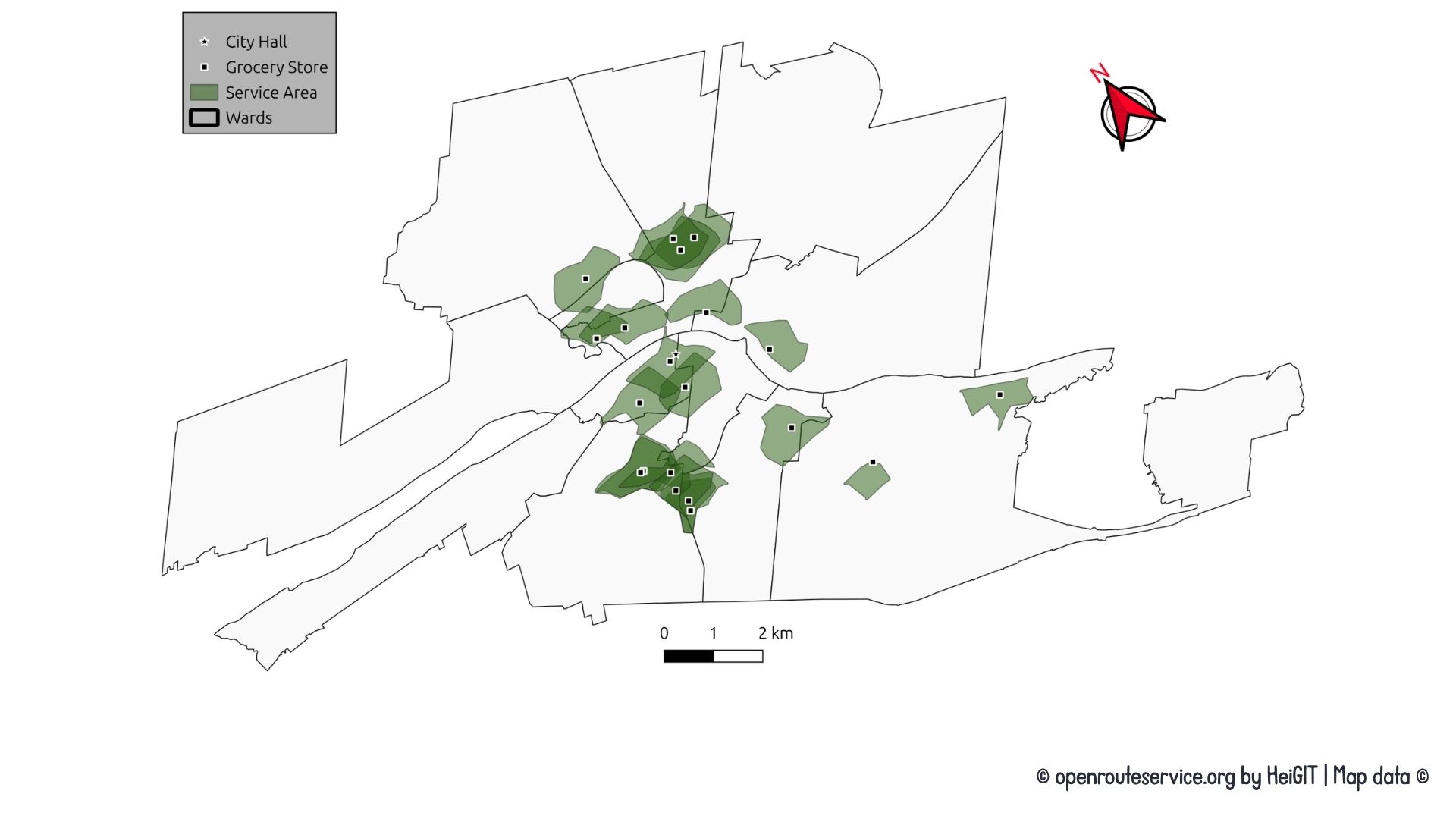
The map above demonstrates the distribution of grocery stores and their accommodating service areas in Fredericton.
A food desert exists when low income is considered alongside physical distance. The report demonstrates that 46.6 per cent of Fredericton residents living in low-income areas live in a food desert, representing 11.9 per cent of the city’s total population.
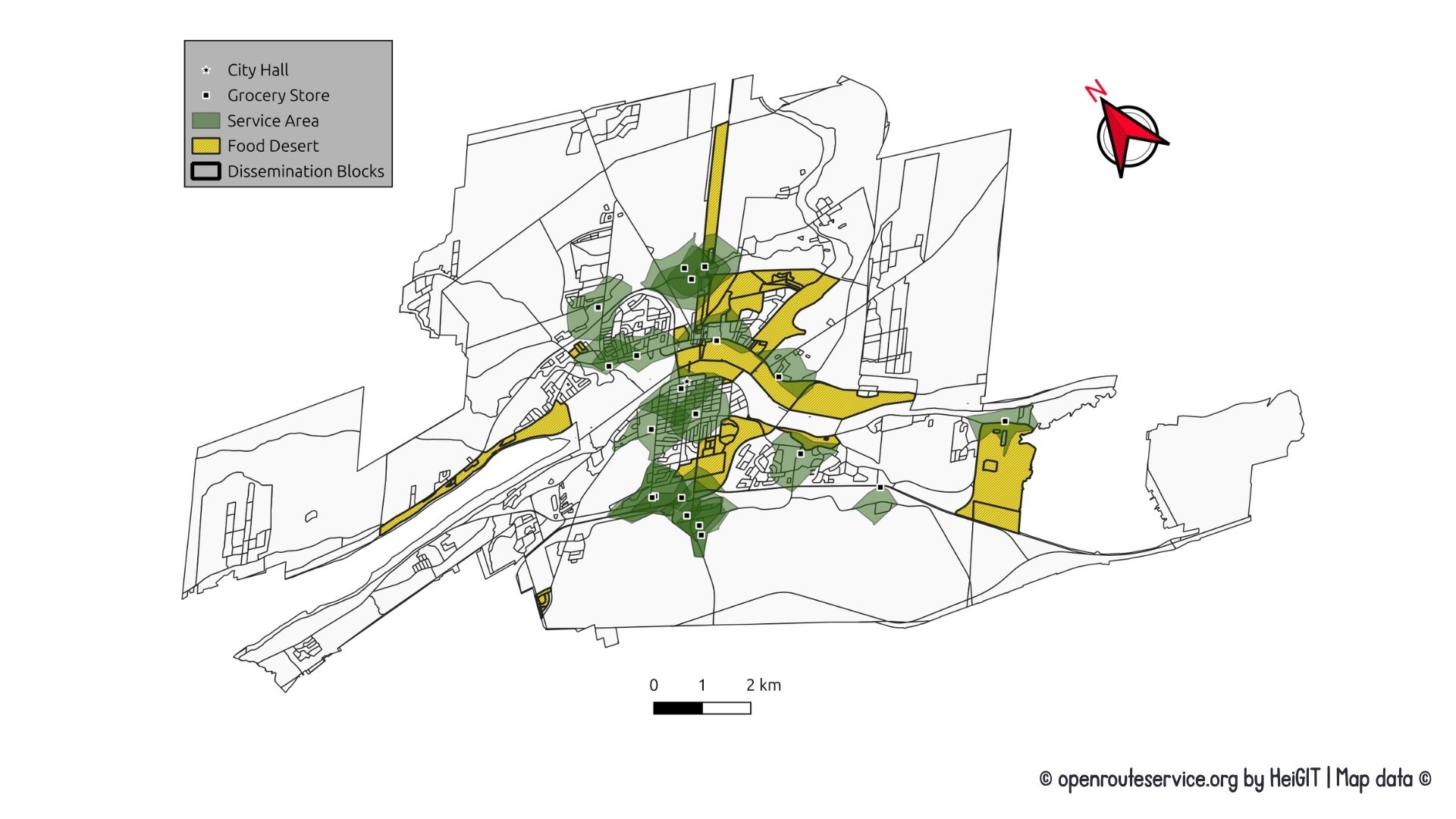
In addition to service areas, the yellow sections in the map above demonstrate areas that are food deserts in Fredericton.
“Food deserts are as much a problem of affordability as of proximity,” the report states. Simply adding more large grocery stores to underserved areas, the authors argue, will not fix the problem. Research repeatedly shows that large supermarkets are not effective in changing dietary behaviours or addressing food insecurity. Small, local, and culturally appropriate stores are shown to be more embedded in communities, and do a better job reflecting the culture and dietary needs of local communities.
The report makes a distinction between large grocers (like Loblaws or Sobeys) and small grocers. It is revealed that of all low-income residents who have physical access to a grocery store, 56.7 per cent were served exclusively by small grocers, and only 29.7 per cent of low-income residents with physical access were served exclusively by a large grocery store.
Grocery stores in Fredericton are unevenly distributed across the city, with many clustered in central areas and two groupings of large stores on its periphery. Five of the city’s 12 wards, including wards 1, 3, 5, 11, and 12, contain no grocery stores within their boundaries at all. Notably, both St. Thomas University and the University of New Brunswick are located within food desert zones.
Recent data from Statistics Canada shows that 29.5 per cent of New Brunswick households are food-insecure, which is above the national average of 25.5 per cent. The province also recorded one of the steepest increases in food costs in Canada over the past year, at 7 per cent, compared to a national average of 5.7 per cent. Addressing food insecurity requires exploring food environments, including the infrastructure, resources and conditions that are available to residents. It also considers the economic, political and sociocultural context in which residents live. Food environments shape what stores are available in our cities and communities, what food choices we have when we enter the store and ultimately what food we consume at home. This is why it is important to analyze food environments.
The report makes three policy recommendations.
- Implement a guaranteed basic income. Research by PROOF, a leader in researching household food insecurity in Canada, has established that policies affecting household finances have a strong impact on food security levels. Canada has piloted income supports before: a guaranteed annual income experiment in Dauphin, Manitoba (1974–1979) showed improvements in health and education outcomes, and Ontario’s Basic Income Pilot (2017–2019) produced measurable reductions in food insecurity. Prince Edward Island is currently advocating for a province-wide basic income program.
- Create targeted support for small and culturally appropriate grocery stores. Policies or programs that focus solely on attracting large supermarket chains to underserved areas have repeatedly shown to be ineffective. Providing financial, logistical, or technical support to small grocers can benefit not only food access but also cultural preservation and community economic power. These types of grocers will play a key role as Fredericton becomes more diverse over time. Several locations across Fredericton fell just short of the study’s grocery store definition but already had the physical infrastructure, including shelving, refrigeration, and floor space, to stock fresh food with minimal additional investment.
- Adopt a food apartheid framework. The term “food desert” falsely implies that poor food access is a natural condition rather than the result of deliberate systemic choices, including discriminatory zoning, disinvestment, and exclusionary lending practices that have long denied certain communities access to resources. A food apartheid framework requires structural responses and centres Indigenous communities, Black communities, and communities of colour in decision-making.
The report acknowledges its limitations. It measures geographic potential access, not actual shopping behaviour. Its income thresholds use national rather than regional benchmarks, which may not fully reflect New Brunswick’s economic conditions. And the analysis reflects a single point in time, based on 2021 Census data and field observations conducted during the study period. Community food programs are also not captured, meaning some classified food desert areas may have meaningful community food infrastructure not reflected on the maps.
The food desert map is a starting point. It is a tool for community organizations, health authorities, and policymakers to use as the basis for deeper conversation about how to address food insecurity in Fredericton and across the province.
The full report and an accompanying webinar are available through Food For All NB.
Seth Russell is a student at St. Thomas University majoring in Psychology and Sustainability & Environmental Studies. Dr. Monika Korzun is an Assistant Professor in the Sustainability & Environmental Studies program at St. Thomas University.

![New Brunswicker deported from Egypt following crackdown on March to Gaza [video]](https://nbmediacoop.org/wp-content/uploads/2025/06/JeffHoulahanJun142025-350x250.jpg)
![Student accepted into UNB grad program stranded in Gaza awaiting Canadian study permit [video]](https://nbmediacoop.org/wp-content/uploads/2025/11/BiometricsNov72025-5-350x250.jpg)



![Proposal for gas-fired power plant in Tantramar lacks transparency, says veteran journalist [video]](https://nbmediacoop.org/wp-content/uploads/2025/09/Screenshot-2025-09-04-at-17.47.39-120x86.jpg)
