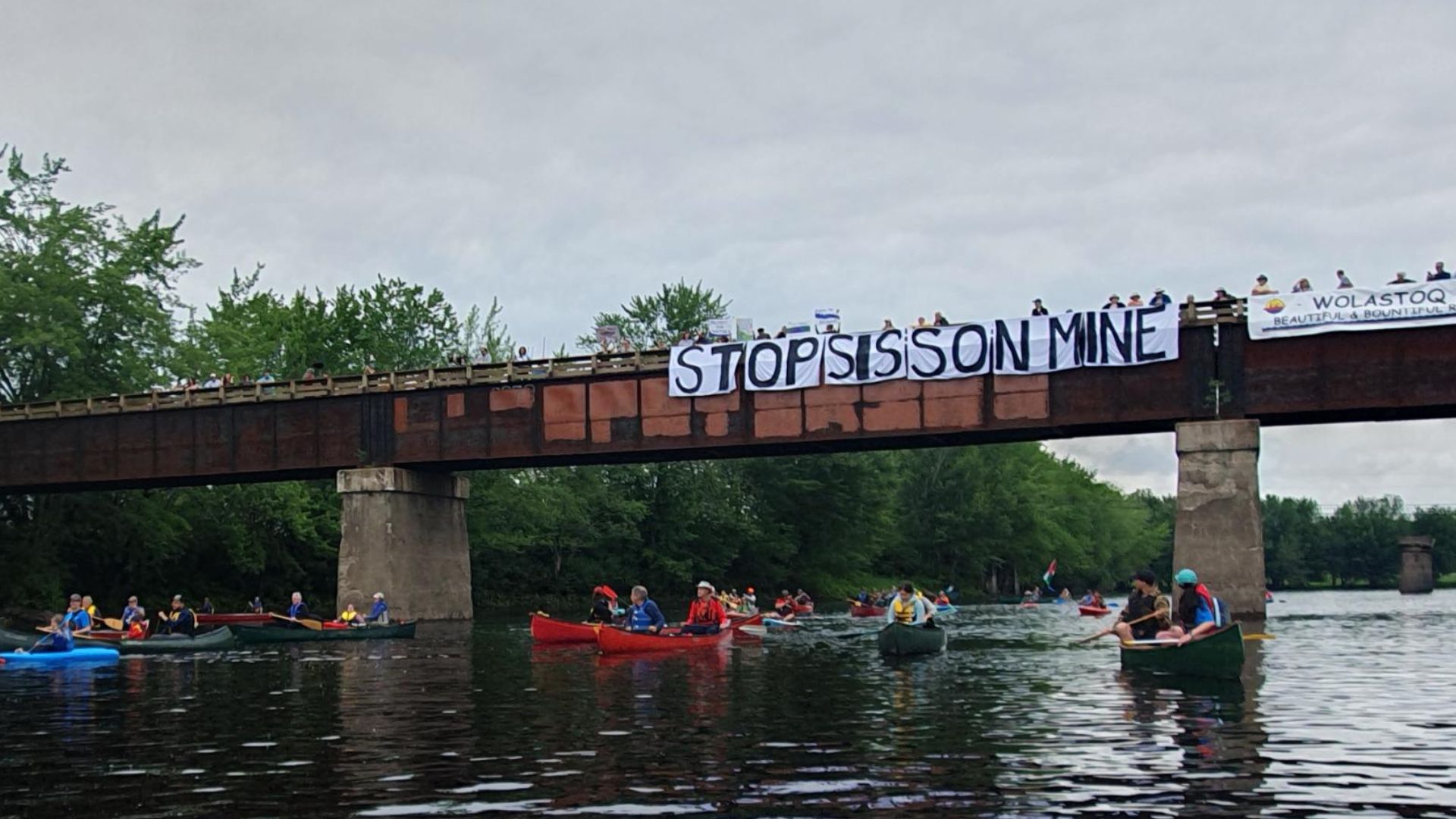
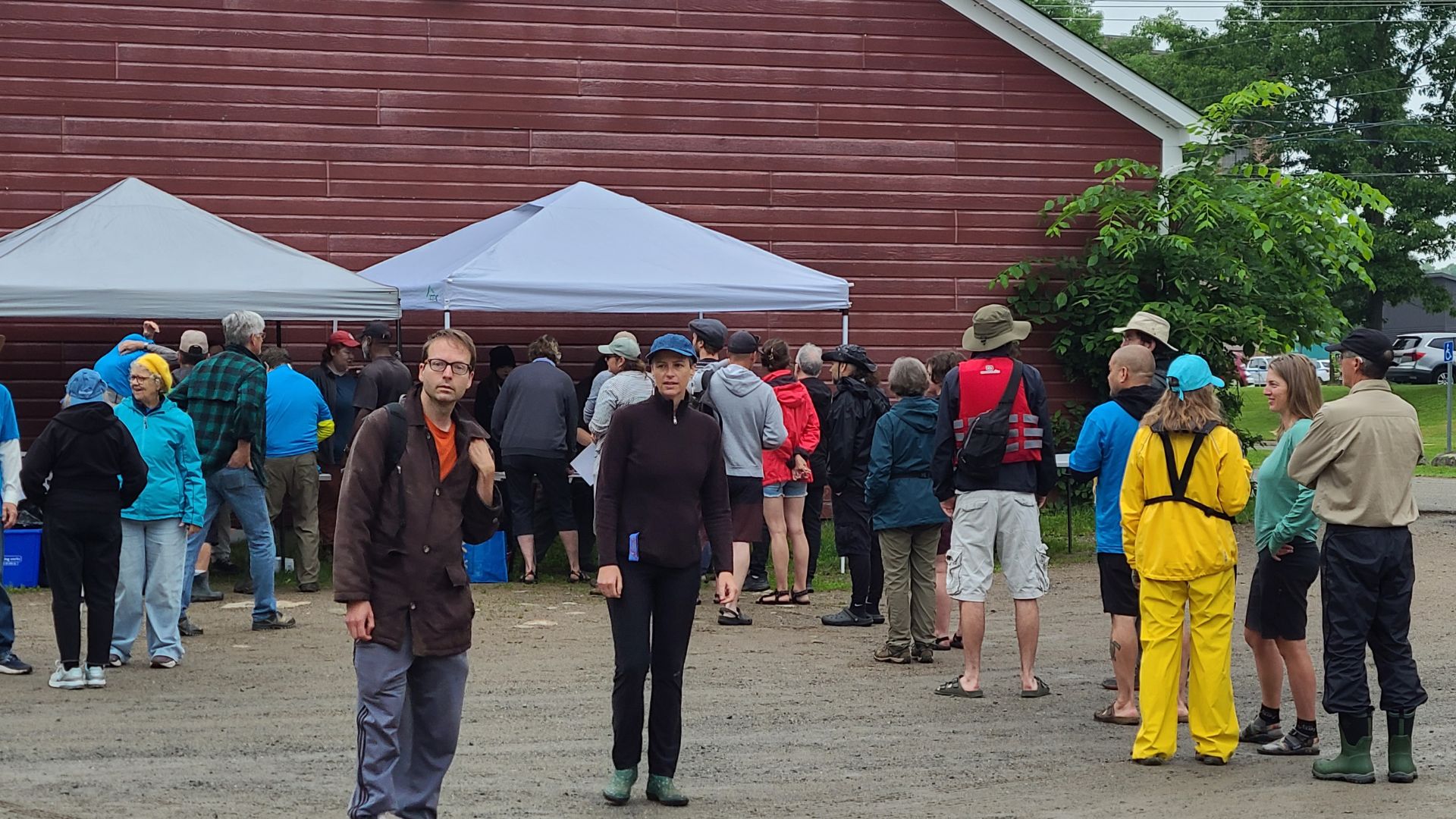
More than 100 paddlers glided down the Nashwaak River to show their opposition to a proposed tungsten and molybdenum mine near Fredericton on Saturday, June 27.
The Stop Sisson Mine Coalition, Nashwaak Watershed Association and Wolastoq Grand Council organized Kci-Sukultin (The Great Paddle) to raise awareness of the dangers of the proposed Sisson Mine to the Nashwaak and Wolastoq watersheds. The Sisson Mine is a long-proposed tungsten and molybdenum mine that has recently been revived through support from the provincial Holt and federal Carney governments.
 More than 100 paddlers made their way down the Nashwaak River on Saturday, June 27, 2026 to oppose the proposed Sisson Mine. Photo: Tracy Glynn

Last August, Natural Resources Canada announced $8.2 million in funding for the Sisson project. In November, Carney referred the Sisson mine project to the Major Projects office, an office created to advance “nation-building projects.”
While touted as producing transitional metals needed for the green economy, the Sisson mine project, 88.5 per cent owned by Northcliff Resources, received $20.7 million from the U.S. Department of War in 2025 “to accelerate development of the Sisson critical minerals project.” Besides energy storage batteries, tungsten and molybdenum are used in defence and aerospace applications.
Alma Brooks, a Wolastoq Elder, told the NB Media Co-op a year ago that the Department of War’s support for the Sisson mine only hardened her resolve against the project. “I am absolutely and totally against anything that would support the United States or Canadian military in their war efforts,” she said at the time.
Brooks was one of many cheering the paddlers from the bridge overlooking the Nashwaak.
Data Brainanta, one of the paddlers, shared Brooks’ concerns. “Tungsten and molybdenum are used in bunker buster bombs and bullets and I think peace-loving people should put a stop to it,” he said.
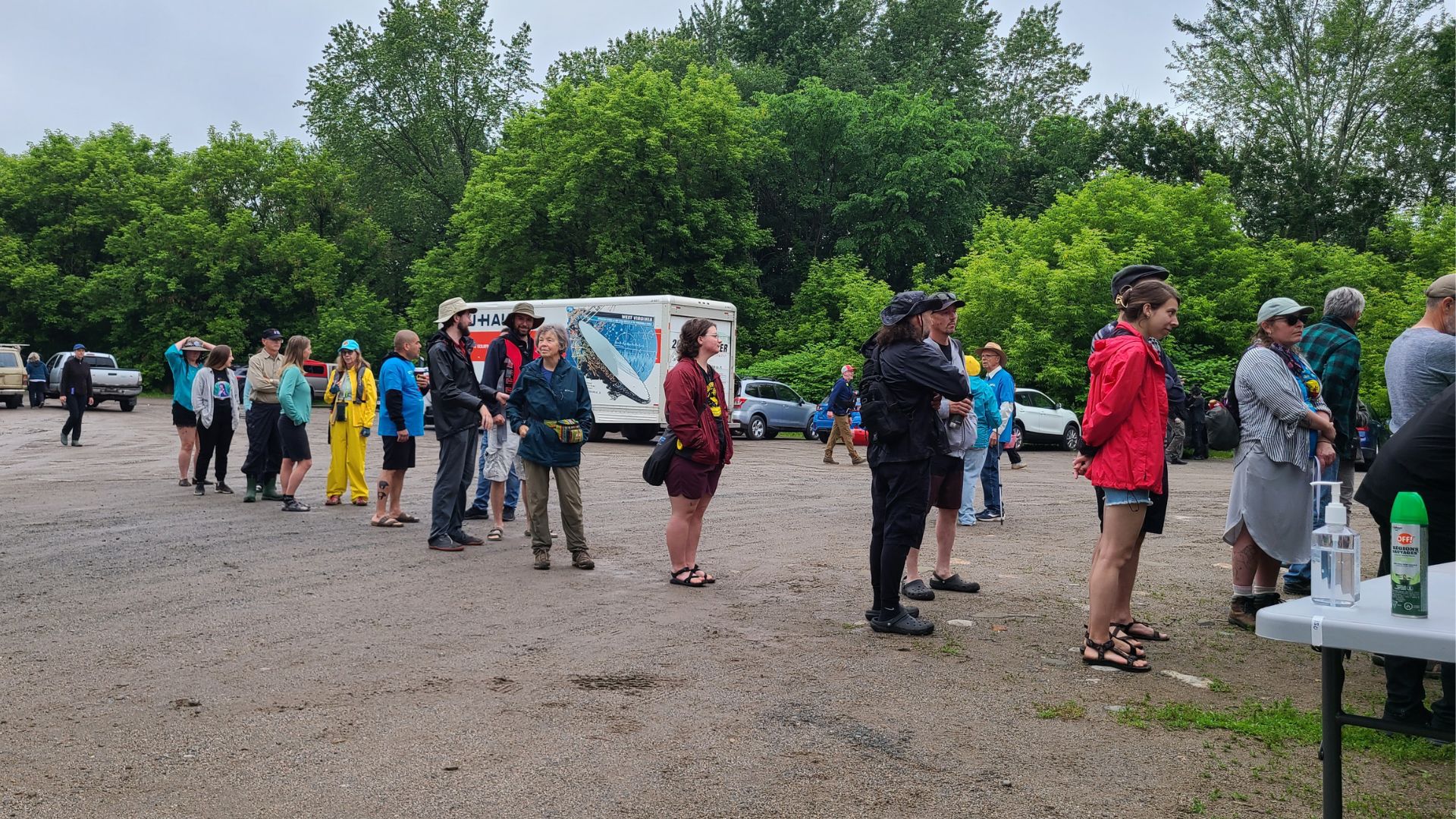
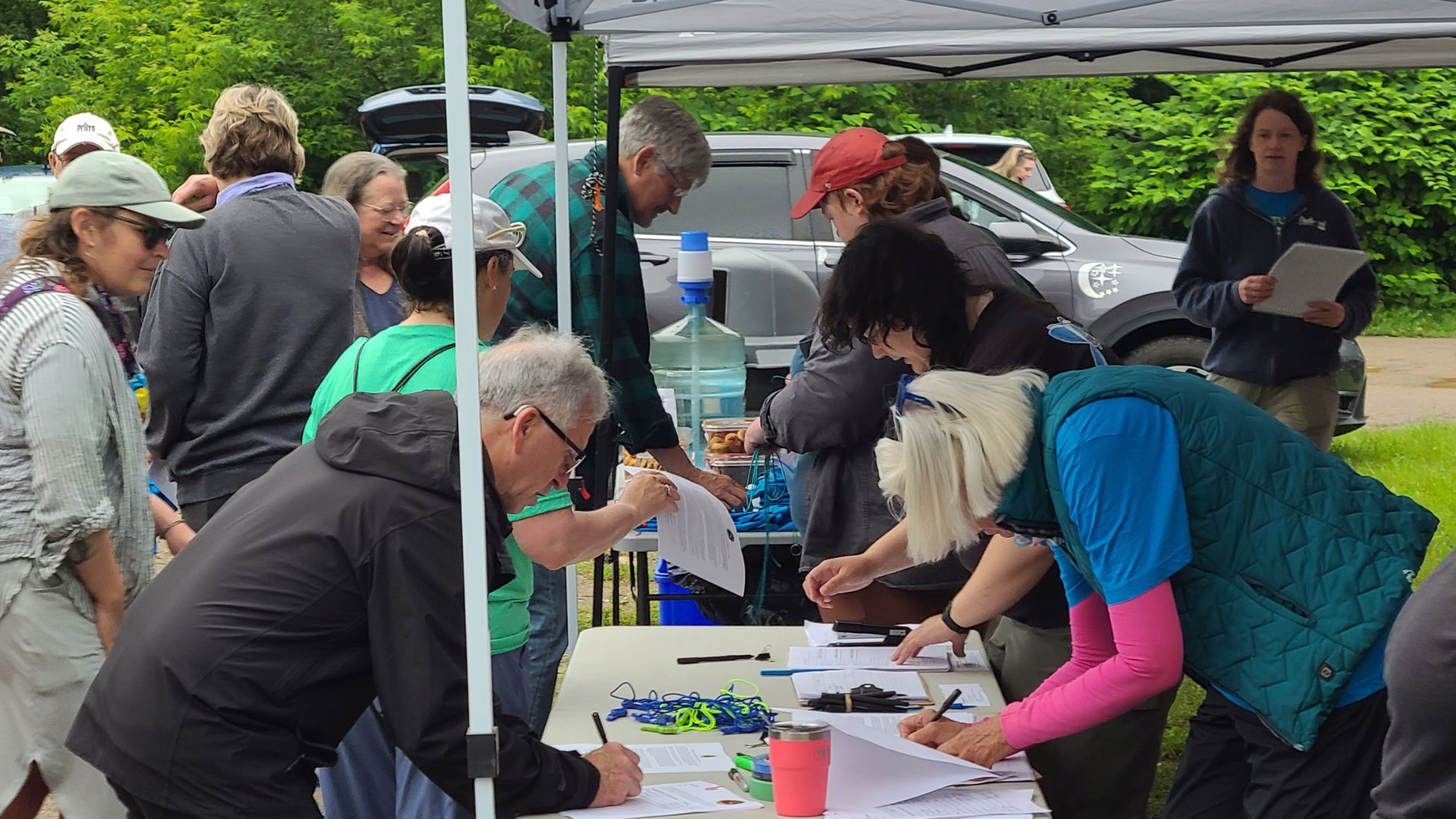
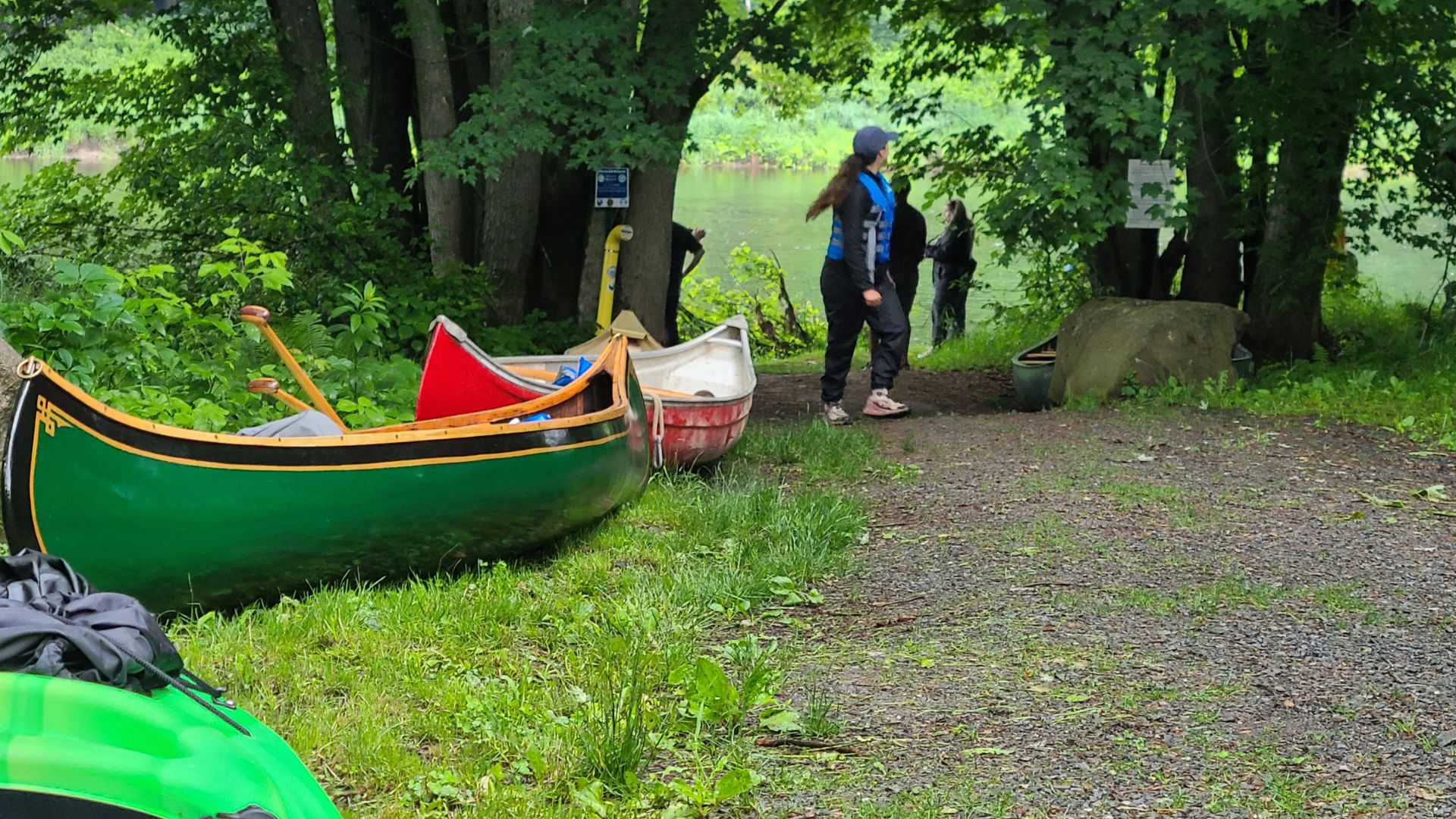
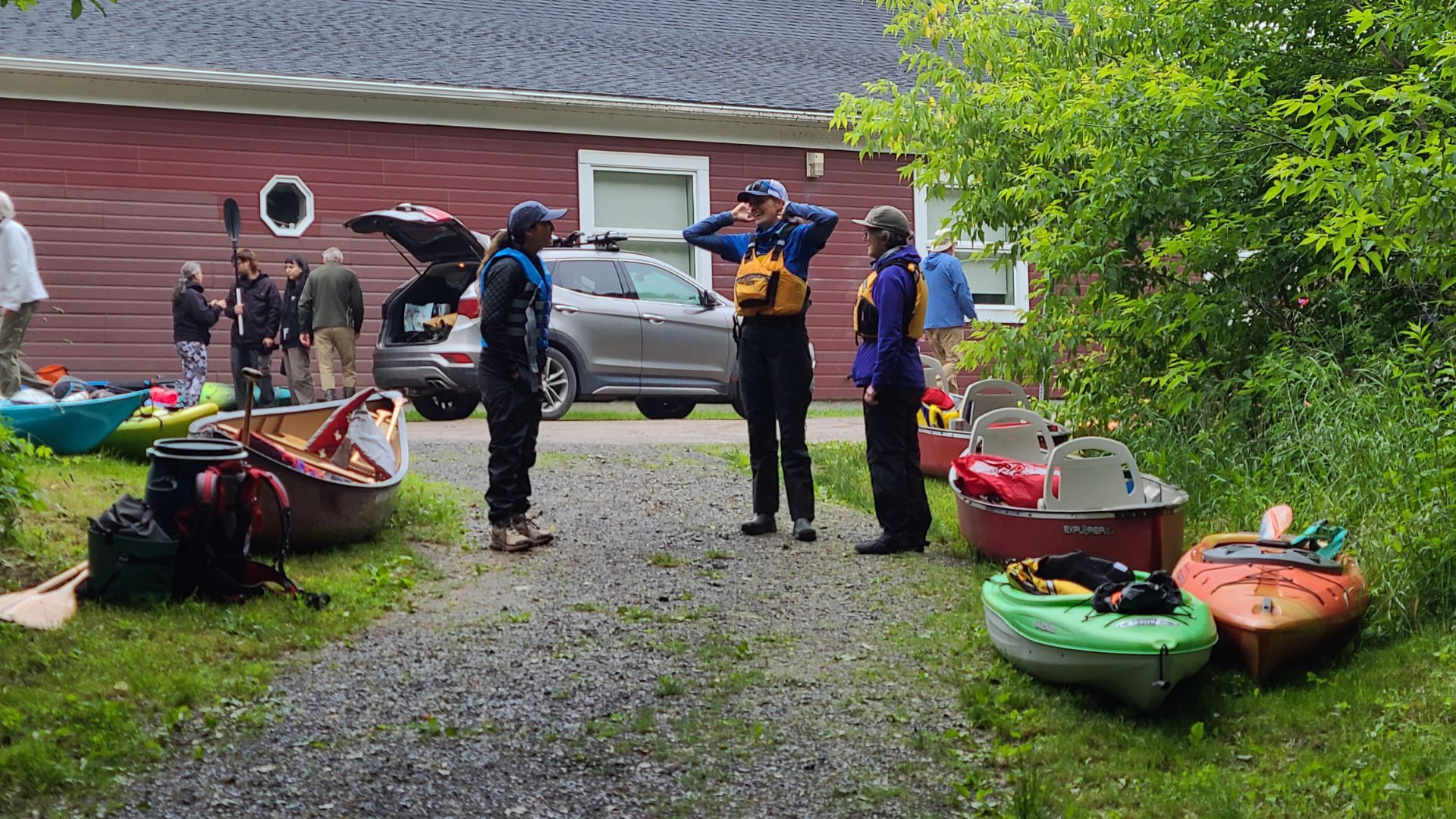
As paddlers prepared to launch their canoes and kayaks into the Nashwaak at the Marysville Heritage Centre, they spoke about the risks to the watershed.
When asked what concerned her the most, Francie Morgan replied, “Like many people I’m quite concerned about a breach.” Morgan was referring to a possible breach of the tailings dam that would hold the mine’s waste.
A breach in the Sisson Mine could release four times the amount of waste as the catastrophic 2014 Mount Polley breach in British Columbia, according to modelling by ecologist Lawrence Wuest, who lives in Stanley, a community located about 20 kilometres from the proposed mine.
Opponents worry that a breach would forever destroy the Nashwaak River.
For Wuest, the current mine plan is based on outdated best practices and technology for tailing storage and dam design. “We would not allow residential or other industrial construction to proceed in 2025 based on outdated building codes of 2013, and based on an excuse that it would be too expensive to build to current code standards,” wrote Wuest in a NB Media Co-op commentary last November. Most paddlers and spectators who spoke to the NB Media Co-op, including New Brunswick Green Party Leader David Coon, said that the Holt government should put an end to the project. “She’s the ultimate decider in New Brunswick, she could say no,” he said of Premier Susan Holt. “She should say no.”
To date, the premier has expressed full support for the Sisson mine project.
A spokesperson for the Sisson project didn’t respond to a request for comment. The NB Media Co-op also reached out to the premier’s office. In response, a spokesperson provided a statement attributed to Minister of Natural Resources John Herron.
It said, in part, that “New Brunswick’s natural resources are an important part of our economy and our future, but development must occur in a way that protects the environment and maintains public confidence.” You can read the full statement here.
Chris Thompson is a Fredericton-based contributor to the NB Media Co-op.
With files from David Gordon Koch.
![Is a Moncton company helping to build jet fighters bombing Gaza? [video]](https://nbmediacoop.org/wp-content/uploads/2024/06/ApexMay192024-350x250.jpg)

![Amid push for ‘nation-building projects,’ critics warn of ecological devastation [video]](https://nbmediacoop.org/wp-content/uploads/2026/10/MineBabyMineSept242026-2-350x250.jpg)



![Is a Moncton company helping to build jet fighters bombing Gaza? [video]](https://nbmediacoop.org/wp-content/uploads/2024/06/ApexMay192024-120x86.jpg)