
![Student accepted into UNB grad program stranded in Gaza awaiting Canadian study permit [video]](https://nbmediacoop.org/wp-content/uploads/2025/11/BiometricsNov72025-5.jpg)
“The only thing I wish for now is to go out to study, before it’s too late,” says Baraa, a Palestinian student who remains trapped in the Gaza Strip, one year after he applied for a Canadian student visa.
The NB Media Co-op has agreed to withhold his surname due to concerns about his safety amid a pattern of Israeli attacks on schools, universities, teachers, and students in the Gaza Strip.
He was scheduled to begin his studies in the Master of Computer Science program at the University of New Brunswick in the winter semester, as reported by the NB Media Co-op in November.
His admission has now been deferred to fall 2026. “I sincerely hope to be there by then,” Baraa said via instant message.
Acting university president Kathy Wilson and other UNB officials didn’t respond to multiple requests for comment about his situation. The university’s communications office previously stated that UNB is unable to comment on student visa applications.
Baraa is among more than 130 Palestinian students who’ve been accepted into grad programs in Canadian universities — but stuck in limbo for up to two years awaiting student visas.
In late May, there was a glimmer of hope when Minister of Immigration Lena Diab told a House of Commons committee that she had “directed officials to accelerate the student visa processing for people in Gaza.”
But her office later backpedaled on that pledge, saying instead that they were only fast-tracking the applications of 37 Palestinian students and family members who’ve already managed to exit the Gaza Strip.
A coalition of advocates has called on Ottawa to evacuate the remaining students from the besieged territory, pointing to several European countries that have done so.
By Monday, Baraa hadn’t heard any news from Immigration, Refugees and Citizenship Canada.
In July 2025, when he applied for a student visa, Canadian immigration authorities instructed him to submit his biometrics — fingerprints and photographs — at the “Visa Application Centre most convenient to you.”
That’s an impossible task because IRCC has no facilities in the Gaza Strip and movement within the territory is heavily restricted under nightmarish conditions imposed by the Israeli military.
On paper, a ceasefire came into effect on October 10, but Israeli attacks have reportedly killed at least 1,072 Palestinians since then.
Israel’s prolonged assault on the Gaza Strip has been widely recognized as a genocide by leading human rights organizations including Amnesty International.
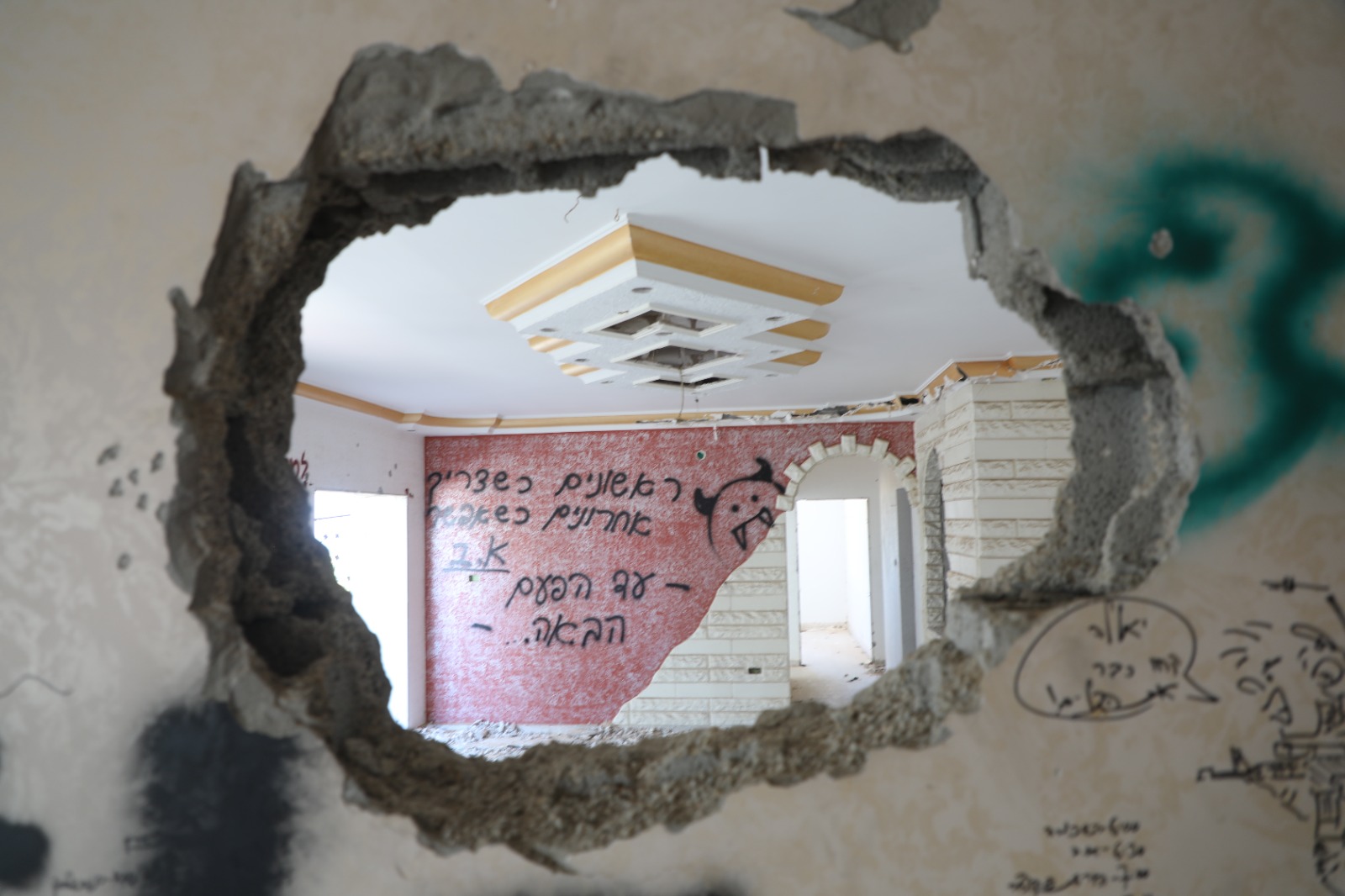
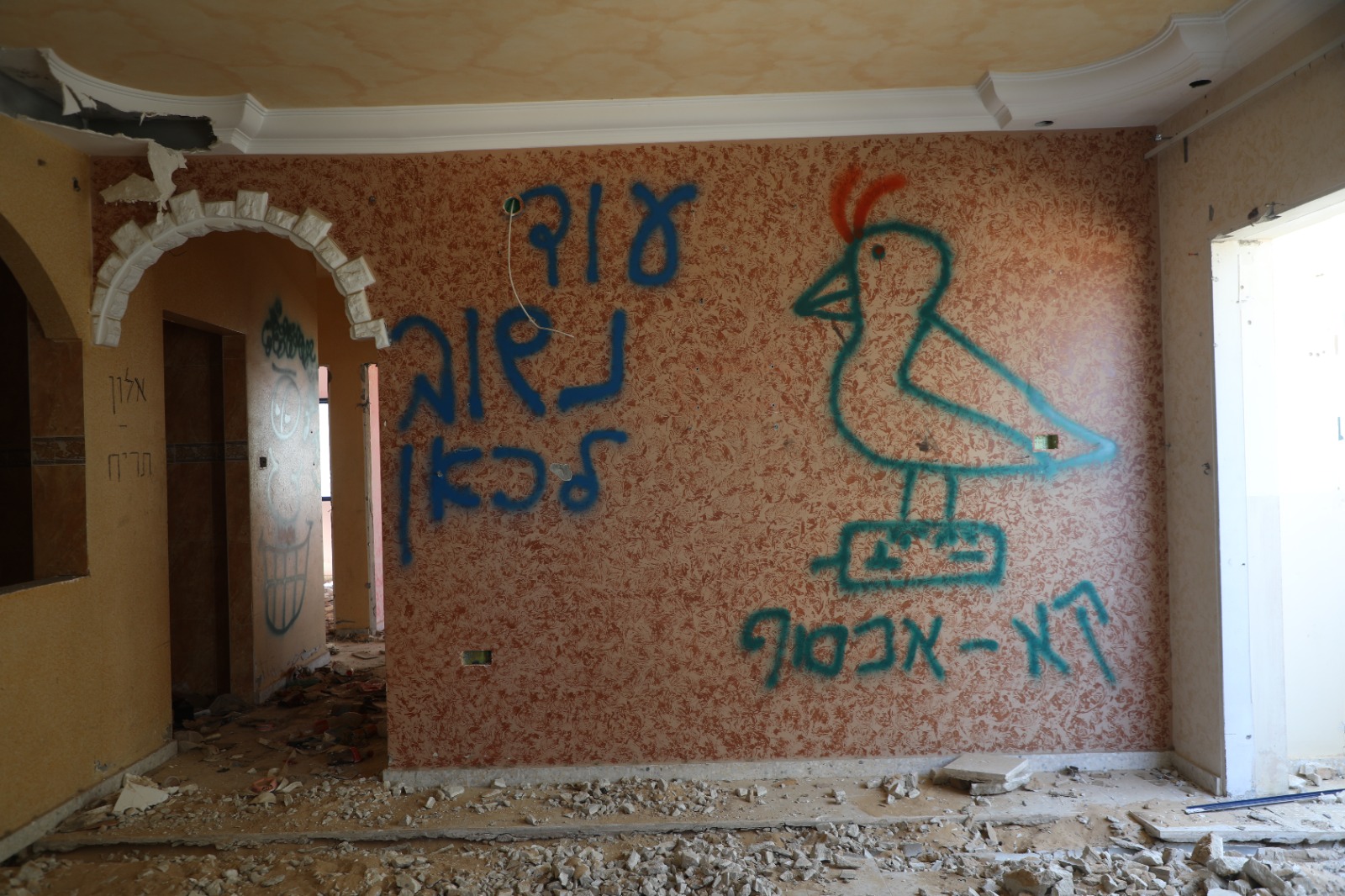
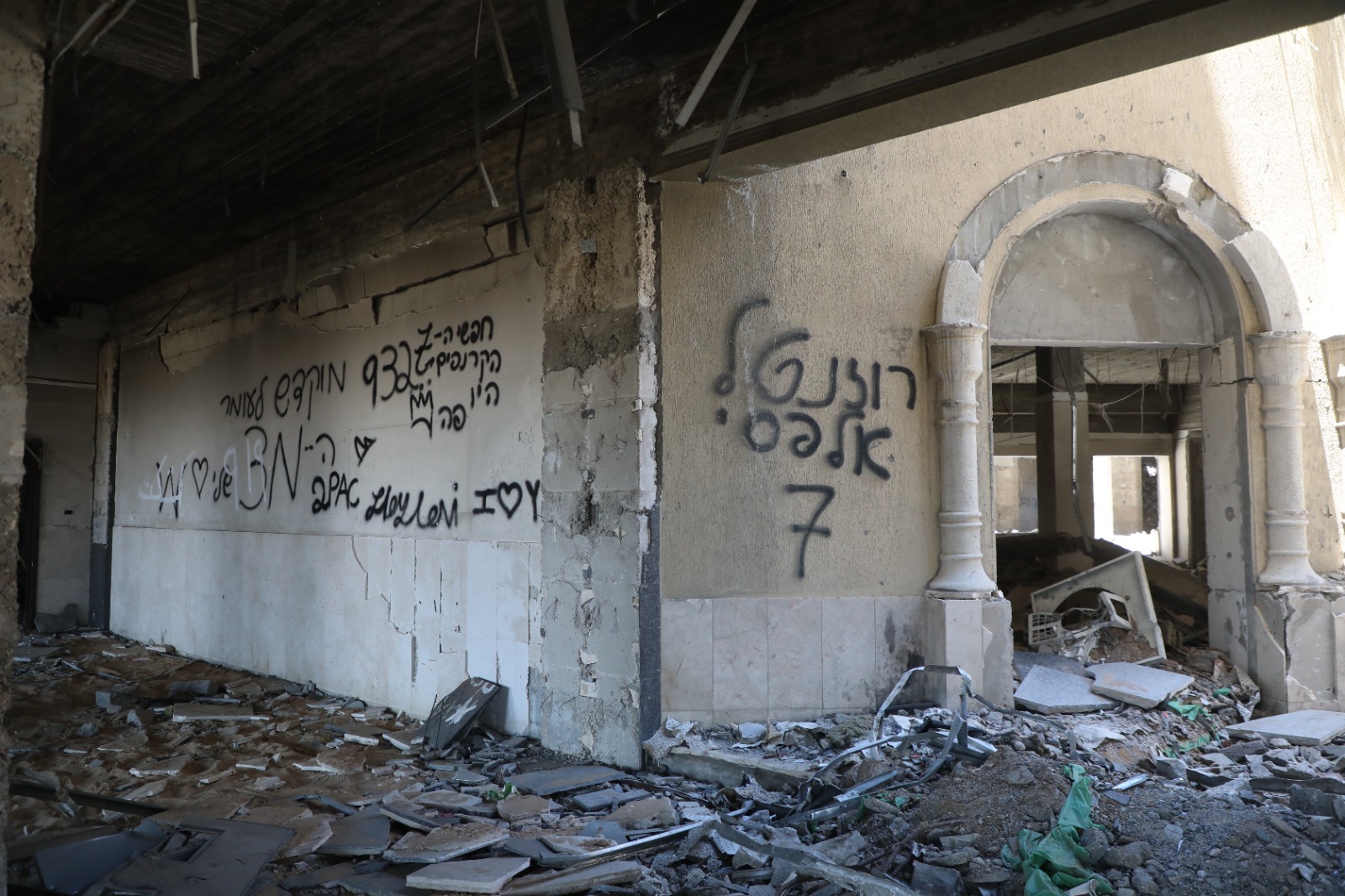
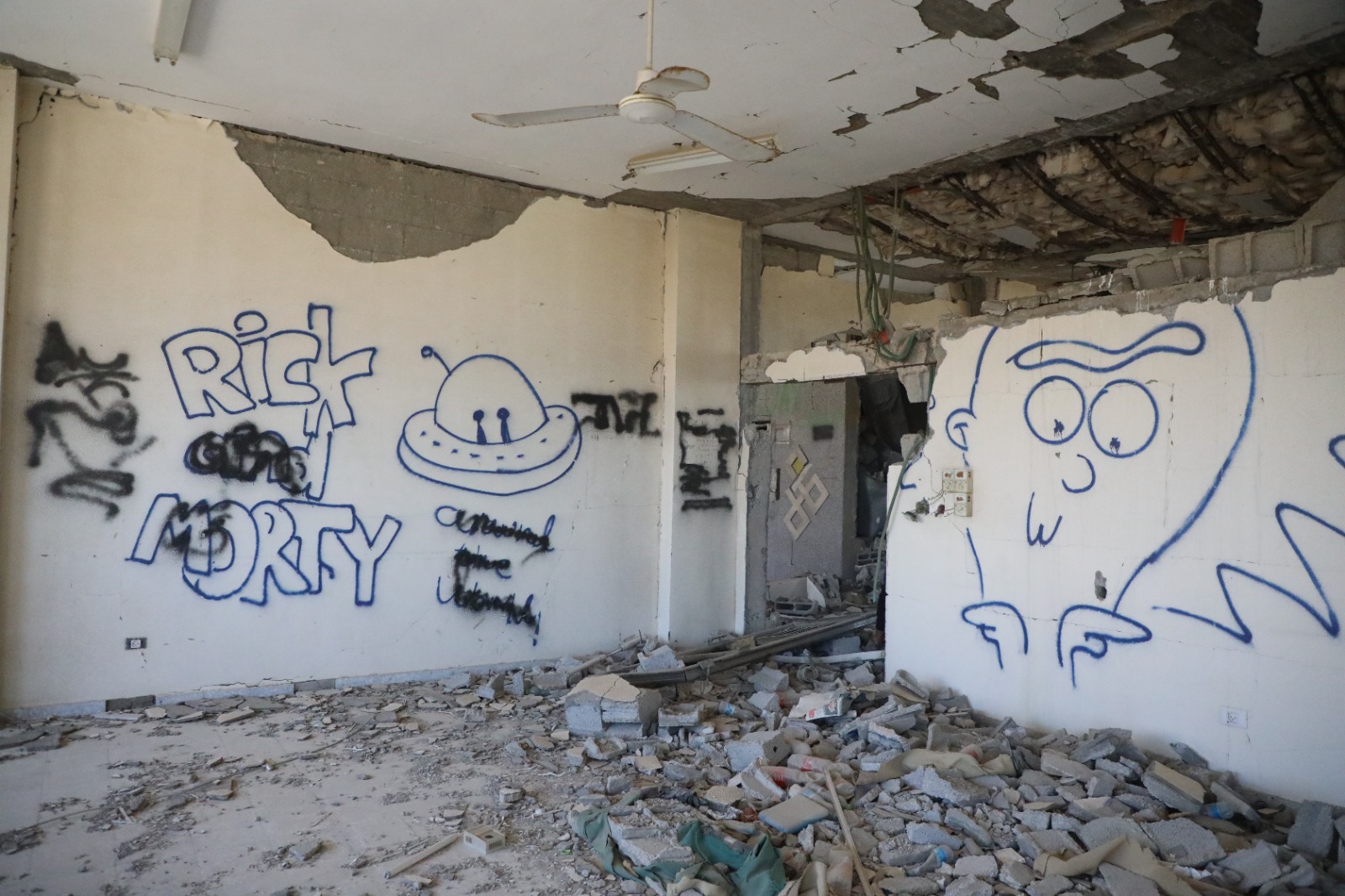
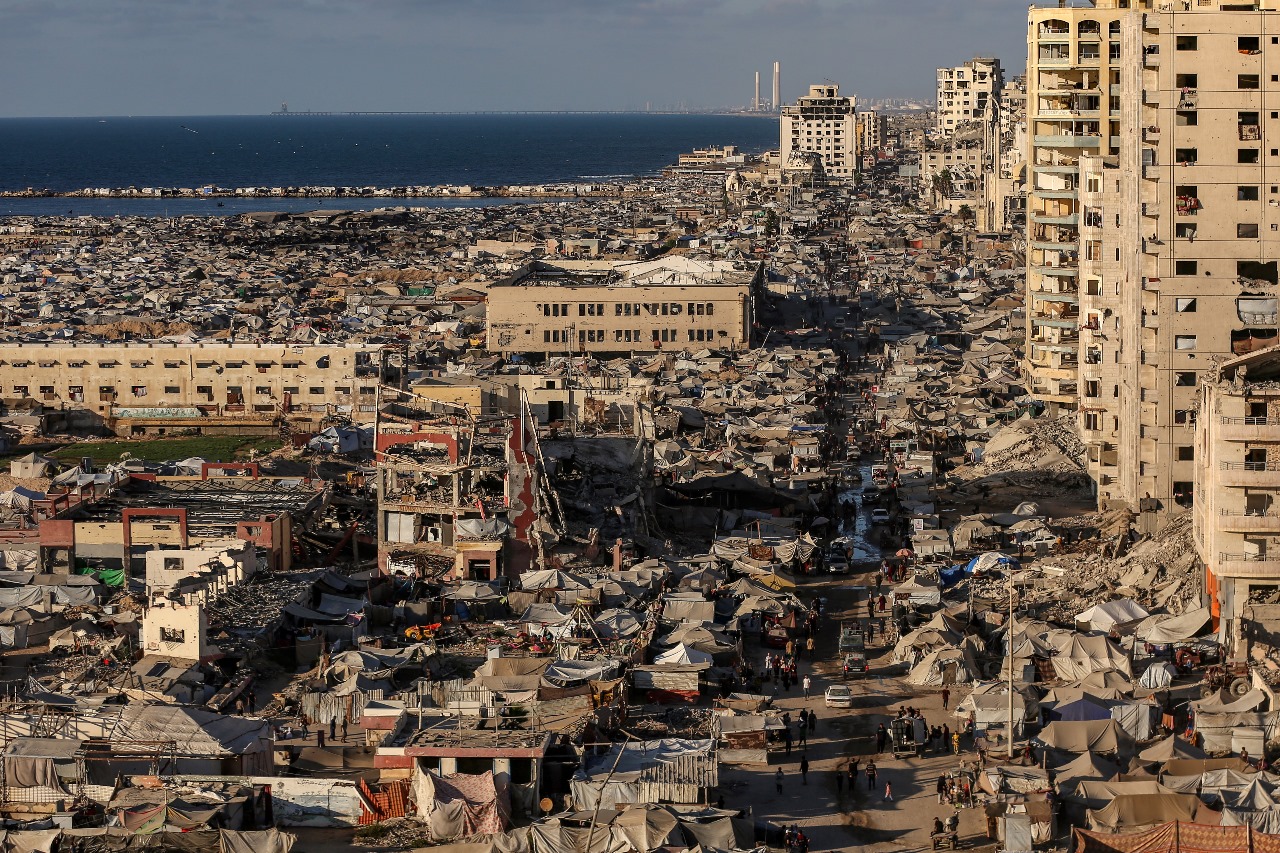
Baraa is now 24 years old — he was 23 when the NB Media Co-op first reported about his situation — and he continues to live in conditions of extreme hardship in a crowded displacement camp.
He once lived on the eastern side of Khan Younis, an area that has now been “completely destroyed,” he said.
He now lives in al-Mawasi, west of the city, where displaced people have built camps in the barren desert lands towards the seashore.
There have been frequent reports of Israeli attacks in al-Mawasi, despite the so-called ceasefire signed nine months ago — and despite the area’s designation as a “safe zone.” On Monday, two people were reportedly killed and 15 others injured when Israel struck a tent in al-Mawasi.
Recent attacks in al-Mawasi also include a drone strike on June 24 that reportedly killed a 12-year-old child and wounded several other children; another drone strike on June 27 that killed a 15-year-old girl and her 30-year-old brother; and an airstrike on June 29 that killed a mother and her baby while damaging and destroying hundreds of tents.
“I’m used to it,” Baraa said of the frequent explosions reverberating across the encampment, “but my depression increases whenever I hear it.”

Asked about day-to-day conditions, Baraa said that it’s difficult to access clean water. Food shortages continue, with price fluctuations making meat, eggs and dairy unaffordable. Firewood is expensive due to gas shortages, and food is cooked on open fires.
The encampments are infested with insects and rodents, he said, and the summer heat makes concentration impossible and sleep difficult.
“Despite all this, I am making achievements,” he said. “I have worked for several months in data entry and dealing with students with UNICEF. I also still work as a volunteer teaching assistant.”
Baraa said he walks two kilometres daily to a place with electricity and internet to work on his laptop.
There, Baraa works remotely with an academic supervisor from UNB’s Faculty of Computer Science, whom he declined to name.
Lately, he said, they have been working on a research paper which they hope to submit to a journal for publication.
People in the Gaza Strip are known for highly valuing education, but Israeli assaults have heavily damaged or destroyed all 12 universities in the Gaza Strip.
Baraa said he hopes to eventually become a top specialist in the “internet of things,” a field involving networks of physical devices, and to use his training to help the Palestinian people.
For now, he wants to get out of the shattered territory and begin his studies.
Minister’s office ‘denied’ pledge
At a House of Commons committee hearing on May 28, Immigration Minister Lena Diab appeared to indicate that visa processing for students in the Gaza Strip would be fast-tracked imminently.
“We have directed officials to accelerate the student visa processing for people in Gaza, and I can confirm—” she said.
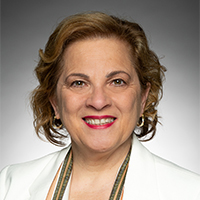
At that point, her microphone cut out due to time limits on debates, making her full statement partially inaudible and leaving it unrecorded in the official transcript.
In a video archived on the Parliament of Canada website, Diab can be heard saying “—will be completed within the next 10 days.”
She was responding to a question from NDP MP Jenny Kwan, who represents Vancouver East.
In an interview, Kwan said she heard the minister “clearly” state that applications from students in the Gaza Strip would be processed within 10 days.
However, the minister’s staff backpedaled on that pledge when advocates from the non-profit Palestinian Students and Scholars at Risk (PSSAR) followed up, according to Nada El-Falou, the group’s director of student services.
“They denied making that promise,” she told the NB Media Co-op.
Speaking in the House of Commons on June 2, Diab said that her department is, in fact, speeding up student visa processing — but only for Palestinian students “who have been able to exit” the Gaza Strip.
“They are being interviewed, and final decisions are being made,” Diab said.
Kwan called for the minister to be fired. “Either the minister was deliberately misleading, or she is inept and has no clue what is going on,” Kwan said.
In response to queries from the NB Media Co-op, the federal government confirmed that students trapped inside the territory are still required to submit biometrics.
“Biometrics can only be completed after people leave Gaza, as IRCC has no presence there,” said Matthew Krupovich, a communication advisor for IRCC.
“This fact prevents us from finalizing applications while clients remain in Gaza.” IRCC didn’t respond directly to a request for an interview with the minister.
Regulations allow for exemptions
Palestinian writer Sara Awad has described how the Italian government evacuated her from the Gaza Strip in December. She was among 180 students evacuated from the territory through the Italian University for Palestinian Students project last year.
“I passed through historic Palestine and occupied territory to Jordan, then on to Rome,” she wrote in an article for the Electronic Intifada. “It took me one full day in a bus that had to stop at three Israeli military checkpoints, where we were all checked and checked again, before we could arrive in Jordan.”
The heavily militarized southern border with Egypt once served as Gaza’s only gateway to the world outside of Israel, but it now falls within a restricted area under Israeli control. Israel’s occupation of the Gaza Strip has expanded since the October “ceasefire” came into effect, tightening its grip on the territory.
Advocates say the Canadian government could follow the lead of countries such as the UK, France, Italy and Ireland.
All of those countries have “provided pathways for students in Gaza to come and study at their universities,” NDP Leader Avi Lewis said at a news conference in April.
During the May 28 committee meeting, NDP MP Jenny Kwan asked the immigration minister how many names the government had submitted to Israeli and Egyptian authorities to request official exit clearance. Diab said she didn’t know.
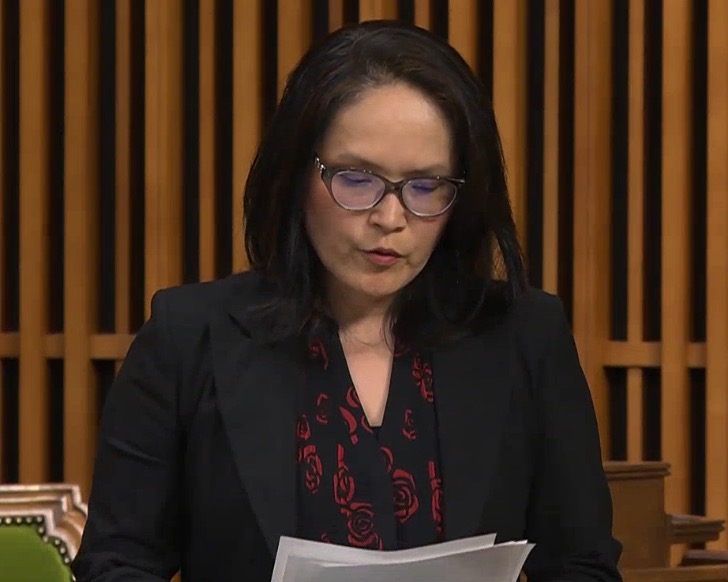
As for biometrics, immigration regulations allow for exemptions in cases where “collection is impossible or not feasible.”
Ottawa has previously put alternative measures in place for people from Syria, Ukraine, and Sudan, Kwan told the NB Media Co-op.
“It is within the minister’s authority to do so,” she said.
Why doesn’t the government make an exception for Palestinian students? Community groups call it anti-Palestinian racism, Kwan said. “I can’t help but to wonder if that is the reason.”
An IRCC spokesperson previously stated that the department is “committed to a fair and non-discriminatory application of immigration procedures.”
The NB Media Co-op also reached out to the office of David Myles, the MP for Fredericton–Oromocto, whose riding includes UNB’s main campus.
A staff member from his office said the Liberal backbencher would defer to Diab due to the “technical” nature of the issue.
He added that Myles’ office has been in contact with the minister about Baraa’s case since December, following the NB Media Co-op’s earlier report. “Obviously our heart is broken about this one,” the political staffer said.
As for Baraa, he expressed an aversion to politics. He prefers to focus on his dreams for a better life.
David Gordon Koch is a journalist with the NB Media Co-op. This reporting has been made possible in part by the Government of Canada, via the Local Journalism Initiative.
Correction: An earlier version of this article referenced an Israeli attack reported in al-Mawasi on Tuesday July, 7; the correct date was Monday, July 6. The updated version also clarifies the situation at Gaza’s southern border with Egypt, which is currently under Israeli military control. Last update: 10:15 a.m., July. 9, 2026
![Is a Moncton company helping to build jet fighters bombing Gaza? [video]](https://nbmediacoop.org/wp-content/uploads/2024/06/ApexMay192024-350x250.jpg)


![Is a Moncton company helping to build jet fighters bombing Gaza? [video]](https://nbmediacoop.org/wp-content/uploads/2024/06/ApexMay192024-120x86.jpg)
