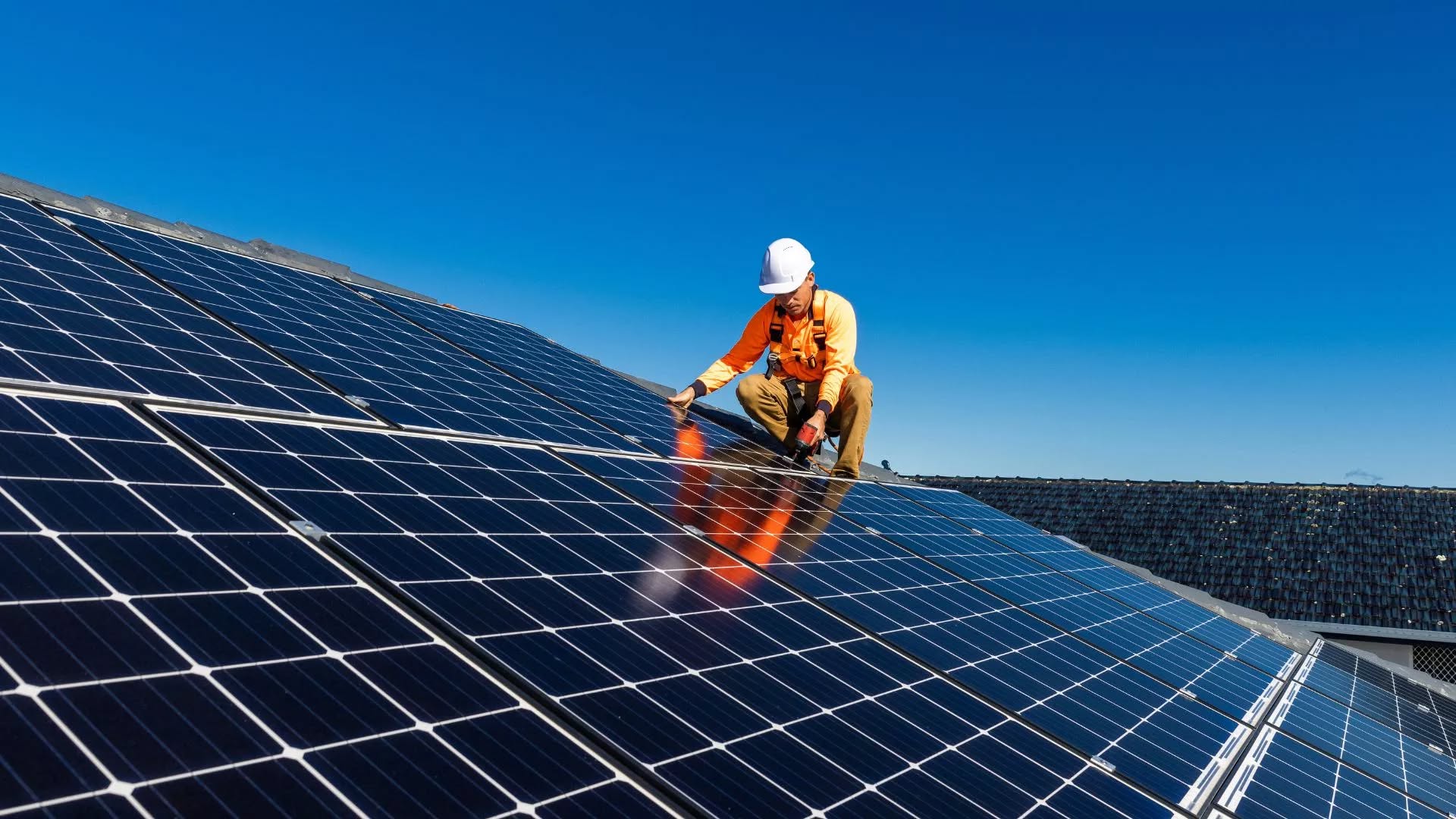
Proposed changes affecting households that generate their own solar power represent a step backwards for environmental sustainability and the renewable energy sector in New Brunswick, according to critics from the Green Party and solar energy industry.
NB Power says its current net metering program — which allows customers to connect their green energy unit to NB Power’s distribution system — isn’t fully recovering the cost of supplying electricity to customers. The utility argues that general service customers are effectively subsidizing more well-off households that are able to afford solar energy systems.
The proposed changes are part of a larger rate design application that requires approval from the provincial Energy and Utilities Board. The new changes would come into effect April 1, 2027, pending EUB approval. The troubled utility has won approval for a series of rate hikes amid the ongoing cost-of-living crisis in recent years.
Under the current program, the output of a solar power unit offsets the cost of power from the grid, providing credit on a one-to-one basis. That ratio would be changed, with NB Power instead buying electricity from net metering customers at 6.77 cents per kWh, and selling it to them at 9.22 cents per kWh, according to one Ontario-based solar contractor.
That change arguably penalizes residents for generating their own clean power, although NB Power is quick to point out that other customers pay a significantly higher residential rate, currently 15.84 cents per kWh.

The changes would also include a new $13 per kilowatt “demand charge” for net metering customers.
It would come into effect during an hour-long peak consumption period that would vary by household, occurring between 7 a.m. and 10 p.m. on weekdays, except holidays, according to Brad Coady, chief commercial officer at NB Power. It would apply to power drawn from the NB Power system, he added.
“What we’re doing is looking at what was the greatest maximum peak demand for that full hour of operation,” he told reporters during a virtual scrum on Thursday morning. “That’s what sets your demand charge.”
Coady said that customers with solar panels tend to produce energy in the middle of the day, taking “a lot of pressure off the midday operations,” but not during the periods of highest demand that occur in the wintertime between 7–9 a.m.
Coady added that solar customers tend to be “more sophisticated” consumers of electricity who may consider purchasing battery storage “so that they can further reduce the peak or reduce their demand on the system and then avoid that demand charge altogether.”
There are currently 2,134 net metering participants in the province, according to NB Power.
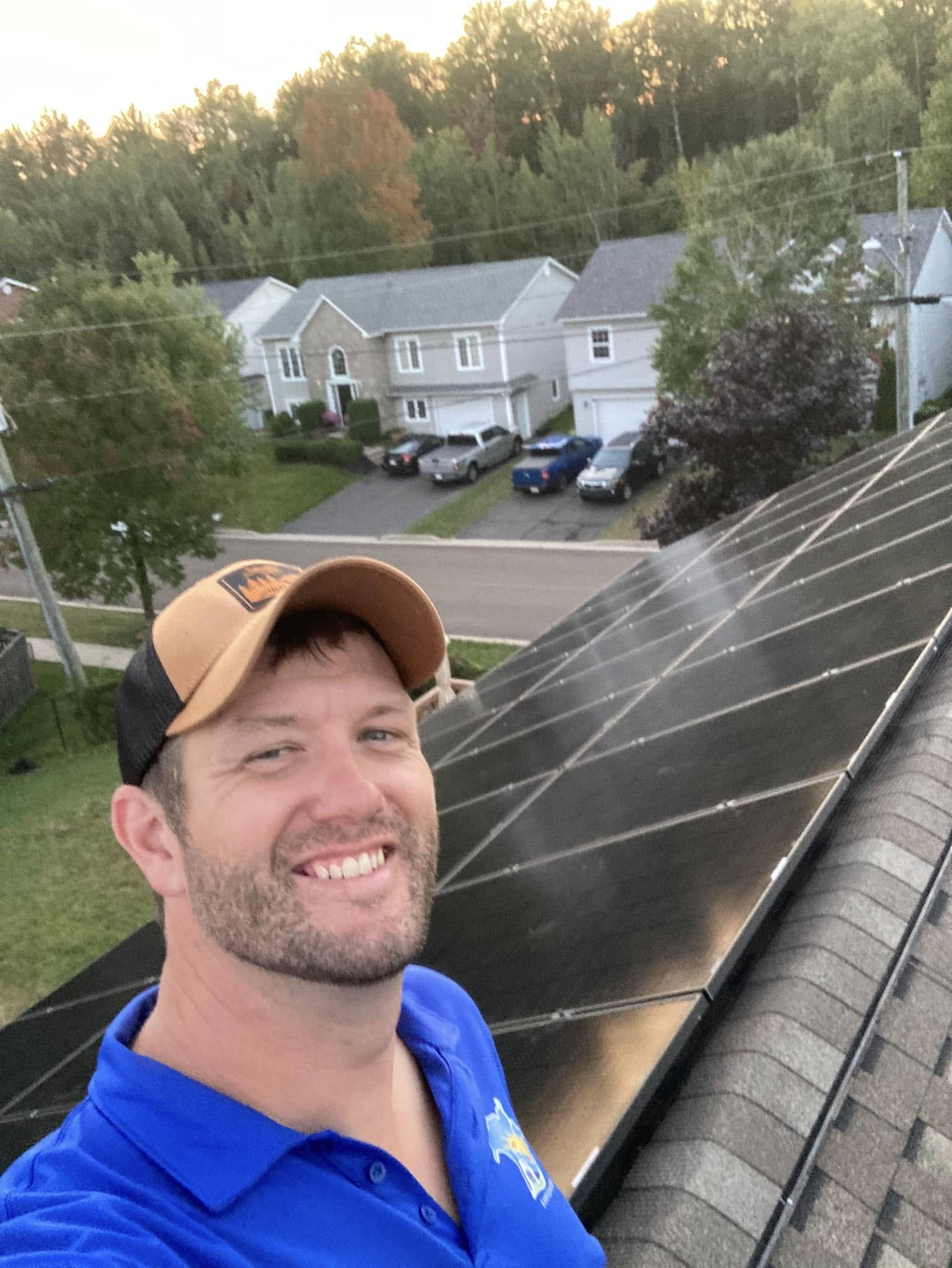
Those customers and anyone whose application to the program is approved by Oct. 31 will be grandfathered into the current system, meaning those households won’t be affected by the changes right away. A 10-year grandfather clause would begin next spring and run until March 31, 2037.
If approved, the policy changes will “decimate business,” according to Rudi Fowler, owner of East Coast Sun, a company that installs solar and battery systems.
“It’s a blow to the solar industry,” he said. “And it’s also a blow to customers who want to be able to offset their power bill and shelter themselves from the poor decisions of the past at NB Power.”
He said that he would no longer be able to recommend solar installations to customers if the policy is approved. “I can’t sell things that don’t make sense.”
Fowler said an example of a good policy is Nova Scotia’s demand response system, which allows people to sell power to the grid.
One of his customers in Nova Scotia added a $5,000 battery to their home solar system and then received a cheque last year from Nova Scotia Power worth about $3,000, he said. “He’ll have his battery paid for in two years.”
Fowler said it costs less for the utility to pay customers than to import electricity from other jurisdictions like Quebec. The policy might also help avoid building costly and environmentally destructive gas-burning plants, he added.
Speaking in the Legislative Assembly recently, Green Party Leader David Coon called the NB Power proposal “anti-solar” and said it would deter people from investing in solar power. “It’s absolutely punitive,” he said in an interview. “It just reflects the fact that NB Power continues to see it as a nuclear utility rather than a renewables utility.”
NB Power has often cited its need for more electricity, a problem motivating the planned construction of a controversial fossil fuel-burning plant in the Tantramar area, for example.
“Here we have householders — and farmers and business owners — who are investing their own money that is putting additional electricity on the grid. I thought we needed more electricity on the grid. That’s what NB Power keeps telling us,” he said.
Coon noted that people with solar panels want to make a contribution to society by reducing dependence on fossil fuels that are responsible for the climate crisis, while also saving money through lower electricity costs.

New Brunswick has a growing solar industry, he said, and the proposed policy change could undermine that economic sector. The Green Party Leader called on the province to overhaul the Electricity Act, but said he doesn’t believe the current Liberal government will do so.
For example, he noted that Premier Susan Holt’s Liberals pledged to “introduce a provincial program for solar retrofits” in their 2024 election platform and in the Speech from the Throne that year. That promise now appears to be on the rocks.
Minister of Finance René Legacy told a legislative committee recently that the government didn’t put money into the budget for solar retrofits because “we didn’t feel that it adds to affordability.”
Legacy said people who can afford those systems will do so because “there’s actually a very good return on investment” and “they have the means to do it.”
The NB Media Co-op requested an interview with Legacy, who is also minister of energy.
His office provided a statement that didn’t address the promised solar retrofits but pointed to continued investments in the Enhanced Energy Savings Program, which supports energy efficiency upgrades, such as insulation and air sealing.
“Affordability continues to be a primary concern for New Brunswickers, many of whom are customers of NB Power,” the statement said.
NB Power “recently announced over 450 megawatts of power purchase agreements for wind energy and a request for expression of interest was issued in December 2025 for 50MW of battery storage,” the statement added.
As for the proposed net metering changes, they will “protect non-participating customers from rising electricity rates,” the statement said. “These are the customers that usually can’t afford to install solar panels.”
The statement also encouraged members of the public to take part in the EUB review process. Conservative energy critic Kris Austin didn’t respond to a request for comment on Thursday afternoon.
David Gordon Koch is a journalist with the NB Media Co-op. This reporting has been made possible in part by the Government of Canada, via the Local Journalism Initiative.

![Is a Moncton company helping to build jet fighters bombing Gaza? [video]](https://nbmediacoop.org/wp-content/uploads/2024/06/ApexMay192024-350x250.jpg)

![Massive increase in military spending imposed by U.S. with little media pushback [video]](https://nbmediacoop.org/wp-content/uploads/2026/10/AlexCoshSept232026-350x250.jpg)


![Is a Moncton company helping to build jet fighters bombing Gaza? [video]](https://nbmediacoop.org/wp-content/uploads/2024/06/ApexMay192024-120x86.jpg)