

A spokesman for the environmental advocacy group Living Ecosystems and Power (LEAP) says he’s not surprised that the federal agency in charge of regulating big industrial projects has decided not to conduct a full environmental assessment of two proposed natural gas generating plants in Pictou County, Nova Scotia.
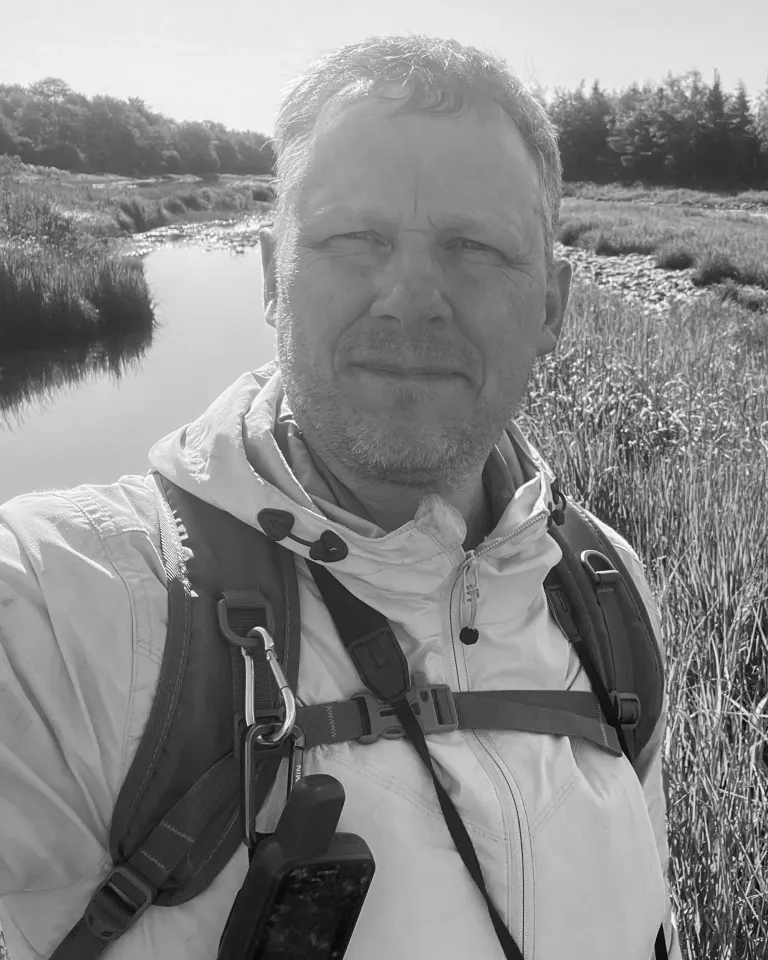
“To be honest, I’m obviously dismayed, but we’re not surprised considering the federal government’s recent announcements on industrial projects,” Mark Brennan said today during a telephone interview with Warktimes.
He was reacting to the federal Impact Assessment Agency of Canada’s announcement Friday that although the two, 300 MW gas/diesel plants “may cause adverse effects,” no further federal assessment is required because those effects “would be limited or addressed through existing federal and provincial legislative and regulatory frameworks.”
The wording of the IAAC decision is similar to one last September when the agency decided against any further review of NB Power’s planned 500 MW gas/diesel plant near Centre Village.
“The gutting of the Impact Assessment Agency of Canada’s mandate to oversee big industrial projects is something that concerns us,” Brennan said, “because it now looks like basically no oversight from the federal government when it comes to industrial projects and everything is being referred to provincial environmental assessments.”
While New Brunswick is still conducting an environmental assessment of the Centre Village project, the Nova Scotia government has already approved the two plants in the small, rural communities of Salt Springs and Marshdale.
“Our issue from our point of view with LEAP is that the public consultation process has not been a consultation process,” Brennan says.
“It’s basically more of a one-sided process that locals and communities and NGOs (non-government organizations) who care about the environment and care about their own water have no say,” he adds.
Brennan says local residents are worried about the immediate effects of the gas plants on their wells and the toxic chemicals such “peaker plants” release into the air that people breathe.
Critical wildlife habitat
“These two gas plants are slated to go into the headwaters of two salmon rivers, namely the East and the West Rivers,” Brennan says, “and this puts an almost critical level of stress on Atlantic salmon in two of the still most positive rivers in this area for spawning and breeding.”
In addition, he says, both sites threaten breeding grounds for threatened or endangered species including the Canada warbler which flies from South America to breed in forested wetlands.
“Eighty percent of that population breeds in Canada, and at both sites, the Canada warbler was found breeding,” he says, adding that the gas plants would destroy the habitat the birds depend on.
“We feel like the governments are not living up to their own mandated requirement to take into consideration species at risk,” he says,
“There is a recovery plan for the Canada warbler and the provincial government and the federal government have both signed on to that recovery plan. And we need to know why both the federal ministers of the environment and the Department of Fisheries and Oceans minister and the provincial environment minister here in Nova Scotia, why are they ignoring species-at-risk legislation to the point where critical habitat for endangered species will be destroyed?” Brennan asks.
Judicial review
Brennan says that aside from environmental and health concerns, LEAP members are worried about the effects on power rates.
“If you’re going to spend billions on gas plants that burn gas to generate electricity that is connected to world market prices, what are your electricity bills going to be?” he asks.
“For the consumer, it’s something that we should really be paying attention to.”
Meantime, LEAP has filed for a judicial review of the projects in the Nova Scotia Supreme Court to determine whether the provincial environment minister followed a decision-making process that was fair, complete and consistent with the requirements set out in provincial legislation.
Brennan calls it a “travesty” that rural communities worried about the destruction of their environment have to take legal action.
“Why should small communities have to take their own governments to court to make sure that they are carrying out their own legislation? It’s not right. It’s not fair. And something smells. You know, there’s something wrong.”
Note: Nova Scotia’s Independent Energy System Operator (IESO) issued a Request for Expressions of Interest last October for the construction and operation of one or two 300 MW gas plants in Pictou County, but says it has not made a final determination on whether “one, or both, of the proposed sites are suitable to support the project, considering environmental, technical, financial, cultural and community impacts. The results of this analysis and the competitive procurement process will inform whether one, two, or no contracts are awarded.”
To read the IESO’s latest news release, click here.
To read a Halifax Examiner report by Joan Baxter on the political connections at play in the Pictou gas plant proposals, click here.
To visit the GoFundMe page that is soliciting donations for the judicial review, click here.

![Proposal for gas-fired power plant in Tantramar lacks transparency, says veteran journalist [video]](https://nbmediacoop.org/wp-content/uploads/2025/09/Screenshot-2025-09-04-at-17.47.39-350x250.jpg)
![Is a Moncton company helping to build jet fighters bombing Gaza? [video]](https://nbmediacoop.org/wp-content/uploads/2024/06/ApexMay192024-120x86.jpg)


![NB Update: What comes after the crisis in local journalism? [video]](https://nbmediacoop.org/wp-content/uploads/2025/06/LabourUpdateApr132025-120x86.jpg)
