First Nations have suffered a major setback in their title claim for more than half of New Brunswick’s territory.
The province’s highest court issued a written decision Thursday agreeing with many of the arguments presented by timber firms with huge holdings in the western half of New Brunswick that were concerned they’d lose control of their land.
They had appealed a lower-court decision removing them from the title claim process, but kept their lands in it, a precedent they said was completely unfair and an affront to the law.
The six Wolastoqey communities along the St. John River and its tributaries still consider those vast forests their own, and wanted a say on how they were used or get all or some of them back. They say they never surrendered their territory and believe the Peace and Friendship treaties, the first signed between Indigenous chiefs and the British Crown three centuries ago, prove it.
“It is plain and obvious that this claim has no chance of success at trial,” said Justice Ernest Drapeau, writing on behalf of the three-judge panel on the New Brunswick Court of Appeal.
They ruled private lands are no longer subject to a possible declaration of Aboriginal title.
People who worried about private property rights celebrated the decision, the latest in a series of legal twists and turns since Indigenous chiefs launched the title claim five years ago.
Expressing disappointment, one of the Wolastoqey chiefs told Brunswick News her side would try to appeal the case to the Supreme Court of Canada.
New Brunswick’s justice minister said he hoped it was a turning point and encouraged the Indigenous chiefs to sit down and negotiate with the Liberal government over the title claim, which could include financial compensation for their lost land.
“My client runs a small sawmill, and this was a huge burden,” said Nova Scotia lawyer Alex Cameron, who argued the case on behalf of H.J. Crabbe and Sons, the smallest of the three firms that appealed. “Particularly in the context of the trade war and the imposition of tariffs from the United States. So, this was an added burden, and he’s really glad to be out of it.”
J.D. Irving, Limited and Acadian Timber, the other two companies, declined comment.
The decision does not stop the title claim dead in its tracks. The judge said the Wolastoqey Nation could still pursue “a declaration” of Aboriginal title on Crown lands, owned by the provincial or federal governments, but only “a finding” of Aboriginal title on privately owned lands.

In effect, this means the Wolastoqey Nation can only seek the return of or compensation for about 30,000 parcels of Crown, or publicly owned land, a case it would still have to win in court, according to Nicole O’Byrne, a law professor at the University of New Brunswick.
When it comes to the more than 250,000 parcels of privately owned land in the territory, the nation could argue the land was stolen and given away inappropriately and seek financial compensation from the province and Ottawa.
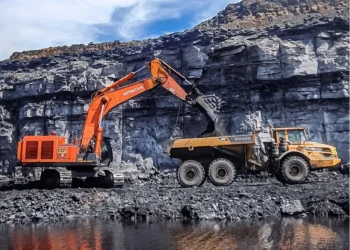
It would not be able to win a veto over decisions made on privately held land – such as a mine being dug – or seek a share of profits from private firms that make money off the land, such as tree harvesting.
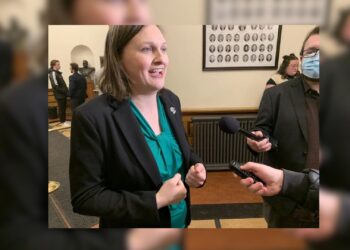
“Justice Drapeau has clarified the issue going forward with this particular litigation, regarding declarations of Aboriginal title on Crown land and land held by private interests,” O’Byrne said.
“That’s a good thing because it provides some certainty. It will be a disappointment for the First Nations, who argued for a much more expansive interpretation of what Aboriginal title meant and that private interests could be held responsible to whatever degree for the fact that the land had moved from government to private interests over the decades.”
In the decision, Drapeau, a former chief judge of New Brunswick, said reconciliation between Indigenous people and the Crown, represented by the provincial and federal governments, wouldn’t happen by taking away people’s private property.
In law, people who own private property are called “fee simple” owners.
“In my view, remedial justice favours compensation from the Crown over dispossession of private fee simple owners in all cases,” Justice Drapeau wrote, adding it was especially the case when the land had passed through numerous “innocent hands” through the years.
But that’s little consolation for the Wolastoqey Nation because most of their traditional territory is now in private hands, not publicly owned.
It’s different in much of Western Canada, particularly British Columbia, where three First Nations have separately launched successfully Aboriginal title claims in different regions. Out west, there is far more Crown land than privately held property.
The nation’s lawyers pursued a legal strategy that went after the land of what they called “industrial defendants,” seven large landowners, including NB Power and several timber firms. They labelled other private property owners, such as homeowners and smaller businesses, “strangers to the claim,” whom they insisted wouldn’t be affected by the title claim.
The former Progressive Conservative government of Blaine Higgs took issue with that idea and said all New Brunswick private property owners were under threat. Spearheaded by former attorney general Ted Flemming, it mounted a spirited defence against the lawsuit, a tactic that was abandoned last year by the incoming Holt Liberal government, which stated they’d prefer to settle the matter outside of court.
Such title cases can take up to 20 years or more and cost millions of dollars in legal fees.
“It’s a lengthy and complex decision, and we will take our time to review it,” said Rob McKee, the attorney general and justice minister, in an interview Thursday.
“But our position remains the same. Our hope is to get to the negotiating table, because that’s where the courts say is the best place to be, for reconciliation and rebuilding our relationships with First Nations. So, I hope this is a turning point in this process and we can get to the negotiating table.”
Patricia Bernard, the chief of Madawaska First Nation beside Edmundston, said she wasn’t surprised by the ruling.
“We’re disappointed,” she told Brunswick News. “We still need to comb through it and talk to our lawyers before we decide what to do.”
However, she said the decision by Drapeau and fellow justices Kathleen Quigg and Brad Green didn’t match a recent decision at the British Columbia Supreme Court.
The Cowichan First Nation was successful in having Aboriginal title declared for a portion of the lower Fraser River and a part of the City of Richmond, directly affecting about 150 property owners.
“This decision so totally contradicts the Cowichan decision,” said Bernard, who is also a lawyer. “We now have two provincial court decisions that are so at odds with each other.”
She said the chiefs still had to talk about the ruling, but it was her bet they’d seek leave to appeal to the Supreme Court of Canada. They have 60 days to make that decision.
“We’re going to want to set good precedence, and I’d say a national precedence.”
Within minutes of that interview, the Wolastoqey Nation posted a message on its webpage.
“The Wolastoqey Nation is deeply disappointed by this decision, including its mischaracterization of our claim and its interpretation of the decision being appealed from,” it stated. “We have instructed our lawyers to seek leave to appeal to the Supreme Court of Canada.”
Glen Savoie, the interim leader of the Progressive Conservative opposition, rightly predicted earlier in the day the Wolastoqey Nation would appeal.
“If the decision is appealed, does the government work continue when they’re uncertain of what the potential appeal might be, or do they stand pat until they get the results of the possible appeal? That’s a question for government.”
Savoie said the different legal approach between the Tory government he had served in, and the Holt government, was not important anymore.
“For me, it’s less about the approach than having the clarity we have now as a result of the judges’ decision. Back in our time, there wasn’t clarity as to what this applied to. Was it all lands and territories defined within the Wolastoqey claim? Did it include Crown land and private land? Did it include homeowners? Today, we seem to have a different appreciation for what that title claim will be, unless, of course it’s appealed and overturned.”
David Coon, leader of the small opposition Green party, said the ball was now in the Liberal government’s court.
“What are they doing right now? Things have gone silent, and the matter of title is still before the courts. The Liberals had made a commitment to move away from courts and toward negotiations,” he said. “This government needs to say what their plans are.”