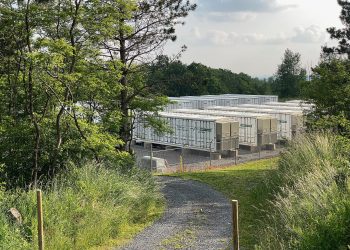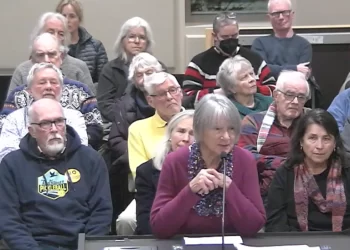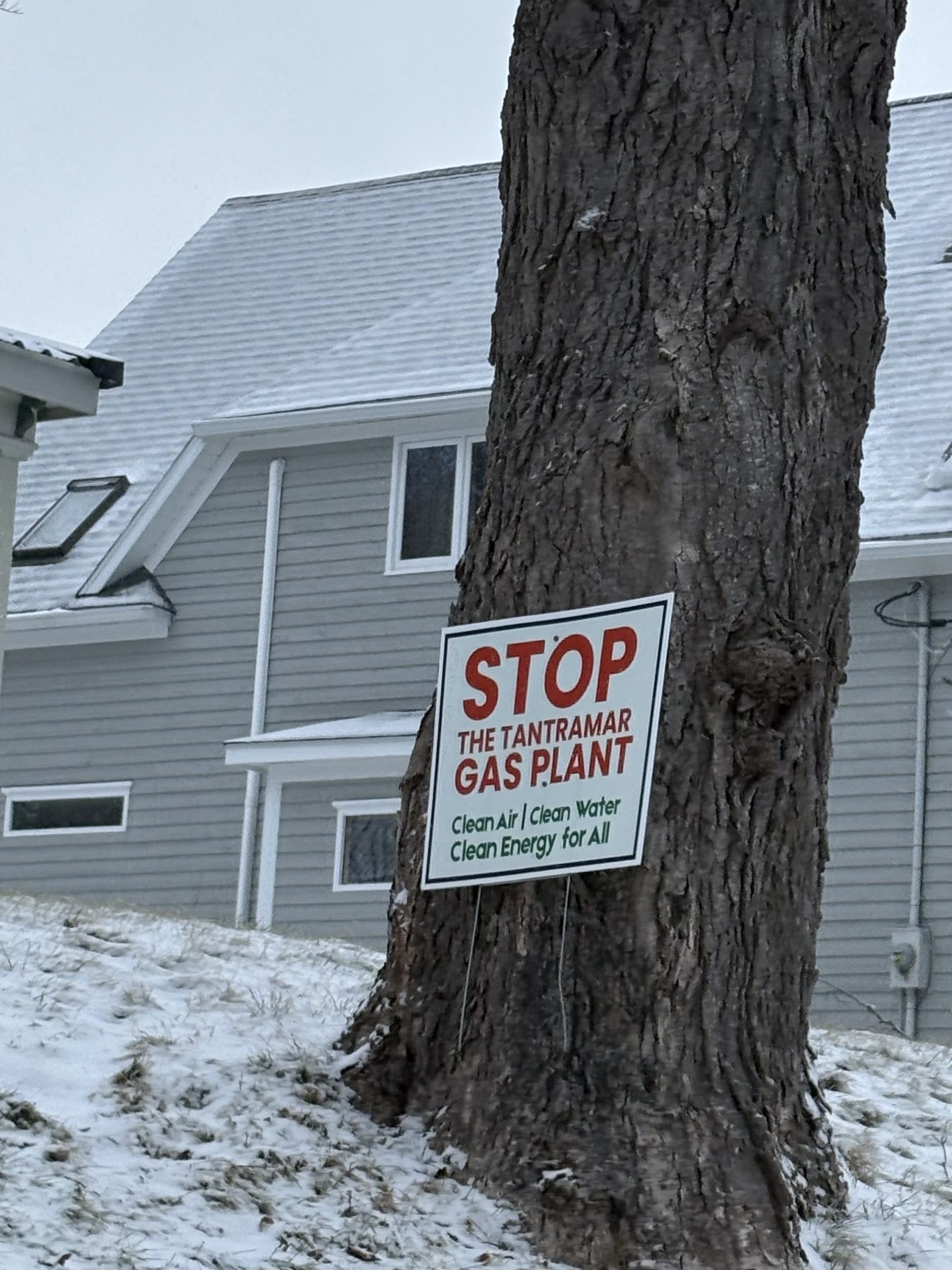
I add my voice to those of the people of the Tantramar region and the many citizen groups who are calling on the provincial government to put an end to the gas and diesel power plant project proposed by American developer PROENERGY in Centre Village.
We urge the government to cancel this project because it jeopardizes our health, water, environment and economy when battery storage and energy efficiency are already cleaner, safer and more affordable options than new fossil fuel methods.
To meet the growing demand for electricity, wind and solar energy can be further developed, hydroelectricity can be sourced from Quebec, and we can return to the working table to make the Atlantic Loop a reality.
This is necessary to create a net-zero electricity grid by 2035 to protect the health and well-being of New Brunswickers in a sustainable way. It is a question of equity and social justice.
These solutions are opposed to the vision presented by Michelle Robichaud, President of the Atlantica Centre for Energy (see Mon Opinion, Acadie Nouvelle, December 3, 2025) that the gas turbine project is a plus for New Brunswick because it feeds the economy and is the most cost-effective solution.
Rather, opponents are saying that this project is a minus not only for New Brunswick but also for Canada and the planet because it delays the energy transition, leads to higher costs, deteriorates health, and worsens climate change and its disastrous impact on the health and safety of the entire world. In doing so, our province is not doing its fair share in building our country that requires investments in the health and resilience of our people.
Health and the economy cannot be dissociated. An economy based on fossil fuels cannot be the most cost-effective solution because the health of individuals depends on a healthy environment and an economy with a low carbon footprint.
If the provincial government is serious about improving health care, it needs to get serious about the environment and the climate crisis. To this end, Premier Holt and her office can draw inspiration from health care professionals to make the right decisions.
When a person has a health problem, the health professional chooses the best possible treatment or care with the least possible adverse effects, maintains open communication with the person being treated throughout his or her scientific process and, in accordance with a universal code of ethics, obtains the person’s consent at each stage of the process.
Administering a treatment or care without the informed consent of the person being cared for, or that would be harmful to the person’s health, would be an error that would render the health professional liable to legal action.
What does that mean in terms of government action? This means that the government must cancel the gas plant project because it is harmful to the health of people and the environment and there is no social consent. Better options must be offered to the population.
Similarly, it means that the government must abide by the environmental code of ethics. On July 23, 2025, the International Court of Justice confirmed that governments have a legal obligation to protect people and ecosystems from the threat of climate change, and that the production and consumption of fossil fuels can be an illegal act at international level.
To make the right decision, the government must make a comprehensive assessment of the environmental and health impact of the gas-fired power plant and must answer, among others, the following questions.
First, air pollution from the combustion of natural gas is linked to heart and lung disease, cancer, and many other diseases, and is responsible for at least 17,400 premature deaths per year in Canada, according to 2018 estimates by Health Canada. People who live near the future power plant are more at risk. Should we allow the gas industry to increase these statistics and risk being part of them?
Second, according to the project’s environmental impact assessment, the plant could emit as much as 900,000 tons of greenhouse gases per year for 25 years, which would delay the energy transition and worsen climate change. Every year, according to the World Health Organization, environmental factors take the lives of about 13 million people. Fossil fuels are killing us. Should we allow the gas industry to continue killing people?
Third, according to proponent’s environmental impact assessment, the plant could withdraw about 7 million litres of groundwater each day, which could lower nearby wells, dry up wetlands and reduce waterways. And this is when seven of the nine planetary boundaries, the invisible lines that keep the Earth in balance, have been crossed, and one of the limits crossed reveals that we have drawn on freshwater reserves faster than they are renewed. Water is a vital substance. Should we allow the gas industry to take disproportionate amounts of groundwater for a plant that we do not need?
The answer to these questions justifies the cancellation of the gas-fired power plant project and supports the accelerated development of renewable energies.
Health is non-negotiable. I am confident that the government will make the right decision for New Brunswickers today and for future generations.
Odette Landry is a resident of Dieppe and a retired nurse.
A French version of this commentary was first published in Acadie Nouvelle on December 30, 2025.