

Energy poverty in New Brunswick is deepening, just as NB Power is heading into hearings to ask for another big hike to people’s electricity bills, warns an advocacy group.
The Human Development Council has released its annual energy poverty report just ahead of the public utility’s general rate application hearings that begin in Fredericton on Monday.
“Even though electricity rates remain among the lowest in Canada, incomes are also among the lowest, and they are not keeping pace with rising energy costs,” states the report, written by council researchers Heather Atcheson and Liam Fisher.
“As a result, many New Brunswickers are unable to afford essential needs, from heating to running medical devices, and are pushed into arrears or face the risk of disconnection.”
NB Power is seeking a 4.75 per cent increase to the rates of its more than 400,000 customers, both residential and commercial. It is a jump much higher than inflation and following three years of successive rate hikes that totalled 23 per cent — increases that have led to an outcry from the public and businesses alike.
If granted, the latest hike would tack on $10.90 a month to the average household bill, or a little more than $130 a year.
Energy poverty
The regulator overseeing the hearings – the New Brunswick Energy & Utilities Board – must examine thousands of pages of evidence filed by NB Power and listen to testimony from its executives, who will also be formally questioned by intervenors such as the Human Development Council during hearings in Fredericton.
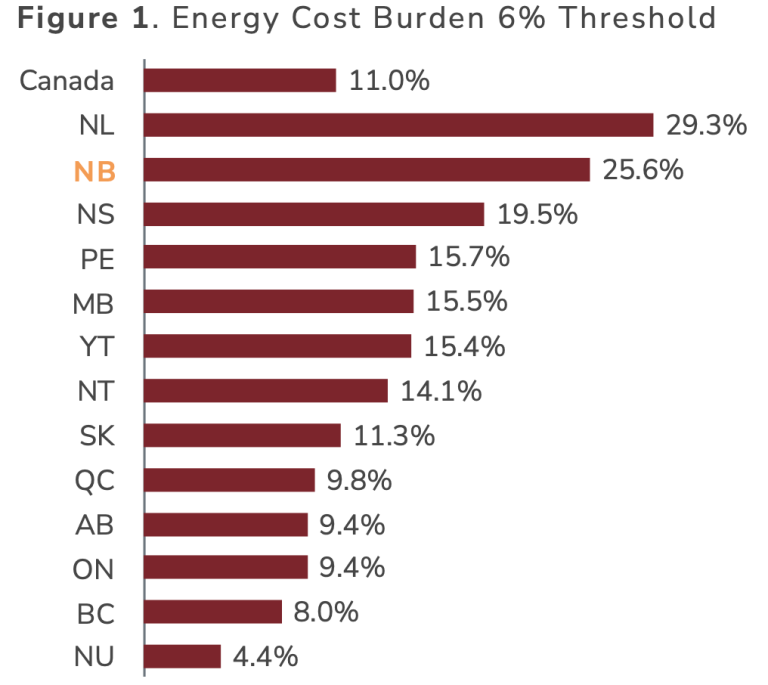
The council relies on a formula to calculate how many people in the province are “energy poor,” widely used by researchers and advocacy organizations across Canada. Energy poverty is defined as households spending 6 per cent or more of their after-tax income on home heating.
By the council’s measure, one in four New Brunswick households (26 per cent) that rely only on electricity for heating, spend more than 6 per cent of their income on energy – the second-highest rate in Canada. Only Newfoundland and Labrador is worse at 29 per cent, the Canadian average is 11 per cent less than half of New Brunswick’s energy poverty rate.
It’s a problem that’s been getting worse. Taxfiler data shows that the average increase in family income in New Brunswick has been about 3 per cent annually from 2015 to 2023, the latest year for which data is available. NB Power rate hikes have far outstripped those increases.
Strictly speaking, the Energy & Utilities Board cannot legally do anything to help poor people on their own. It can advise the provincial government about policy concerns, but its primary duty is to ensure NB Power, a monopoly electricity provider, is doing everything it can to keep rates affordable for everyone, without jeopardizing reliability or safety.
Affordability program
The council has been demanding that the provincial government create a permanent low-income electricity affordability program, which so far has fallen on deaf ears.
The Holt Liberal government says it provided relief to all of NB Power’s residential customers by providing a 10 per cent rebate on bills, a move the opposition Green party criticized for helping some of the richest customers, such as upper-income households that have the biggest houses and often use the most electricity.
“Payment-related distress is now a permanent feature of the electricity system,” the researchers noted. “The introduction of a winter disconnection moratorium is an important step, but it does not resolve the structural affordability gap.”
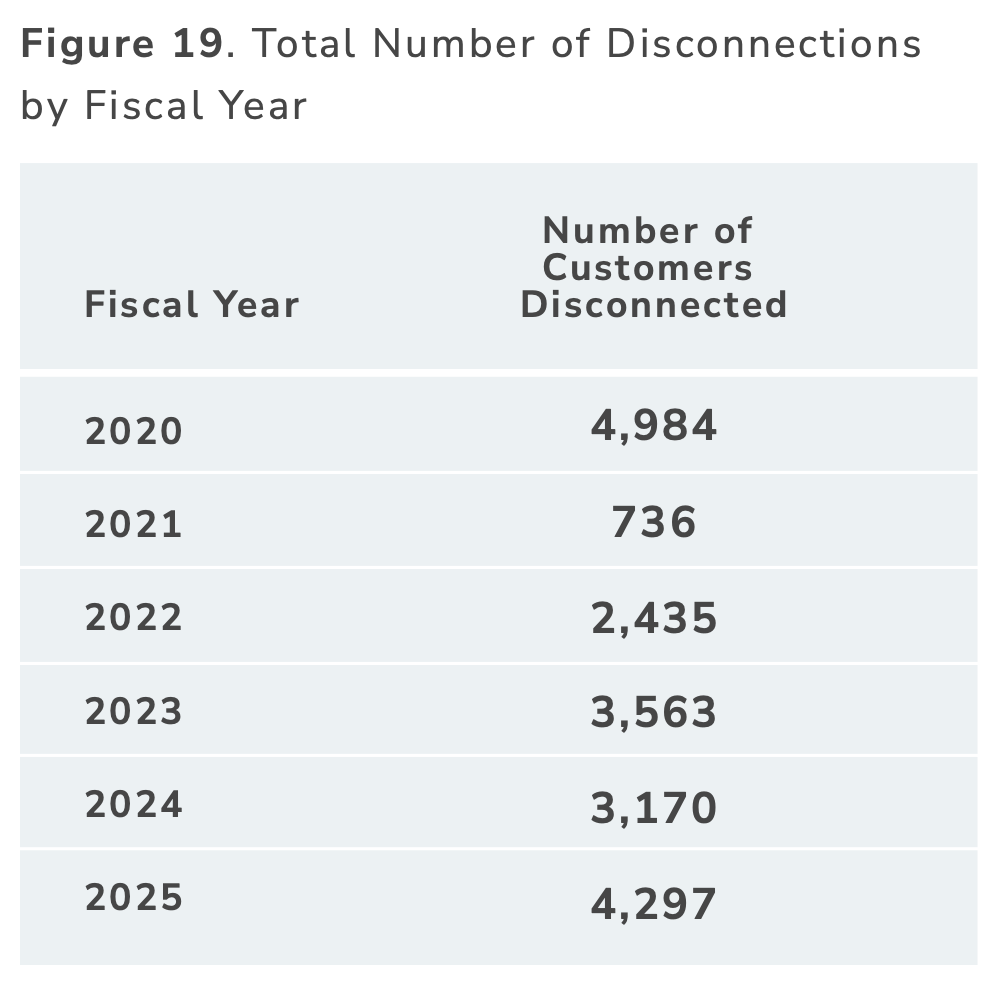
The report notes that one in seven of NB Power’s customers are behind on their bill payments each month. The Crown corporation disconnected 4,297 customers in the fiscal year 2025 alone, typically after arrears reached levels that were impossible for low-income households to pay, the researchers said.
In March 2025 the average amount owing at the time of disconnection was $1,159.
Interim rate hike on April 1st?
NB Power says it has no choice but to ask for a higher rate.
“Aging infrastructure, an increased demand for electricity and stronger weather systems due to climate change mean rate increases continue to be necessary,” it states about the general rate application.
“As a cost-of-service utility, we only charge what we need to cover the cost of delivering electricity to New Brunswickers. We go to great lengths to ensure New Brunswickers pay the lowest electricity rates possible, and we look at every opportunity we can to reduce our own costs and increase our internal efficiencies before we raise rates.”
The decision on rates is expected to take several weeks, if not months. Recently, in a special, half-day hearing, NB Power asked the regulator to approve an interim rate hike before a final decision is made, warning that it needed the money as of April 1 or risk hurting its finances over the long term. However, the board has since rejected that request.
Still, the council warns that energy poverty affects “everything from respiratory illness to household food security. Reducing it will improve quality of life and strengthen household financial stability,” it states.
“New Brunswick must implement a program, such as a low-income electricity rebate or a percentage-of-income payment plan, that ensures bills are affordable based on what people can actually pay.”

![Amid push for ‘nation-building projects,’ critics warn of ecological devastation [video]](https://nbmediacoop.org/wp-content/uploads/2026/10/MineBabyMineSept242026-2-120x86.jpg)

![University security closely monitored pro-Palestine activists, documents show [video]](https://nbmediacoop.org/wp-content/uploads/2024/11/20231129_131826-120x86.jpg)
