The Canadian Labour Congress made a historic decision at its recent convention in Winnipeg to cut ties with the Israeli General Federation of Labour, an organization widely known as Histadrut.
Palestine solidarity activists were able to pass that resolution even though CLC leadership reportedly “pushed aside” a stronger motion that would have declared all trade with Israel as hot cargo.
It’s part of a larger, ongoing campaign that also involved a recent public meeting in Saint John.
The CLC is the largest labour organization in Canada, bringing together dozens of unions such as the Canadian Union of Public Employees, Public Service Alliance of Canada, and the United Steelworkers, representing a total of three million workers.
By passing the resolution to cut ties with Histadrut, the CLC joined a number of unions in South Africa, the UK, Norway and Ireland that made similar decisions in the past.
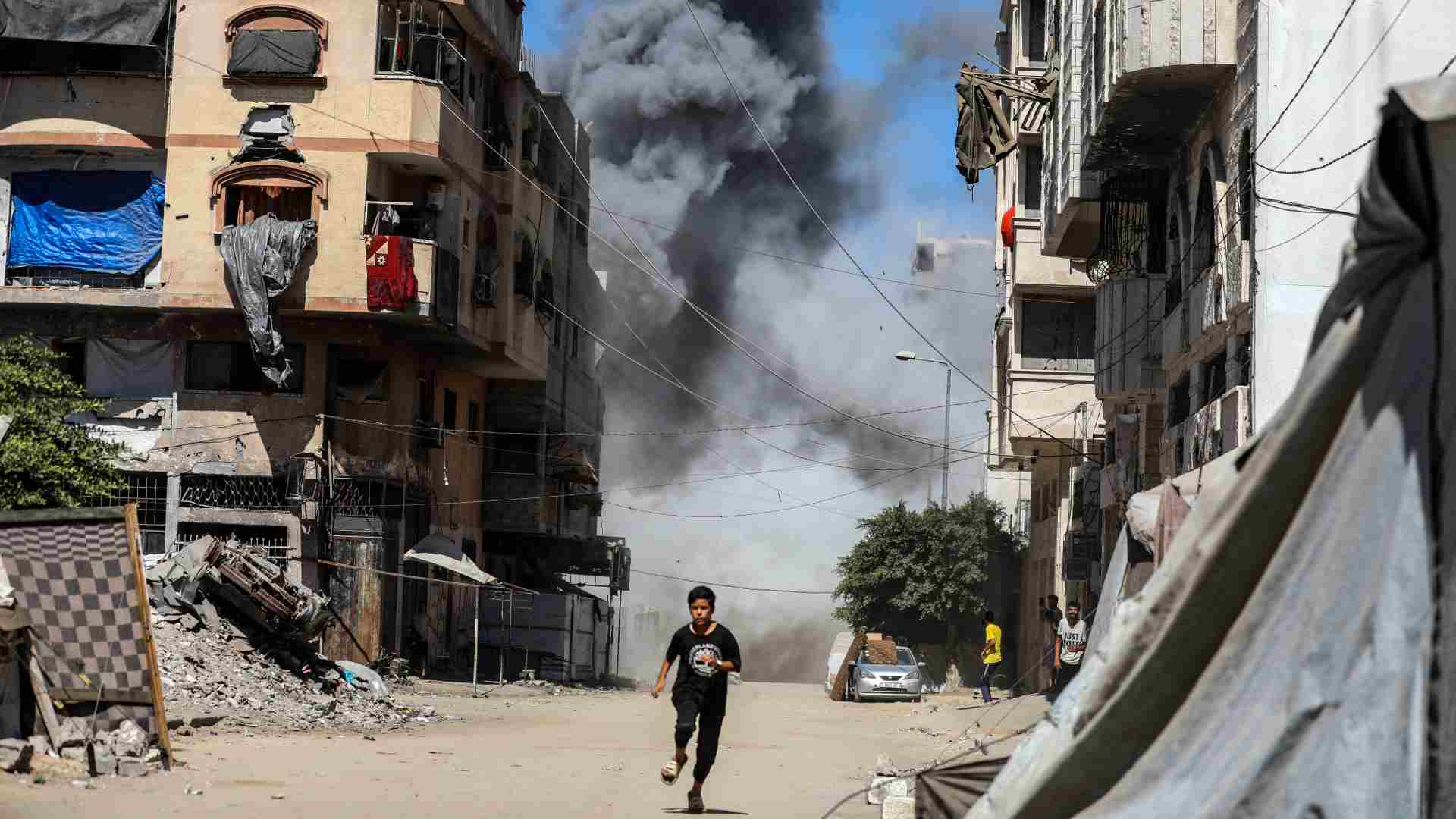
In the ongoing genocide in Gaza, the Histadrut — which has about 800,000 members and deep links with the Israeli military — has supported the war effort and bombing campaign.
During an official visit to weapon factories at the end of 2023, Histadrut’s elected senior leader, Arnon Bar-David, showed journalists a missile on which he reportedly wrote: “Greetings from the Histadrut and the workers of Israel!”
That’s the kind of language you would use in a letter of support or congratulations, said Kevin Levangie, a member of the Labour for Palestine national steering committee who attended the CLC convention.
“And this is instead being written on a bomb, which is going to be used to kill Palestinians,” he said. He called it “horrifying.”
Labour for Palestine is a group of Canadian labour and trade unionists that focus on educating and mobilizing union members on the issue of Palestine and international solidarity.
According to a 2025 report prepared by Kevin Skerrett for Labour for Palestine, “the Histadrut was more a complex of employer enterprises and an administrative body for a pool of ethno-nationally defined – i.e. Jewish, immigrant/colonist – labour than it ever was a ‘union’ in any conventional sense.”
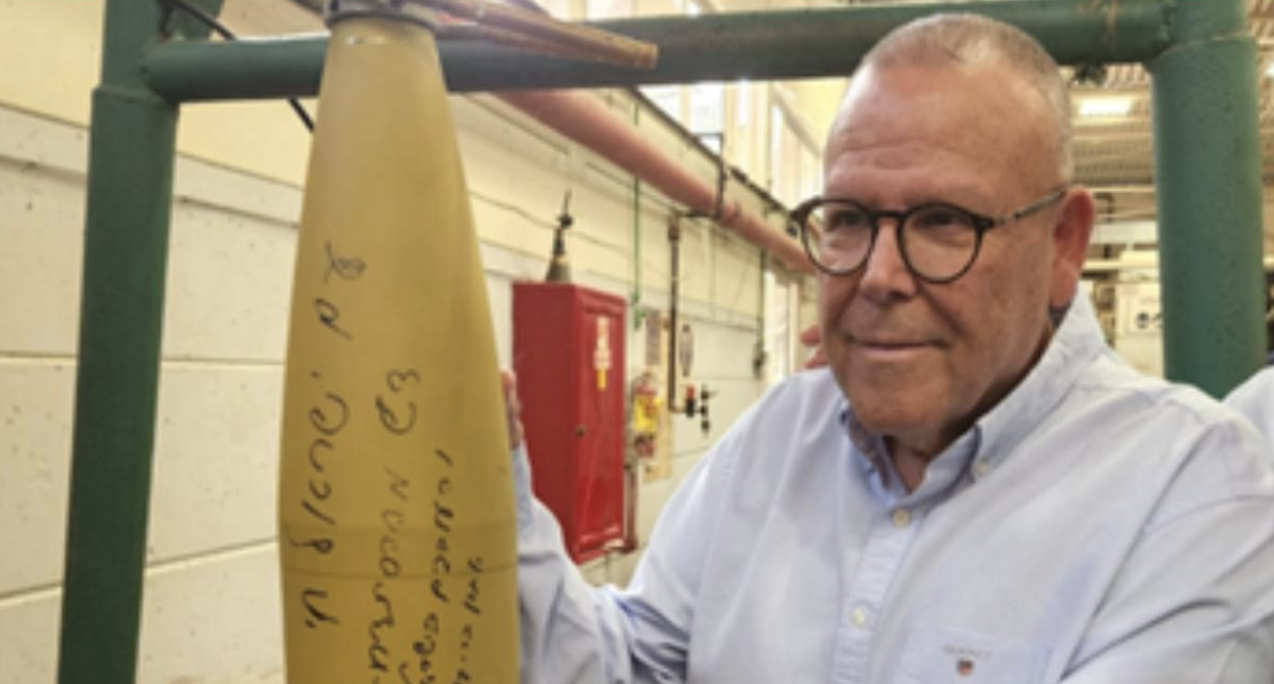
Skerrett’s report featured the photo of Bar-David as he signed the missile.
“I think that that image in particular, framed in the larger report, was extremely helpful in helping people wrap their head around the fact that the Histadrut is not like the CLC,” Levangie said. “The Histadrut is not like COSATU in South Africa. It’s not like a normal trade union confederation.”
Since its inception in 1920, when Palestine was still under British colonial rule, the Histadrut has played a role in building Jewish colonies while suppressing the Arab Palestinian population with a Zionist paramilitary force, the Haganah, that would later become the Israeli Defense Force.
As stated on its website, “the Histadrut was the driving force behind the establishment of the State of Israel. The Histadrut founded and established economic, financial, cultural, sports, and industrial institutions that would enable the new state to emerge.”
Campaign against hot cargo
The call to cut ties with Histadrut is part of Labour for Palestine’s Hot Cargo Kills Campaign, launched in the summer of 2025.
Hot cargo is a term in the labour movement for goods and services that are unethical or potentially harmful to other workers, and that unions therefore boycott and refuse to handle.
Examples closest to home include Saint John longshore workers’ refusal to ship heavy water to Argentina under military rule in 1979, or arms shipment to Iraq during the U.S. invasion in 2003.
In 1999, the CLC also joined the international labour movement to declare shipments to Indonesia as hot cargo, which helped East Timor win its independence after decades of military occupation.
The end of apartheid in South Africa in the 1990s was also brought about, in part, by decades of pressure from international workers’ solidarity, which later inspired the ongoing Boycott Divestment and Sanctions movement against Israeli apartheid.
The New Brunswick Federation of Labour was the first labour federation in Canada to endorse the hot cargo campaign back in May 2025, although that resolution was limited to arms shipment.
Building off the success of that resolution, more expansive resolutions were later adopted by labour federations in Nova Scotia, Newfoundland and Labrador, and Ontario.
Those resolutions called for cutting ties with the Histadrut and employed a broader definition of hot cargo.

Public meeting in Saint John
During a “hot cargo town hall” meeting in Saint John in April, Labour for Palestine activist Chris Smith spoke about the 2005 call from Palestinian civil society for a global BDS campaign.
He described it as an effective nonviolent way to compel the State of Israel to abide by international law and to recognize Palestinian people’s rights to self-determination.
Goals of the campaign include ending Israel’s blockade on the Gaza Strip and its “occupation and colonization of all Arab lands,” and dismantling the West Bank separation barrier.
Other goals include freedom for all Palestinian and Arab political prisoners, recognition of the right to full equality for Palestinian and Arab citizens of Israel, and fulfillment of the right of return for Palestinian refugees, as stipulated in UN General Assembly Resolution 194.
Andri Cahyadi, a steering committee member of Labour for Palestine Menahkwesk/Saint John, said the town hall event was meant to raise awareness about the concept of hot cargo ahead of the CLC convention.
Competing resolutions
Several labour organizations put forward resolutions for the convention based on calls from Labour for Palestine, writes Judy Haiven, a Halifax-based member of Independent Jewish Voices and retired professor specializing in labour relations.

That resolution — which included calls to declare all trade with Israel as “hot cargo”; to endorse the Arms Embargo Now campaign; and to cut ties with Histadrut — “had more submissions than any previous one in the history of the CLC,” she writes.
Those resolutions came from “12 union organizations, including the Canadian Union of Postal Workers, the National Union of Public General Employees, the Ontario Federation of Labour, several union locals and four labour councils,” she writes.
Those were combined into a single resolution at the convention. However, the CLC leadership “pushed aside” that resolution in favour of a “watered down version,” she explained.
Levangie, who is also regional education and organization officer for the Atlantic region with the Canadian Union of Postal Workers, called the CLC’s proposal a “weak resolution” that “didn’t really require any specific action to be taken.”
Labour for Palestine ultimately managed to win support to amend that watered-down CLC resolution by adding the clause to cut ties with Histadrut, a partial victory for the Palestinian cause in the Canadian labour movement.
What is next for Labour for Palestine? “That’s what we’re all wondering,” Levangie said. He believes the important thing to keep in mind is that such resolutions represent “just one more tool.”
He renewed calls for workers to organize the rank-and-file, to advance the hot cargo agenda across the country.
Data Brainanta is a recent newcomer to Turtle Island from Indonesia who writes for the NB Media Co-op.


![University security closely monitored pro-Palestine activists, documents show [video]](https://nbmediacoop.org/wp-content/uploads/2024/11/20231129_131826-350x250.jpg)


![Is a Moncton company helping to build jet fighters bombing Gaza? [video]](https://nbmediacoop.org/wp-content/uploads/2024/06/ApexMay192024-120x86.jpg)