October is sustainability month at many colleges and universities. It is a time when students create welcoming spaces to explore the intersections of daily life and environmental responsibility. Students and community members leave such spaces feeling inspired to take meaningful steps towards sustainability.
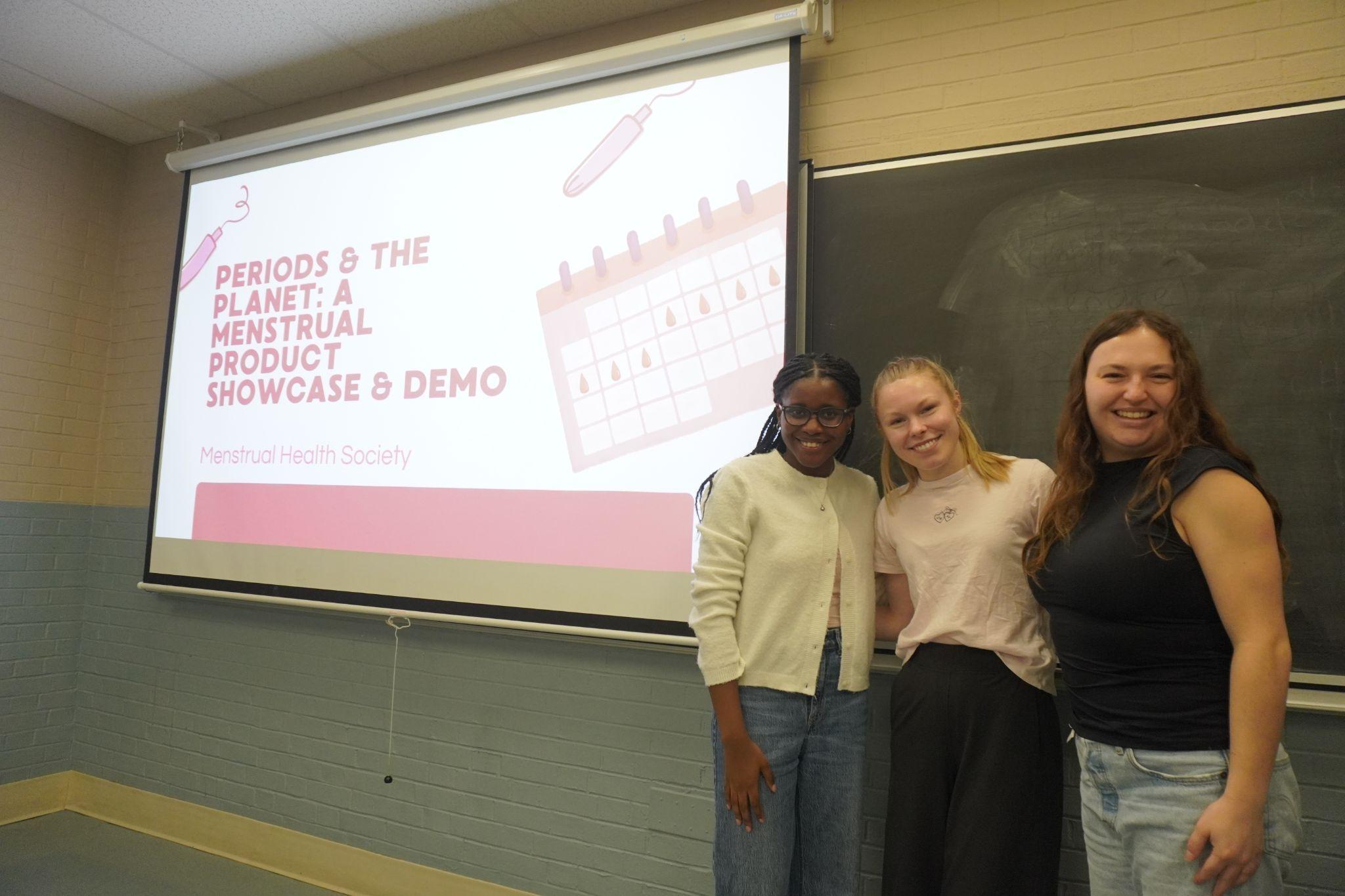
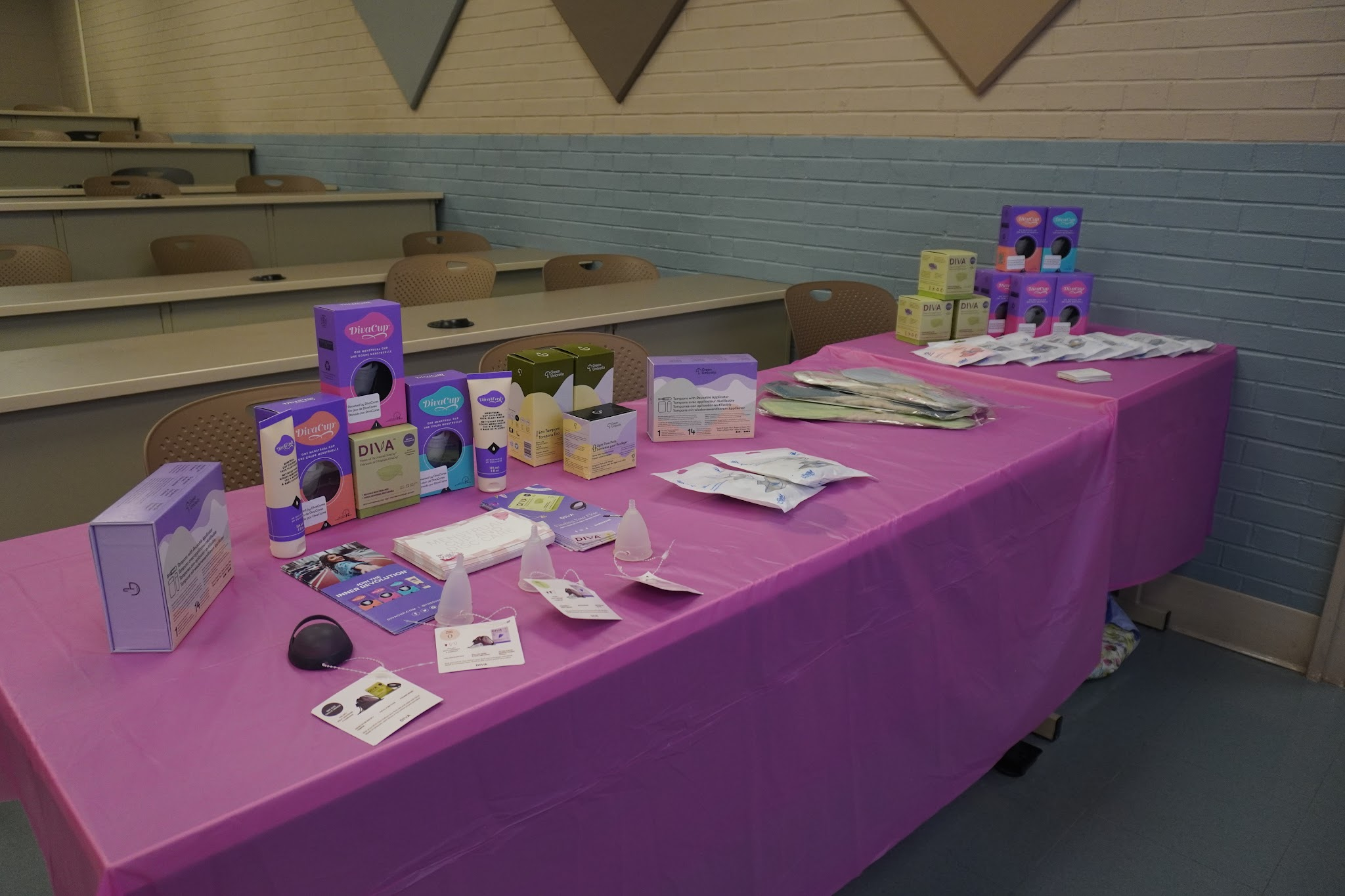
On October 30, the University of New Brunswick Menstrual Health Society showcased the different types of eco-friendly menstrual products, demonstrating how to use and clean them. They also discussed the environmental impacts of menstruation.
Menstrual Health Society Sustainability Coordinator Opeoluwa Marion Ojo Abegunde organized the event with support from co-chairs Cadence Steeves and Jessica Tribeau.
“I think there just needs to be more promotion of menstrual health equity,” says Abegunde, “the way the world is right now with pollution and a lot of environmental issues… I thought it would be nice alongside the Menstrual Health Society to focus on the sustainability aspects in menstrual health and how that connects.”
Menstrual equity refers to equal access to period products, as well as accessibility to education regarding sexual and reproductive rights, and the proper sanitation facilities for all people who menstruate. By framing the workshop around equity, the organizers highlighted that true sustainability can’t be achieved without addressing the financial, structural, and social barriers of consumers.
Steeves shared her motivations and what made her so passionate about sustainability in menstrual health.
“I’ve been part of this society since first year, it’s something I’ve always been quite passionate about… when I was a teenager actually I discovered menstrual cups and they totally changed my life and I just care a lot about sustainability, as well as making sure everyone has access to the products that suits them,” said Steeves.
The discussion turned towards how plastic packaging in period care compromises environmental and personal health and what it takes to shift away from it.
Steeves pointed to institutional and financial support as key driving forces for change. “We need to be more open… Giving people the chance to not have that huge upfront cost would really help in moving away from plastic,” said Steeves.
Tribeau reinforced the importance of openness from an individual perspective, sharing that “as a person purchasing these products, it’s just being open to trying new things.”
Of course, barriers can make it difficult for students to adapt eco-friendly products in their monthly routine. While the cost is one of the main issues, the stigma around sustainability in menstrual health is another factor.
Tribeau pointed out that, “because we don’t have the information easily accessible to a lot of people … it’s not promoted as much as the generic pads and tampons that you just dispose of.”
Wrapping up the showcase, Abegunde left attendees with important considerations for choosing period products: environmental footprint, personal health, and individual resources like cost and access to laundry facilities.
Encouraging participants to evaluate the full lifecycle of what they use, Abegunde said, “It’s not one size fits all. What works for one person may not work for another.”
Karyll Pasion is a third-year University of New Brunswick student, majoring in Media Arts & Cultures, with a focus on film, and minoring in Gender & Women Studies. She seeks to explore reproductive health and feminist stories for the NB Media Co-op.