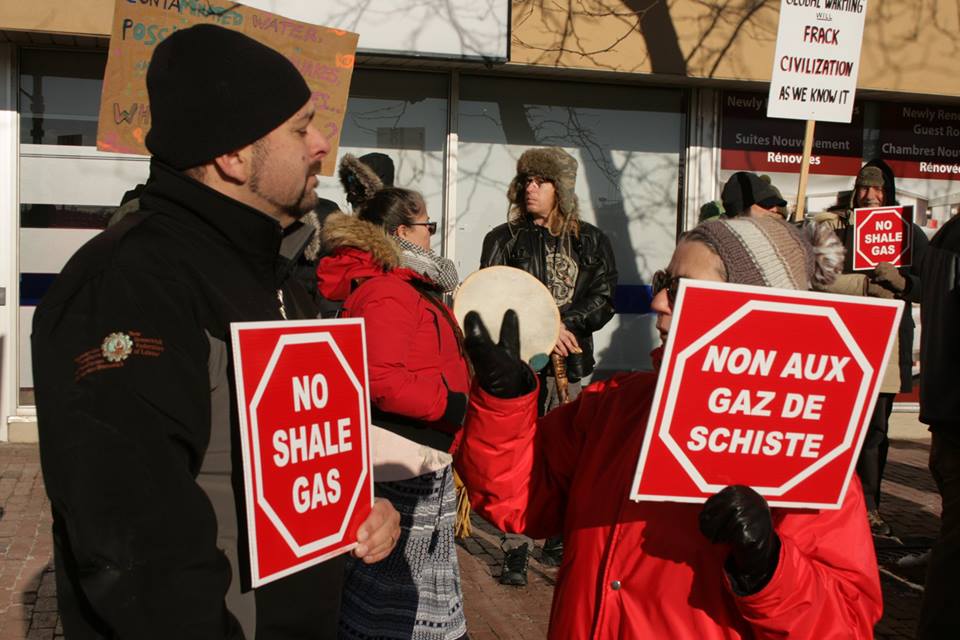
Canada is decommissioning a nuclear power plant for the first time, marking a new chapter in the country’s nuclear history. The decommissioning of Gentilly-1 in Bécancour, Quebec — on the St. Lawrence River in Wabanaki territory — is a milestone in the country’s reckoning with its radioactive legacy, setting a precedent that will influence how future projects are approached across Canada.
The implications extend far beyond Quebec. How Gentilly-1 is dismantled, how its waste is transported, and how oversight is conducted will set precedents for future decommissioning projects across the country.
For New Brunswick, these decisions will shape the expectations, policies, and protections in place when it comes time to decommission Point Lepreau — a process that will carry even higher stakes for this province.
The threat of radioactive waste on the move
Gentilly-1 recently entered its active dismantling phase, with the removal of remaining radioactive and structural components, including equipment, piping, cabling, and control panels from the service and turbine buildings.
Under the current dismantling plan, the resulting radioactive waste is expected to be transferred to Canadian Nuclear Laboratories at Chalk River, Ontario, for interim storage.
This planned transfer follows an earlier shipment of Gentilly-1 used fuel to Chalk River that occurred without publicity or demonstrated compliance with regulatory requirements.
Transporting nuclear waste is inherently dangerous because it involves moving materials that remain hazardous to human health and the environment for centuries to millennia. Even under ideal conditions, risks cannot be fully eliminated — accidents, mechanical failures, weather events, security threats, or human error can all result in the release or exposure of radioactive materials.
Unlike other hazardous goods, radioactive waste cannot simply be cleaned up with standard emergency response measures; contamination can render land unusable, water unsafe, and ecosystems damaged for generations. Every shipment is a high-stakes event, and the impacts of even a single failure could be irreversible for the communities and lands along the transport route.
These risks are compounded by the fact that current storage solutions for Gentilly-1 nuclear waste are only temporary. Neither Canada nor any country in the world has a permanent solution for radioactive waste — meaning the waste will eventually need to be moved again, effectively doubling both the risks and costs associated with its handling and transportation.
Bloc Québécois urges halt to radioactive waste shipments to Chalk River
On October 17, 2025, amid growing national debate over nuclear waste transport, the Bloc Québécois formally called on Federal Natural Resources Minister Tim Hodgson to immediately halt the transfer of radioactive materials from Gentilly-1 to the Chalk River Laboratories.
To reinforce their position, the Bloc Québécois has launched a petition allowing the public to voice their opposition to the project. It underscores the environmental risks of transporting radioactive waste and storing it so close to a major drinking water source, as well as the lack of meaningful consultation with Indigenous communities.
The Bloc’s petition also highlights a separate proposal for the Chalk River site: the construction of a nuclear waste landfill known as the Near Surface Disposal Facility (NSDF). This project also has become a major source of controversy. The Kebaowek First Nation, along with more than 140 municipalities in Quebec and Ontario, has voiced strong opposition to placing large volumes of radioactive waste near the Kichi Sibi (Ottawa River) and its tributaries.
Whistleblowers raise alarm over secretive transport practices
More than 60 groups, with the Passamaquoddy Nation among them, have endorsed a letter sent to the Prime Minister and key members of Cabinet on December 2, 2025, sounding the alarm about the federal government’s management of radioactive waste transport in Canada.
The signatories state that they are “blowing the whistle” on a practice that has remained largely hidden from public view: the movement of radioactive waste along public roads, bridges, and through First Nations territories without consultation, notification, or parliamentary oversight.
The letter focuses on Canadian Nuclear Laboratories’ decision to consolidate federally-owned radioactive waste at the Chalk River Laboratories site. The signatories emphasize that Chalk River is an unsuitable and inherently vulnerable location due to its proximity to the Ottawa River and its exposure to seismic activity.
In response to these escalating concerns, the signatories call for three concrete actions: an immediate cessation on shipments of radioactive waste to Chalk River; a full ban on the import of radioactive waste; and a strategic assessment under section 95 of the Impact Assessment Act to evaluate the cumulative and long-term risks of transporting radioactive waste on public highways.
Such an assessment, they argue, is essential to ensuring informed, democratic decision-making and to guiding future reviews of nuclear facilities, reactor decommissioning projects, and federal waste policies.
Canada’s radioactive waste crisis demands action
Canada urgently needs to halt the practice of transporting radioactive waste over public roads, through municipalities, across public bridges, and over Indigenous territories without meaningful consultation, public notification, or clear regulatory justification.
These shipments — often occurring quietly and without community awareness — pose risks that are collectively borne by the public while decisions are made by a small number of government and industry actors.
The lack of transparency erodes trust and fails to meet even the basic standards of democratic governance, environmental protection, or respect for Indigenous rights. Communities have the right to know when hazardous materials are moving through their homelands, and they deserve a real voice in determining whether and how such shipments occur.
The Age of Nuclear Waste is only beginning, and Canada is unprepared to manage the growing challenges of transporting, importing, and exporting radioactive materials.
As reactors age, decommissioning accelerates, and new nuclear projects emerge, waste shipments will only increase — but federal oversight remains fragmented, inconsistent, and insufficiently accountable to the public.
Without a coherent national policy grounded in precaution, transparency, and genuine consultation — especially with First Nations whose territories are routinely crossed — Canada risks locking in a legacy of poorly governed radioactive waste movements.
Canada must act now to establish responsible oversight and build a safer, more accountable framework before today’s shortcomings become tomorrow’s crises.
At times like these, we’re reminded that every chapter of Canada’s nuclear history carries lasting responsibilities: our nuclear past has left behind a trail of toxic legacy that no technology, no policy, and no promise can safely contain for the timescales required.
Mayara Gonçalves e Lima works with the Passamaquoddy Recognition Group Inc., focusing on nuclear energy. Their work combines environmental advocacy with efforts to ensure that the voice of the Passamaquoddy Nation is heard and respected in decisions that impact their land, waters, and future.

![Radioactivity and nuclear waste under scrutiny in Peskotomuhkati homeland [video]](https://nbmediacoop.org/wp-content/uploads/2025/10/EdwardsAkagiOct52025-1-350x250.jpg)