The Sunday, December 14, Telegraph-Journal article features Premier Susan Holt asserting there are “no alternatives” capable of meeting New Brunswick’s electricity needs by 2028. That statement is not only misleading — it risks locking our province into a long-term, outdated, “old school capacity” harmful decision that we can still avoid.
New Brunswickers want reliable power. That much is true. But they also want clean air, protected wetlands, safe drinking water, and a future that does not mortgage their children’s health and environment in the name of expediency. These goals are not mutually exclusive, and it is disingenuous to suggest that fossil-fuel peaker plants are the only path forward.
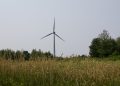
The claim that renewables cannot meet near-term demand ignores well-established facts. Wind, solar, and battery storage are not experimental technologies — they are widely deployed, rapidly scalable, and multiple times more energy-efficient than fossil fuel generation when losses from extraction, transport, and combustion are considered. Battery energy storage systems can be deployed faster than gas plants, respond instantaneously to peak demand, and do not require proximity to pipelines — the real reason Tantramar has been selected.
Suggesting that Scoudouc was not chosen for the proposed plant because of the presence of a pileated woodpecker raises an obvious and troubling question: does this now mean that all designated industrial sites must continuously survey for this species — and halt operations if one is found? Industrial sites are designated for a reason, through a rigorous, multi-layered provincial process intended to balance development with environmental protection and the public interest. The government’s sudden emphasis on a pileated woodpecker sighting raises concerns about the entire process. Environmental protection should be comprehensive and genuine — not selectively invoked when convenient. Wetlands, water tables, and human health deserve the same rigorous consideration.
In New Brunswick, industrial zoning is established through provincial legislation, municipal and rural planning frameworks, and environmental regulation. These designations are not arbitrary. They involve environmental impact assessments, public consultation, ministerial approvals, and clear definitions of what constitutes heavy industry. The purpose of this process is to ensure that industrial activity is directed to appropriate locations before projects are proposed, minimizing harm rather than reacting to it after the fact. This process has not been followed in the RIGS case.
The people of Tantramar, both residents and council, were blindsided, lied to, and are now being railroaded through a rush job that is irresponsible and lacks prudence on financial, environmental, and socio-economic levels.
If the province is now prepared to disregard those established designations — or selectively invoke wildlife presence to justify siting decisions — it invites a deeper question: can a wetland simply be reclassified as an industrial site without triggering a comprehensive Environmental Impact Assessment? If so, then the integrity of the entire planning and environmental review system is called into question.
When NB Power speaks of “peak demand,” the public deserves clarity. Peak demand refers to short, infrequent spikes — often measured in hours per year — not continuous base load. Building a large fossil fuel plant to address these brief peaks is like buying a semi-truck to do a bicycle’s job. Modern grid management, demand response programs, distributed renewables, and strategically located battery storage are precisely designed to address these challenges — and they do so without the long-term environmental and health costs.
Experts across North America agree: peaker plants are becoming obsolete. Jurisdictions far larger than New Brunswick are meeting peak demand using batteries paired with renewables, often at lower cost and with greater reliability. Yet the public is being told there is “no alternative,” while those of us opposing this project are in daily consultation with engineers, energy planners, and climate scientists who say plainly: this plant is oversized, unnecessary, and the wrong technology for both current and future needs. We should be past the point of experimenting with community and environmental health. Science and common sense say no to this project.
A lot of the information can be found at Peak Coalition – a coalition opposing peaker plant such as RIGS – trying to now fix the mistakes that have already been made.
The Premier’s comments on battery storage costs also rely on incomplete and misleading figures. Battery bids appeared non-competitive in NB Power’s evidence presented to the EUB — suggesting costs roughly 75 per cent higher than combustion turbines for meeting a 400-MW capacity target — but these estimates exclude critical factors, most notably energy arbitrage – (electricity is purchased when prices are low and sold/discharged when prices are high, significantly offsetting their cost over time). Even NB Power’s own Integrated Resource Plan reflects this reality, identifying battery storage as the first-choice option in most of its future expansion scenarios. Omitting these benefits presents a distorted comparison and undermines informed decision-making.
If the government claims to know “what New Brunswickers want,” it must ask: which New Brunswickers? Those who do not live within the science-proven 30-kilometre health impact zone of facilities like the proposed RIGS plant, whose wetlands, wells, and air remain unaffected? Across the United States, this same type of plant is routinely sited near low income communities with limited ability to be heard. Does the government truly see Tantramar that way — a region located within the Chignecto Isthmus with more than 25 environmental designations, many globally recognized, and known as an environmental and academic world leader?
Does the province have the right to protect some citizens while knowingly exposing others to disproportionate harm? The answer should trouble us all.
Outdated fossil infrastructure carries real, documented health risks — respiratory illness, cardiovascular disease, and environmental degradation that compounds over time. These are not abstract concerns. They are measurable, peer-reviewed realities. At a moment when climate impacts are accelerating — flooding, drought, heat stress — choosing technologies that increase emissions rather than curtail them is not prudent governance; it is willful neglect.
Wind, solar, and battery systems are available now. Batteries, in particular, could be installed quickly in industrial areas such as the Scoudouc Industrial Park without disturbing wetlands or wildlife habitats — and without needing a gas pipeline at all. That fact alone proves that the push for the Tantramar site is completely unnecessary.
The reality is this: Susan Holt and her office do not yet appear to have all the information required to make an informed decision on behalf of ALL New Brunswickers. The opposition, community members, and independent experts are offering evidence-based alternatives that deserve honest consideration. We are requesting them to listen.
We are at a crucial moment in our shared existence. The choices we make now will shape not only our grid but also our environment, our health, and our credibility as stewards of this province. There are alternatives. The only thing truly lacking is the political will to fully understand them — and the courage to choose better.
New Brunswick deserves nothing less.
Lisa Griffin is the Resource and Development Coordinator at the Atlantic Wildlife Institute.