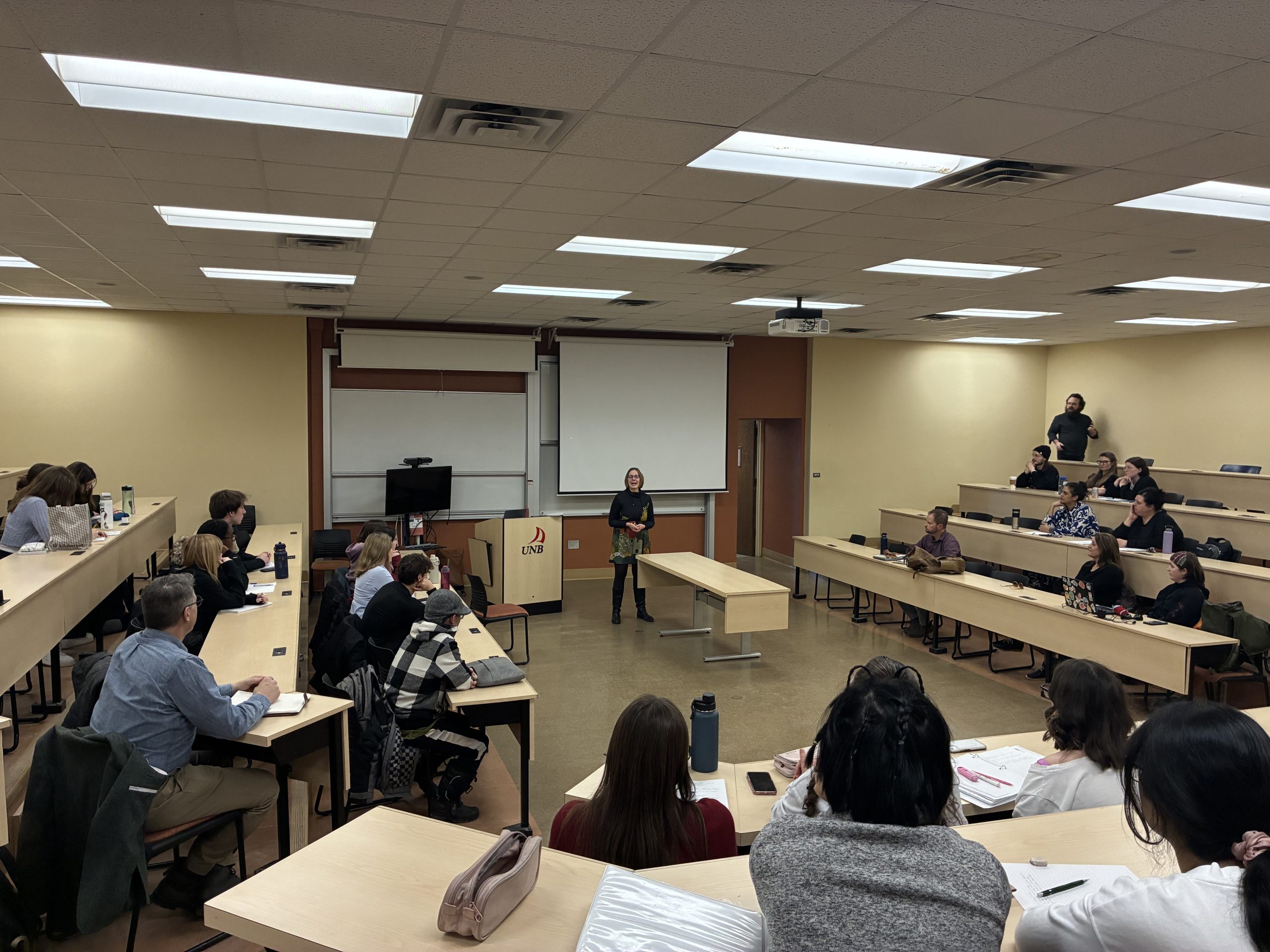
A historian shared painful accounts of childhoods in Halifax during the Second World War at the University of New Brunswick on Feb. 19.
The talk, titled “Bitter Tales: Remembering Wartime Childhoods in Halifax, Nova Scotia (1939-1945),” was hosted by the University of New Brunswick’s Gregg Centre for the Study of War and Society and the Atlantic Canada Studies Centre, chaired by Fred Burrill.
Presenter Barbara Lorenzkowski is a historian specialized in oral history of childhood and youth and co-director of Concordia University’s Centre for Oral History and Digital Storytelling. She co-edited Small Stories of War: Children, Youth, and Conflict in Canada and Beyond (2023) and is in the process of completing a book project on “The Children’s War,” an oral history project on children’s affective life-worlds in Atlantic Canada during WWII.

This project started in 2009; Lorenzkowski carried out a total of 40 interviews with older Haligonians. In her interviews, she found there were “three outlier” stories that were about broken homes. Lorenzkowski’s been trying to make sense of these stories since the conversations.
What she found were “emotional geographies of childhood,” personal stories enmeshed in the larger story of the Second World War. Her forty “interview partners” shared those stories with her.
Unlike the 37 other people, the three outlier stories described homes that provided “no emotional sustenance.” The people involved did not “feel at home, but out of place and on the margins.”
Indeed, Lorenzkowski knew that social workers had seen the neglect of children during the war years when there was tremendous growth in population and pressure on the housing stock. A lot of archives on the topic show disdain for “mothers [who] deserted or abandoned their children.”
Bill Taylor was one of the interviewees in this selection of outliers. Taylor’s father was often away as a chauffeur and his visits home were filled with anger and violence. Lorenzkowski considered Taylor’s narration as a “painful account of a family under strain.”

The family was evicted from their home for being unable to pay rent, showing “the fine line between poverty and destitution” at the time.
Taylor’s story was riddled with shame, about his poverty and his level of education; he only learned to read and write at the age of 25. Taylor told her about not being invited to other’s birthdays: “I was poor, I didn’t belong.” Children of this social class often had to start working very early.
Taylor had not told Lorenzkowski that he had authored the book Cracking the Theft Rings: The Story of a Cop at the Port of Halifax, a memoir of his life. What was surprising for the historian was that Taylor hadn’t dedicated much of the book to his childhood.
The second person interviewed was Larry Griffin, who reached out to Lorenzkowski to be interviewed. Griffin gave what Lorenzkowski termed, “a hesitant interview,” taking her around the city to teach her about the places.
Griffin had been given up for adoption by his biological mother: “unwanted, rejected and abandoned.” Griffin’s aunt eventually took him in but lost her husband soon after and had to move to a boarding house to manage it. This place was described by Griffin as “crammed quarters.”
As a child, Griffin recounted having a lot of independence, but it was a “a freedom born of parental neglect,” according to Lorenzkowski. At 14, when his mother remarried, Griffin went to live with her to look after his half-sisters.
Unfortunately for Griffin, his possibility in working for the army was cut short by the end of the war, May 4, 1945. However, he joined the navy and enjoyed companionship and freedom for the first time, eventually becoming captain. “Larry Griffin had found his home at sea,” Lorenzkowski said.

Marge Hemsworth was the third interviewee, someone who Lorenzkowski described “feeling profoundly out of place and out of touch with her environment.” She had lived in many different places around Halifax and had been in foster homes for long stretches.
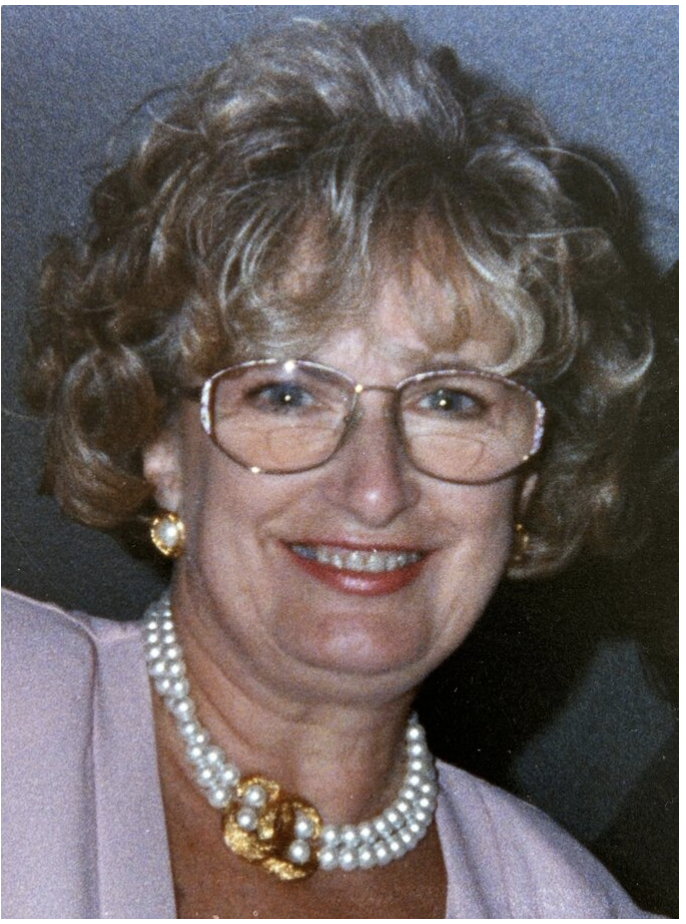
Like many of the other interviewees from the larger group, there were little recounting of hugs and cuddles, no “language of touch.” Hemsworth’s mother was a “party girl” and “very stern,” so Hemsworth was surrounded by others but very alone.
In her interview, Hemsworth also painted a picture of herself as self-efficient: “when upset, she learned to contain her tears.” About her childhood, she said “I never felt like a little child. I always felt like I was born old.”
Hemsworth found a surrogate family later, in the Halifax clock tower, where she stayed until adulthood. Her interview was punctuated with laughter, but “laughter in the face of absurdity,” to make life bearable, according to Lorenzkowski.
The stories of these three interviewees are coming of age tales that take place in adolescence, when they leave their awful childhoods. Their ideas of self are not rooted in childhood. However, according to Lorenzkowski, “the past remains etched into the present,” for all three interviewees.
Lorenzkowski’s talk followed an outstanding workshop, attended by Fredericton High School social studies students, to learn about taking and analyzing oral histories. Students were led through the analysis of a 25-minute interview and enthusiastically participated.
Sophie M. Lavoie is a member of the NB Media Co-op’s editorial board.
Correction: The original version erroneously credited the organization of the event to the Department of Historical Studies. This was amended at 11:52 a.m. on Feb. 5, 2026 to read the Gregg Centre for the Study of War and Society.