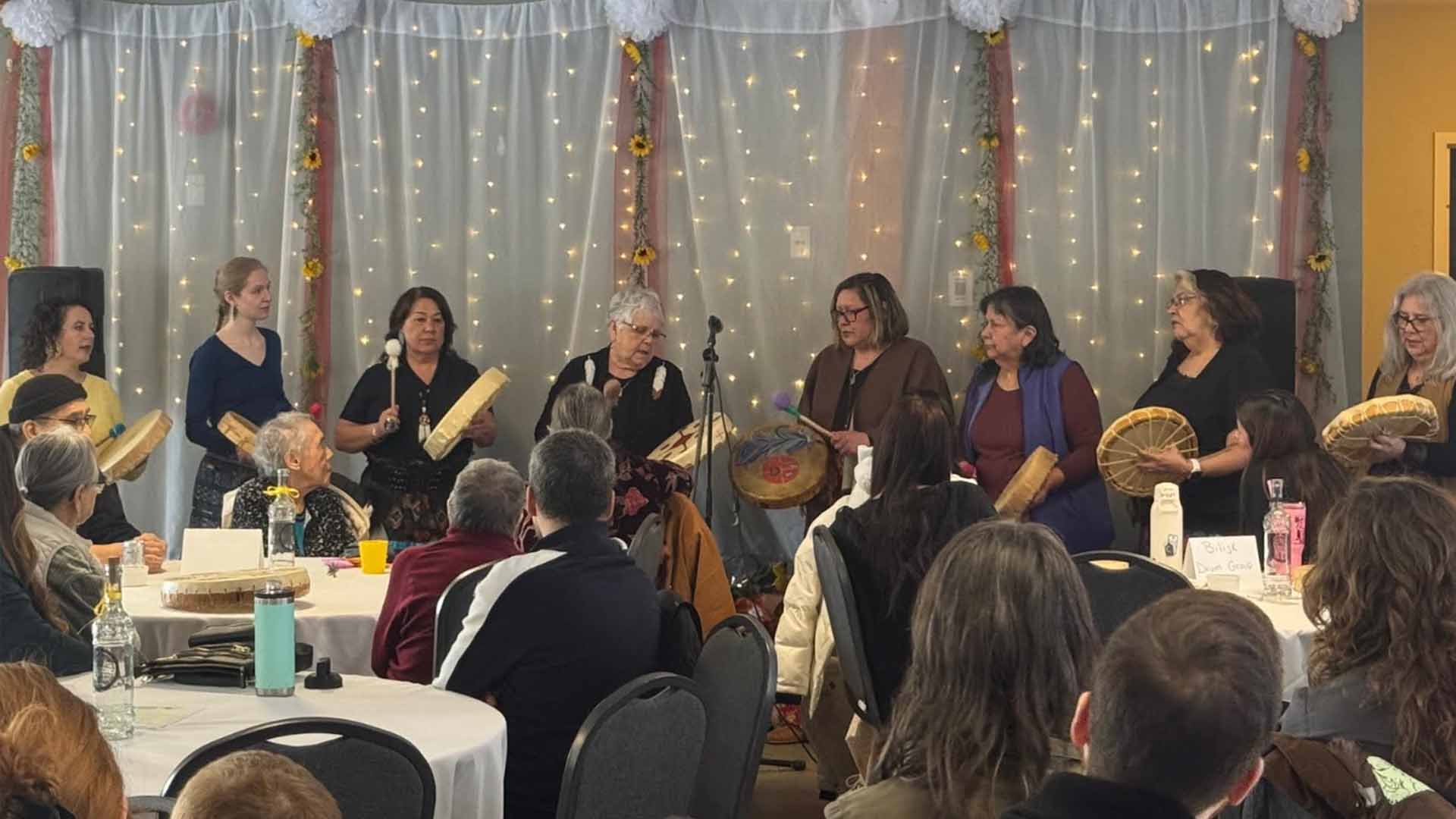
Kehkimin, the Wolastoqey immersion school located in Fredericton, has launched 13 new books for children as part of its efforts to revitalize the severely endangered language.
A book launch took place recently at Killarney Lodge, north of Fredericton. The event featured door prizes, welcome prayers, songs, drumming, and the introduction of the new books to the public for the first time.
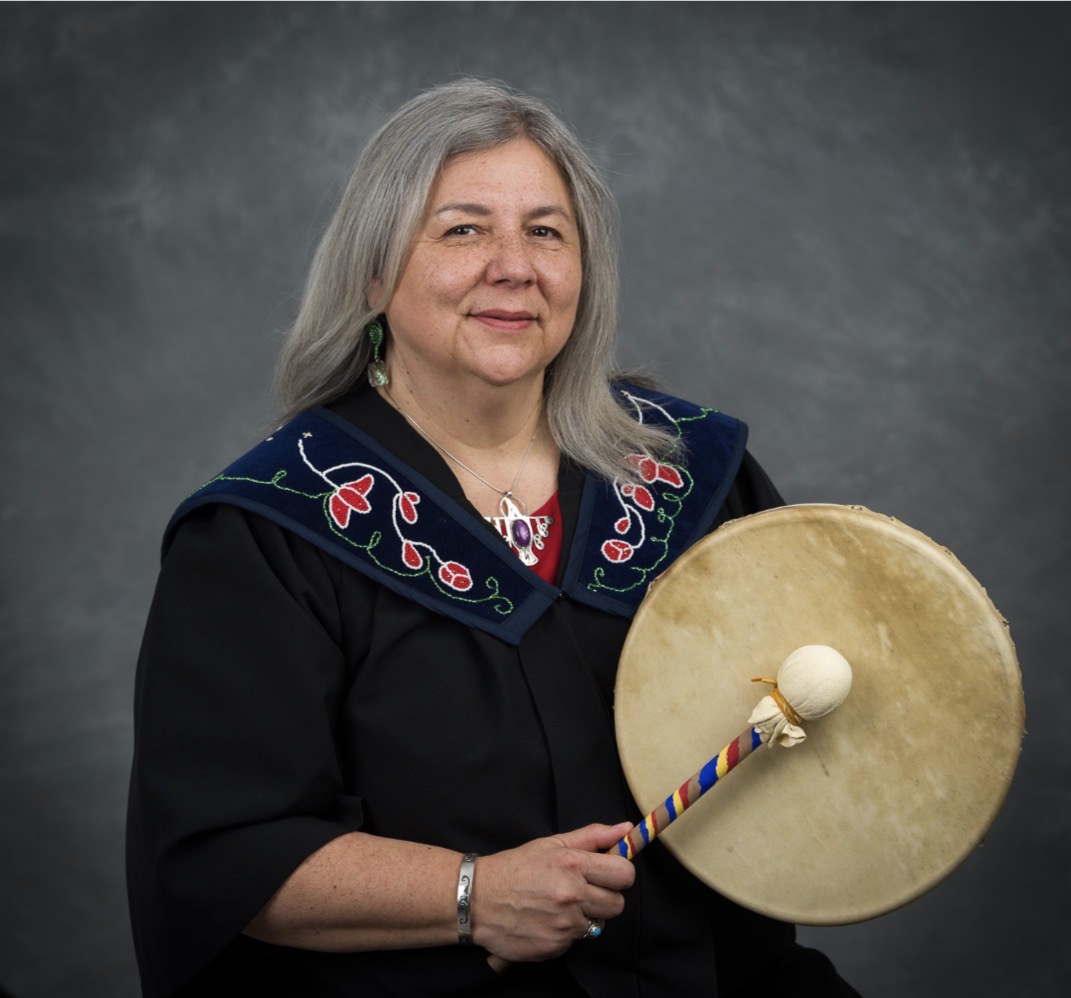
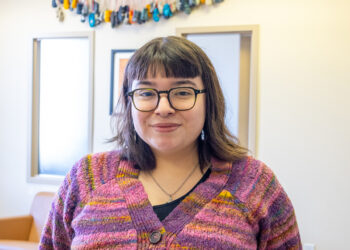
Lisa Perley-Dutcher from Netqotkuk is the director and founder of Kehkimin Immersion School, and runs the day-to-day operations of the program at Killarney Lodge.
The school teaches children ages three, four and five to speak Wolastoqey “in an immersive atmosphere, having Elders and people involved with some expertise in language,” according to Perley-Dutcher.
Kehkimin worked with the Language Conservancy of Canada to create a media player as well, to help people learn how to pronounce words.
“It’s important that people hear how the language is spoken for correct pronunciation, ” Perley-Dutcher said.
“We’re considered a critically endangered language with less than 60 fluent lifelong speakers.”
Originally, when she and her team considered starting the immersion program, there wasn’t a curriculum, so they first had to gather the material for a curriculum book.
“We have a board of directors, we work collaboratively as a team, to try to create things that we know we need,” Perley-Dutcher said.
They continue to work together to create Wolastoqey books for teaching. The team writes the storybooks in English and then translates them into Wolastoqey.
“We have worked with a linguist. We work with Elders who know how to spell and know how to write language.”
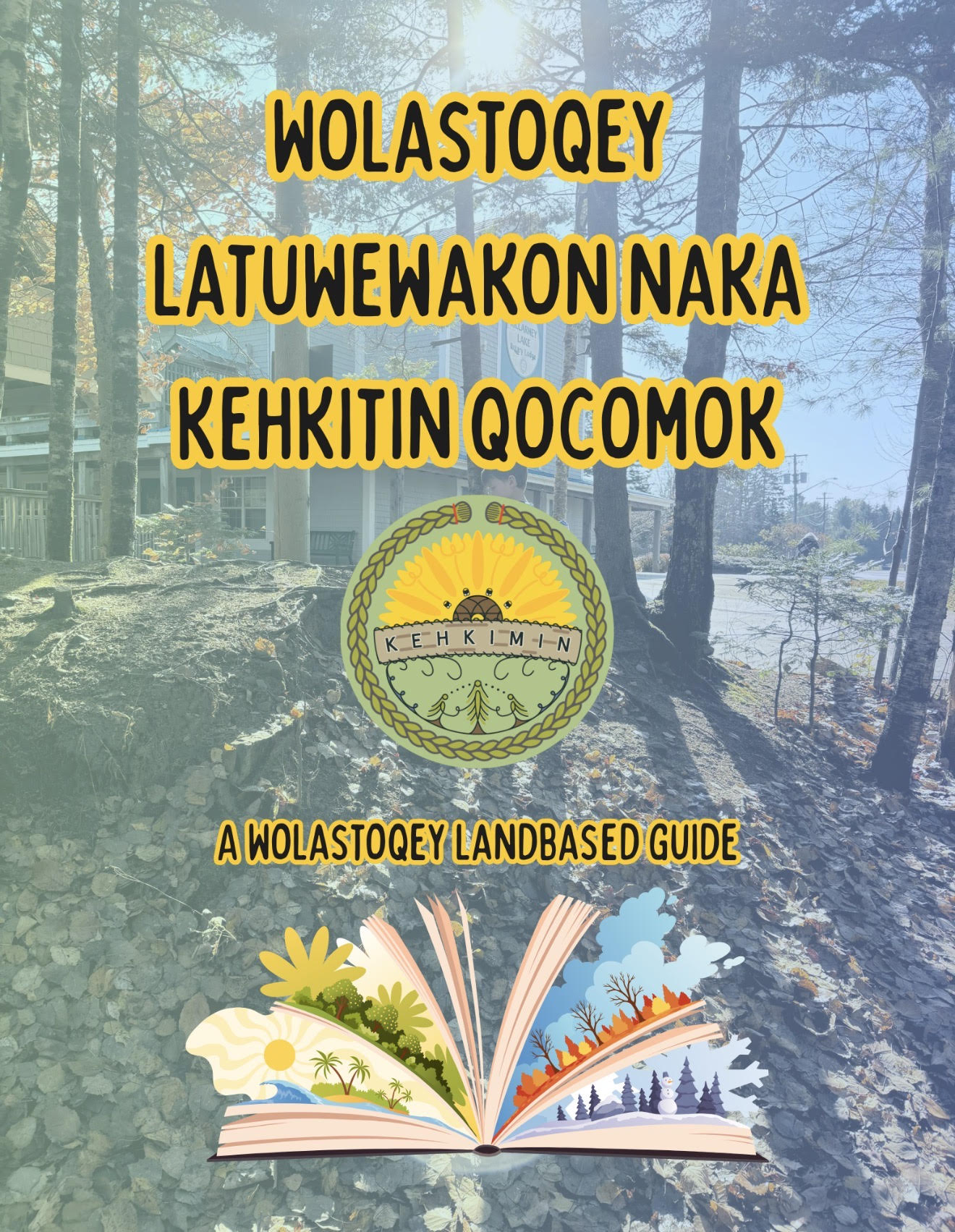
Some of the newly released books are land-based, focusing on nature. One of them is called Wolastoqey Latuwewawakon naka Kehkitin Qocomok, “a guide for teachers to learn language about being out in nature with animals, trees, and plants.”
There are also songbooks included in this collection, including Woliwon woliwon, which “teaches us about gratitude for everything we have and for the beauty around us.”
“We’ve worked hard to pull these resources together not only for ourselves and for meeting our objectives, but for other schools, our Indigenous schools that are trying to teach the language but don’t have the resources,” said Perley-Dutcher.
“I grew up going to day school, so I have a lot of trauma around language,” she said.
Indian day schools ran in Canada from the late 19th century to the 2000s and were created by the government to assimilate Indigenous children into the mainstream.
Indian day schools were similar to residential schools, but they operated within Indigenous communities, and the children returned home at the end of the day.
“So for me to heal from that trauma, it’s really important for me to engage in things that help give that language back to me.”
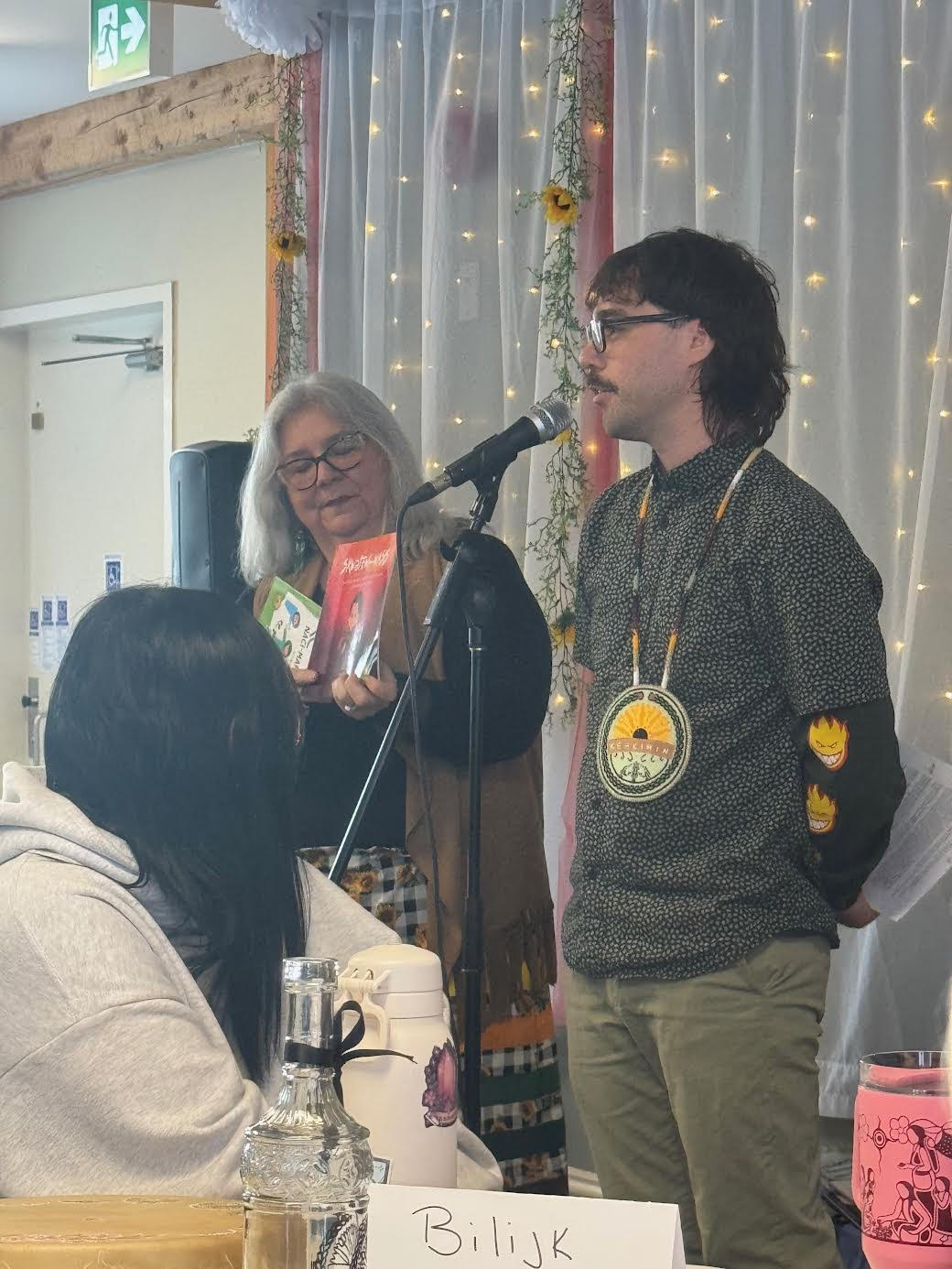
“We also go to schools that would like to have us come in and do some in service about how to use our books,” she said. “So that’s the other component that we’re going to be working on probably in the next couple of months.”
Some advice Perley-Dutcher gave for those learning the language is that “the first step is always just the commitment to it. You can commit to even learning one word a day.” She believes that speaking the language “shows solidarity with the languages that are being lost.”
Another point she stressed was the importance of allies. Perley-Dutcher said that people often question why she teaches non-Indigenous people. “In order to save our language, we need to have people to talk to in our language, and that’s how English is so predominant,” she said.
“Language can connect us in ways that sometimes nothing else can.”
One example of language connecting people, Perley-Dutcher explained, is the shared vocabulary between the Wolastoq and Mi’kmaw languages.
Her favourite word shared between the languages is “sankewitahasuwakon” (Wolastoqey spelling), which means “the peaceful mind.”
Kehkimin has a website, and they have a free language-learning app as well. You can also find Kehkimin’s books on YouTube.
Anna-Leah Simon is a St. Thomas University student and an intern with the NB Media Co-op from Elsipogtog.
![NB Update: What comes after the crisis in local journalism? [video]](https://nbmediacoop.org/wp-content/uploads/2025/06/LabourUpdateApr132025-350x250.jpg)
![‘We’re still here, and we will always be here’: Mi’kmaq language program fosters pride [video]](https://nbmediacoop.org/wp-content/uploads/2026/09/MikmaqCampAug142026-350x250.jpg)

![NB Update: What comes after the crisis in local journalism? [video]](https://nbmediacoop.org/wp-content/uploads/2025/06/LabourUpdateApr132025-120x86.jpg)
![University security closely monitored pro-Palestine activists, documents show [video]](https://nbmediacoop.org/wp-content/uploads/2024/11/20231129_131826-120x86.jpg)