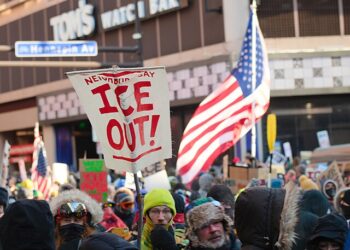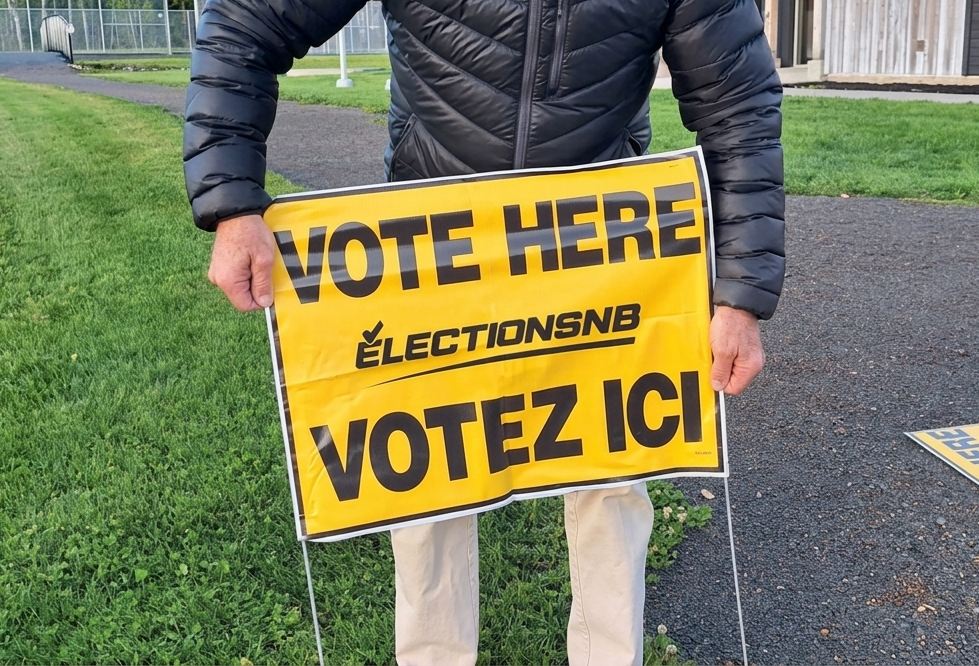
The results of recent elections in the United States and their impact on local and global scales highlight the need for continued care for our electoral processes.
Both Liberal and Conservative governments in New Brunswick have failed to respond to recommendations from New Brunswick’s Chief Electoral Officers, which address provincial and municipal elections. For example, of the 108 recommendations in the Modernizing New Brunswick’s Electoral Legislation 2019 report, only three have been addressed so far. Subsequent reports from the team of current Chief Electoral Officer Kim Poffenroth highlight threats to fair elections, while the parties we have elected fail to address them.
The 2024 post-election report warns, “There are growing concerns nationally and internationally regarding the increased risk of foreign interference in elections and the use of generative AI to manipulate and influence people’s voting intentions through coordinated misinformation and disinformation campaigns.” The report quotes Taylor Swift: “If you fail to plan, you plan to fail.” Our governments need to plan proactively by updating electoral processes.
Emerging technologies enable data analysis and manipulation that could not have been foreseen by the crafters of our current election legislation. Parties and individuals running for office are given access to vast databases with information on voters. This access was intended to enable campaigns to organize. However, the current framework cannot prevent someone from running for mayor of a community, for example, for the sole purpose of accessing the personal information of voters. Further, new computing powers make it possible for voter information to be intertwined with other data sources to enact a wide range of manipulated information management. And the data persists in party systems between elections in unregulated ways.
Climate change poses further threats to elections due to the increasing likelihood of emergencies. For example, wildfires in Northwest Territories made an election impossible in that region, but there was no legislation to give impartial guidance on how to respond. Elections New Brunswick presented recommendations for legislation that would guide action in a similar emergency, but the previous Conservative and current Liberal governments have not addressed this need.
Along with recognizing the threats to our current election structures, it is important to understand that different structures are possible.
Susan Holt’s Liberals came to power with a majority government in 2024 on the basis of 48.1 per cent of the vote, with 65.04 per cent of eligible New Brunswickers voting. With her power to whip her MLAs, she has absolute power to govern as she wishes with the support of only 31 per cent of the electorate (48 per cent multiplied by 65 per cent). Further, many of the people who voted for the Liberals did so reluctantly for fear of vote splitting that could result in their most feared candidate winning. Similarly, the previous Conservative government had absolute power with the support of 25 per cent of New Brunswick’s voters in their 2020 majority victory (39.2 per cent of the vote multiplied by 65.04 per cent of the voters).
Organizations like Fair Vote Canada and others advocate for change from the first-past-the-post process to proportional representation. The aim is to prevent misrepresentation of voters’ wishes. Such systems are the norm in Western Europe and elsewhere. There are various ways to structure proportional representation and other alternatives (e.g., ranked voting). But election processes are legislated by parties in power, parties that are reluctant to change the processes that have enabled their power.
Election boundaries also demand attention. Donald Trump is unapologetic about his efforts to redraw election boundaries to favour his party. This practice, called gerrymandering, is common in the USA, and it is also a danger in New Brunswick. To prevent gerrymandering, it is necessary to set non-partisan processes for drawing boundaries. Currently in New Brunswick the commission appointment process is partisan, which resulted in three prominent Liberals and three prominent Conservatives setting the most recent boundaries, with significant impacts on the options available to voters in the 2024 election (for example the split of the previous Fredericton South riding).
David Wagner is a professor in the faculty of education at the University of New Brunswick.