Disclaimer: Given the dehumanizing rhetoric about the homeless in social media, I wish to emphasize that the description below of an experiment with rats is meant to suggest that a positive environment can lessen drug dependency in both rats and in people. It is not meant to suggest that rats can be compared to people without homes or vice versa in any other way.
A famous experiment by Canadian psychologist Bruce Alexander at Simon Fraser University on drug dependency in rats has prompted Andri Cahyadi, a Saint John social worker to consider how the experiment can help the city make progress on the issue of drug dependency among the unhoused.
Before he began his experiment, Alexander read studies in which rats were placed in a tiny bare metal cage and given bottles of water and morphine or cocaine. They often drank the drug water heavily and some overdosed.
Wondering if the tiny cage might have something to do with their dependency, Alexander built a large housing enclosure that was 200 times the size of a normal lab cage. He called it “Rat Park.” Rats found the park a comfortable, stimulating home with toys, wheels for exercise, nesting materials, and 16 to 20 rats of both sexes living together to socialize and mate. Alexander noted “the rats hardly ever used the drugged water. None of them ever used it compulsively and none of them ever overdosed.”
The experiment shows how much difference an environment can make for rats and the difference it could well make to those in Saint John who struggle with drug dependency, especially the unhoused and those with mental health issues.
Speaking to co-hosts Cat and Finch on an episode of Minutes to Midnight on 107.3 FM in Saint John, Cahyadi said that rather than recognize the influence of the environment and working to improve it, the city uses a police model to tackle addiction.
They do this “because they are trying to control the situation.” Police or security companies such as Guarda typically protect the interests of business or entertainment venues over those on the street.
However, Cahyadi pointed to research that suggests that what was learned from the Rat Park experiment can be applied to individuals and families. When the unhoused who have addiction and mental health issues are provided with housing even though they have not yet recovered, their chances of survival and recovery improve dramatically.
This practice, called Housing First started in the nineties, Cahyadi explained as a result of research by Sam Tsemberis, a psychologist. Tsemberis maintained that housing is a right for all people. He found that clients were less likely to miss psychiatric appointments when they were visited by professionals in their home. They made fewer visits to the emergency ward and were able to end their relationship with the justice system.
“Practitioners go to clients’ homes or apartment every week and help them with navigation and savings goals. They help them keep their tenancy. They can bridge communication with the landlord, help them file a complaint to the housing tribunal, reduce their dependency on substances, and guide them toward a path to recovery. They don’t force people into treatment, but if the client enrolls in a program, 30 per cent of their gross income is paid to them and they receive a subsidy for rent or social assistance.”
Importantly, the government even saves money by doing this. “Otherwise people tend to miss their appointments, get picked up by police and end up in hospital.”
In a landmark Housing First project called At Home, a massive study across five Canadian cities, researcher Eric Latimer found that for those with high needs the net cost of supporting them fell from $20,000 down to $6,300 per person, per year. For moderate-need individuals the program saved the government less, but the savings still added up: about 46 cents on the dollar.
From what Cahyadi can tell, even though the model has worked in cities across Canada including Moncton, it doesn’t seem to be used in Saint John. Residents in the city can wait as long as 12 years for a house, he said. Currently, 2,800 households or individuals in the city find themselves on a wait list according to the New Brunswick Housing Corporation and more than 14,000 households in the province, according to CBC.
The wait list continues to grow longer than new housing can be built; and little new social housing has been built since the early 1980s, according to government and housing officials because of federal funding cutbacks at that time. The small amount of housing that has been built isolates groups in a radius of a few blocks, unlike what the model suggests which is to integrate each individual or family into a larger neighbourhood.
Still, some housing is better than no housing at all.
Cahyadi wonders if the empty, five floor, 68,000 square foot Golden Ball building in uptown Saint John could have been made into apartments for the homeless. However, Irving now is demolishing it due to water damage, mold growth, asbestos contamination and lack of maintenance.
Cahyadi believes the long wait for a home combined with the policing approach has made the problem worse: Last year 39 homeless people died in Saint John and 110 died in the province, including seniors. He suspects that because homelessness occurred in Saint John relatively recently, only after COVID, the city has not had the experience or expertise to deal with the issue.
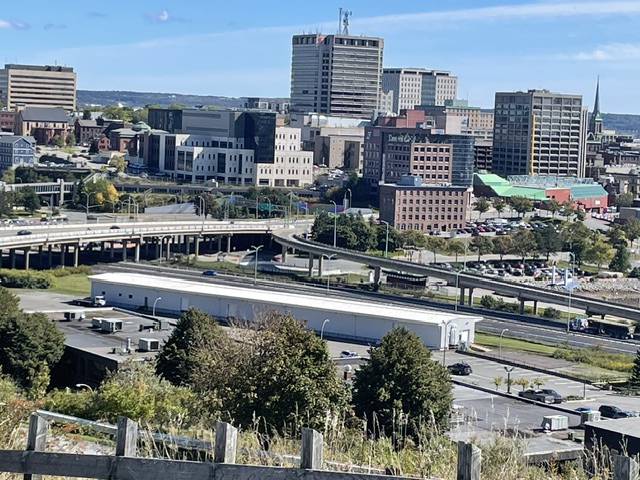
In September 2025, desperate to do something, City Council partitioned the city into red, yellow and green zones. In the large red zone it prohibits tents and encampments; in yellow zones it permits up to five tents at a time; and in green zones it allows for some transitional housing. The cost for implementing the zone approach: $ 3.5 million.
Although the problem may become less visible, Cahyadi is not optimistic it will work.
“A police approach just hides the issues.” said Cahyadi. “Housing First can work if practitioners know how to implement it.”
Unlike the city, Cahyadi views drug addiction as a public health issue.
“Instead of criminalizing or judging their behavior, we might ask what happened to this person. Maybe something happened in their childhood or to their family.”
In the rat park experiment the rats chose the new environment, “the environment they wanted over the drugs that were so available.”
“Imagine taking this concept into the city,” he said.
Chris Wanamaker is a mental health therapist, writer and socialist who lives in Saint John.



![Is a Moncton company helping to build jet fighters bombing Gaza? [video]](https://nbmediacoop.org/wp-content/uploads/2024/06/ApexMay192024-120x86.jpg)