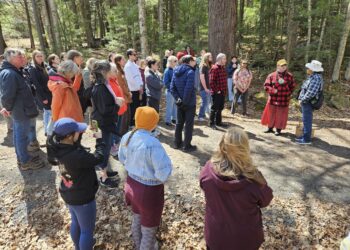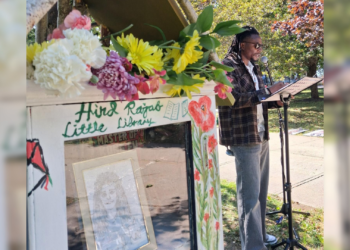
“We have to decide collectively how we want to run our society. We cannot just leave things to consultants and administrators who don’t understand the problems of the community,” said an organizer of the Free Fair, which took place on August 22 at Solidarity Square (King’s Square) in Menahkwesk (Saint John).
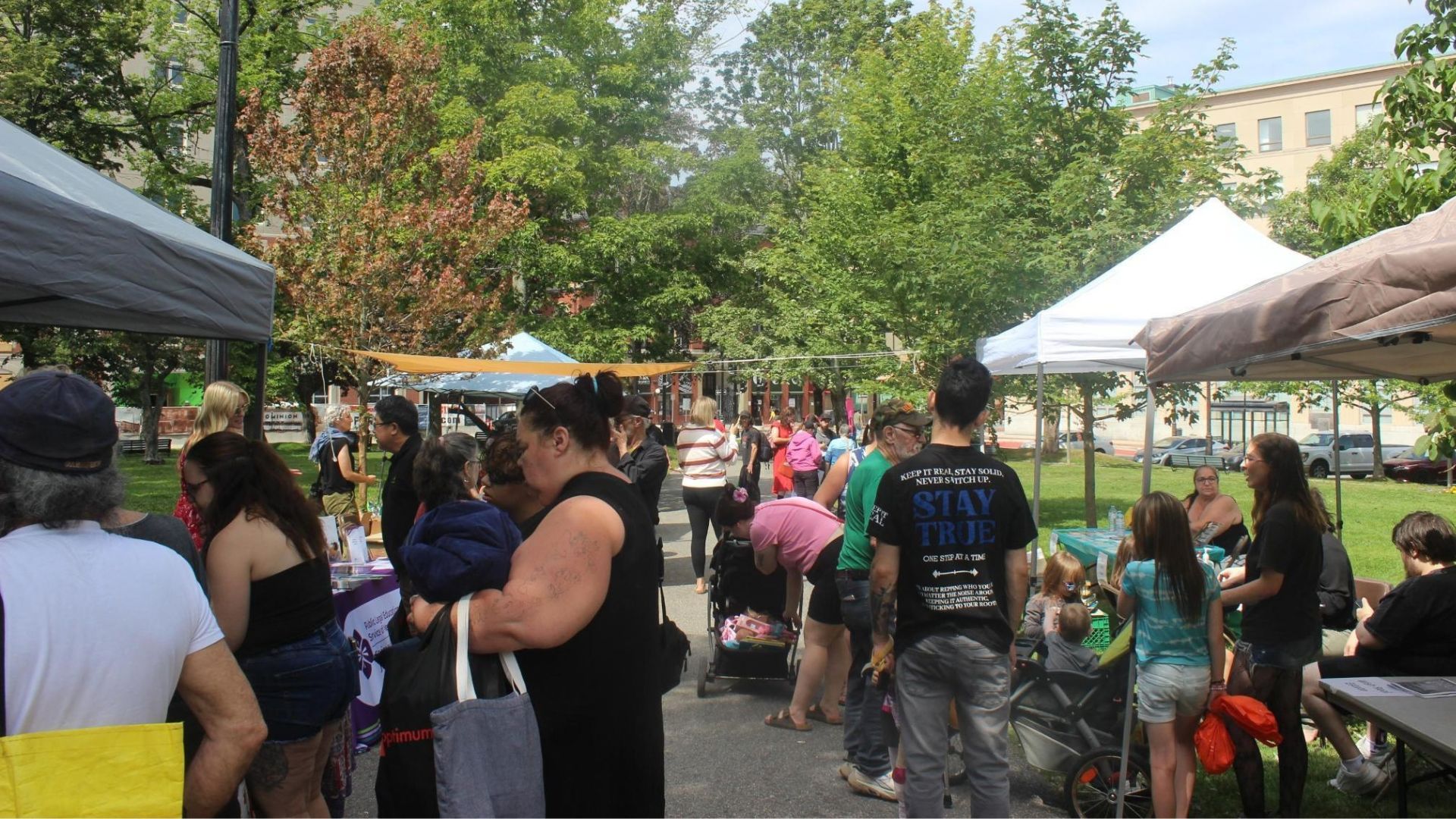
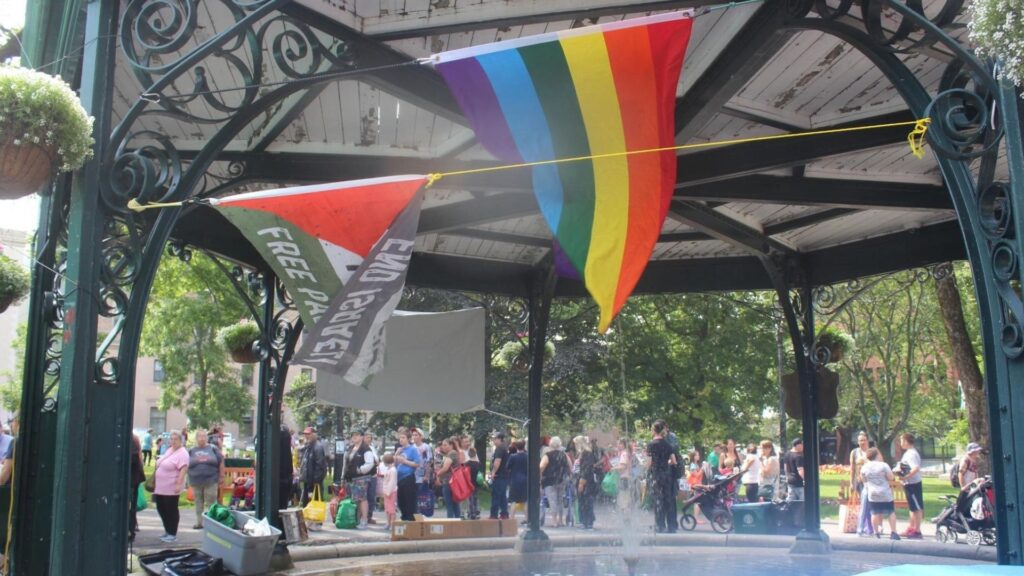
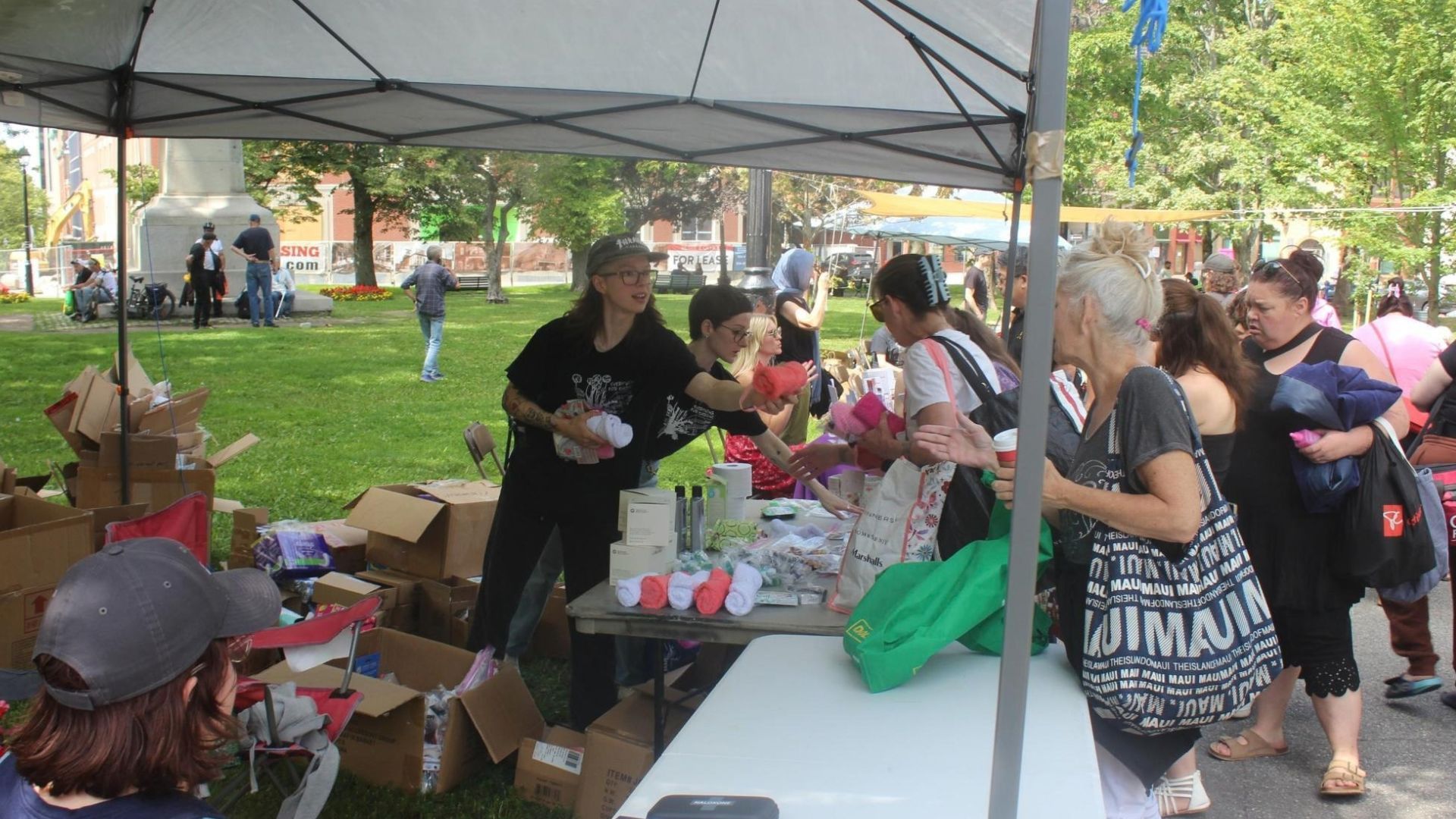 Community members, local organizations and volunteers gathered for the Free Fair on August 22 at Solidarity Square in Menahkwesk. Photo by Sarah Durham.
This report does not name the organizers and participants because they preferred to remain anonymous given their employment and immigration status. Their identities have been confirmed by the author.
The fair, organized by the Saint John Community Coalition, is in its second year. NB Media Co-op reported on last year’s event.
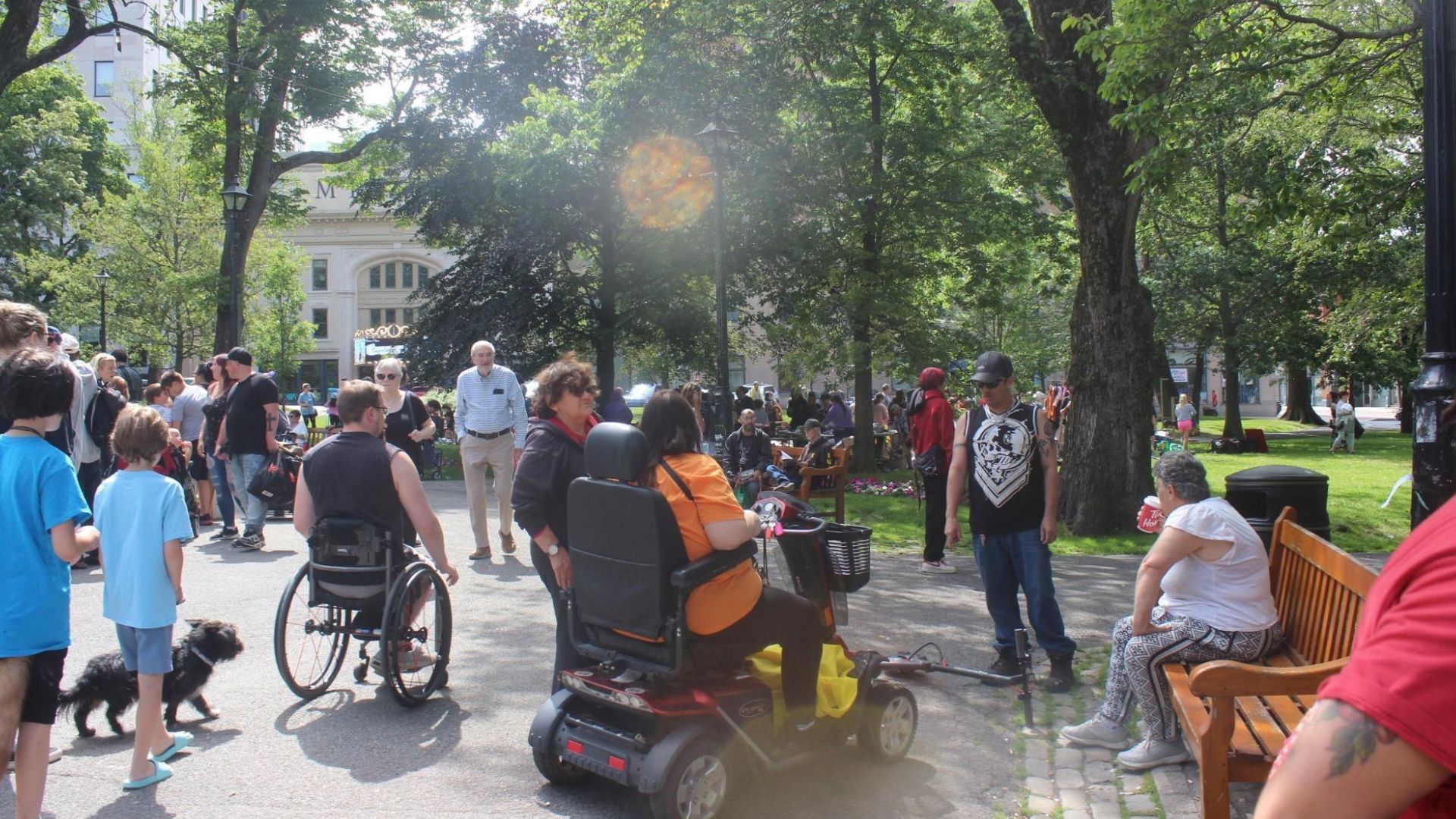
“We were building off of the successes and lessons from last,” said an organizer. “We decided to go with Solidarity Square this time. It’s more accessible and has way more foot traffic.” More than a thousand people attended over the course of four hours.
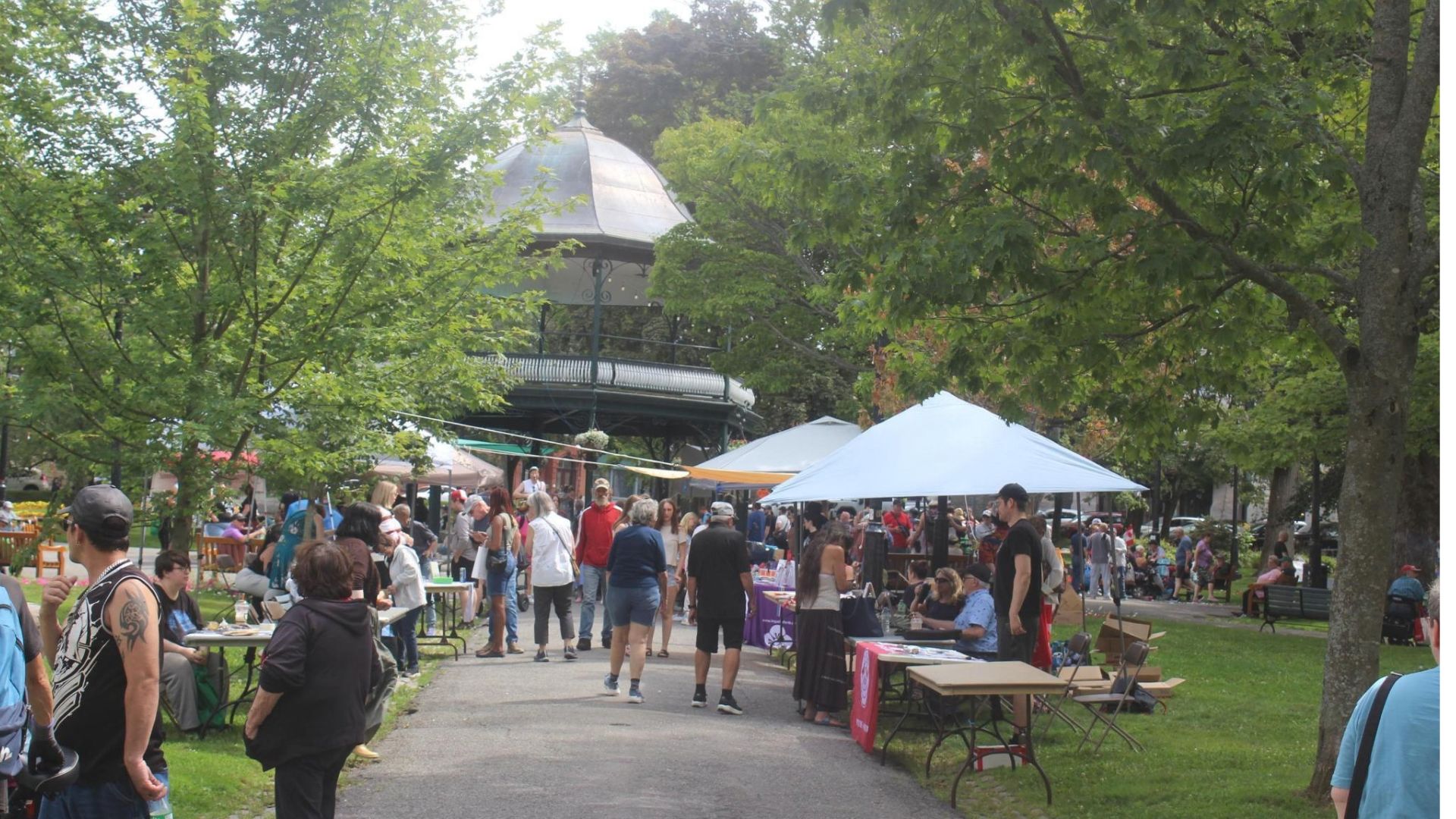
The pathway leading up from the uptown market was taken by various tables where people gave out information on harm reduction, mental health, legal aid, elder dog care, zines, learning opportunities in the city and more.
The other side of the square was occupied with repair services for clothing, small appliances and electronics.
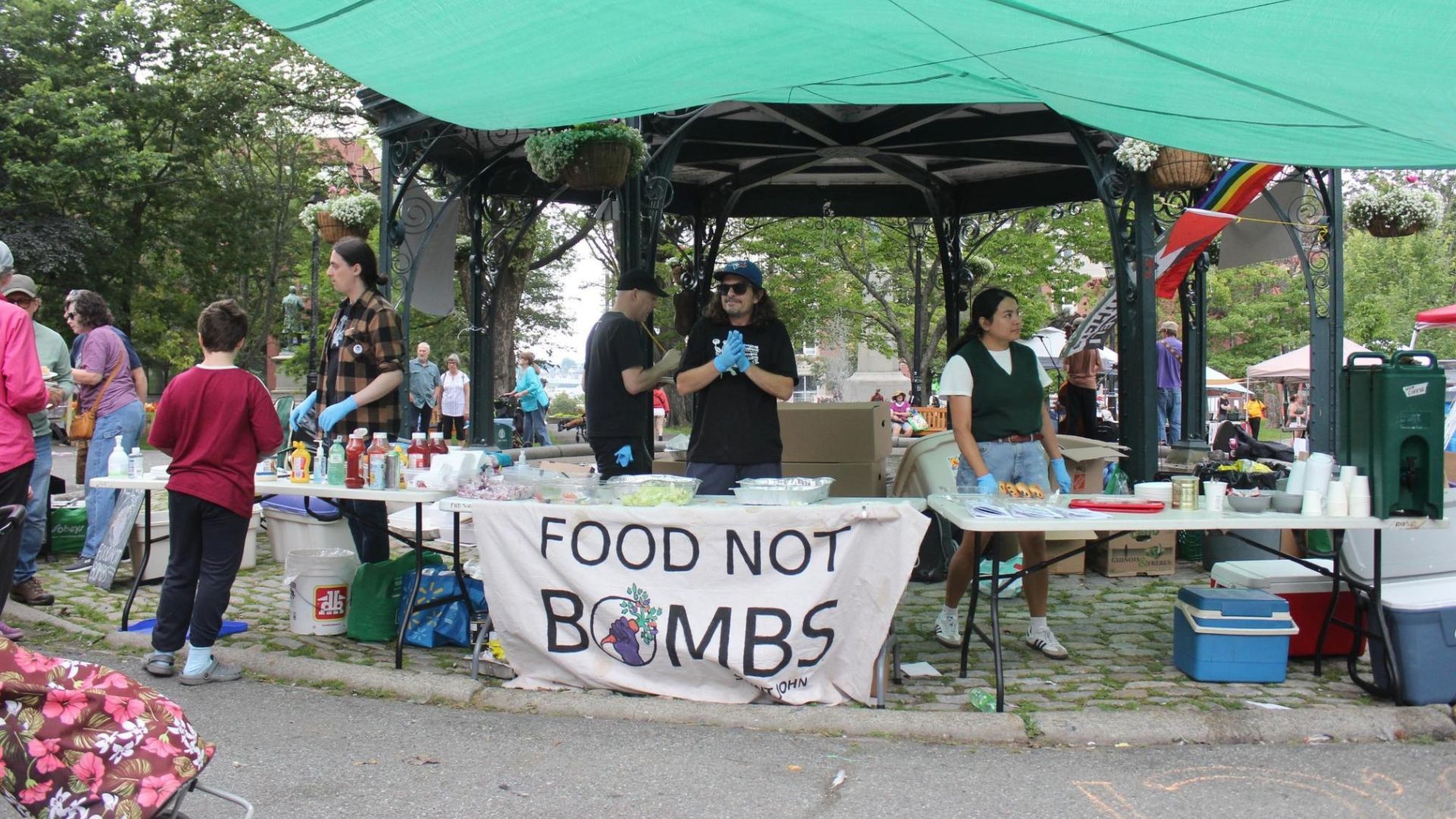
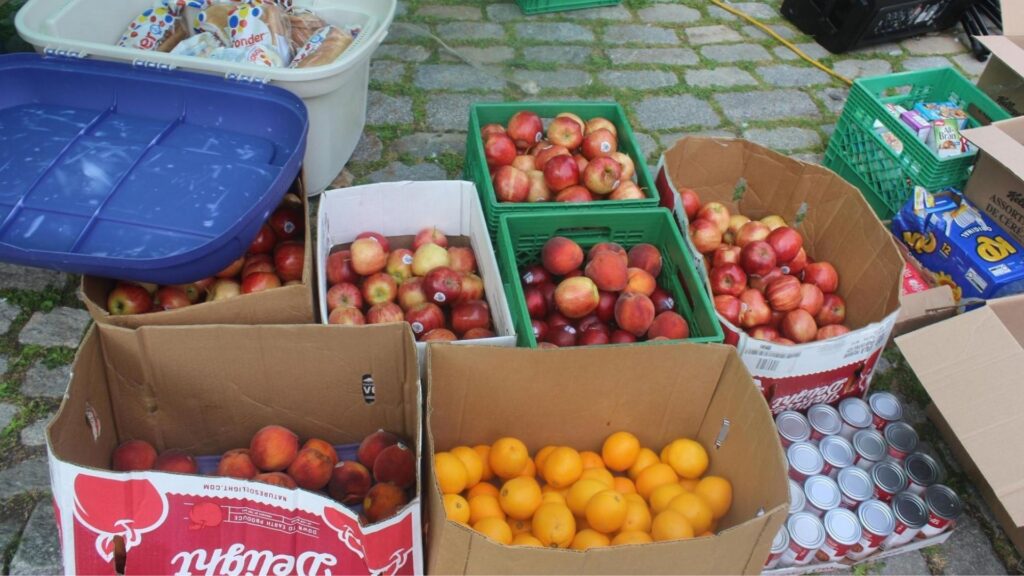
The bandstand at the center of the square was straddled by a long line of people waiting leisurely for food and to pick up non-perishable canned or boxed food along with fresh fruit, coordinated by Food Not Bombs.
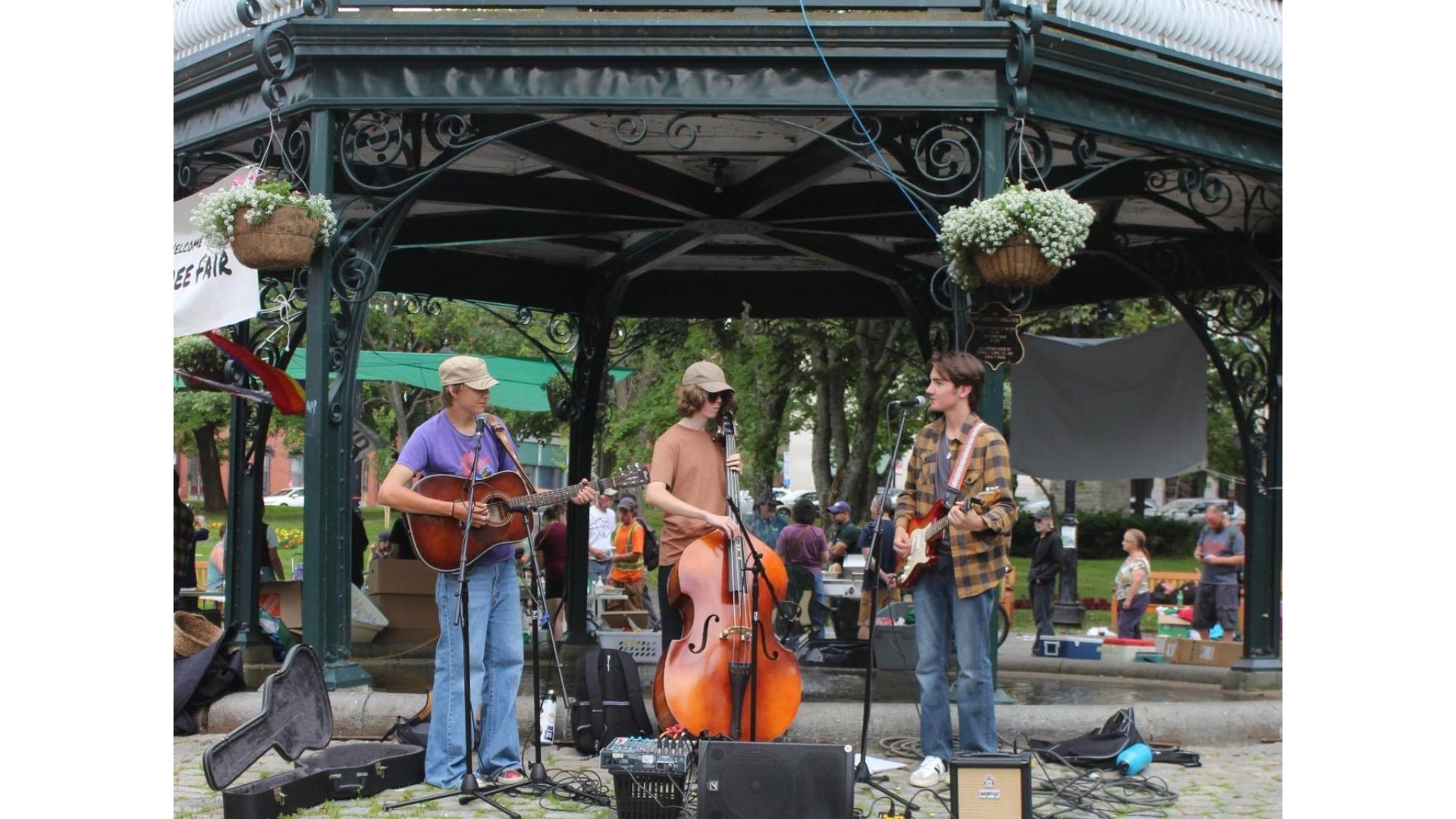
Musicians performed on one side throughout the event, including a set by a local high school band.
The Palestinian flag flew on the bandstand alongside the brightly coloured pride flag.
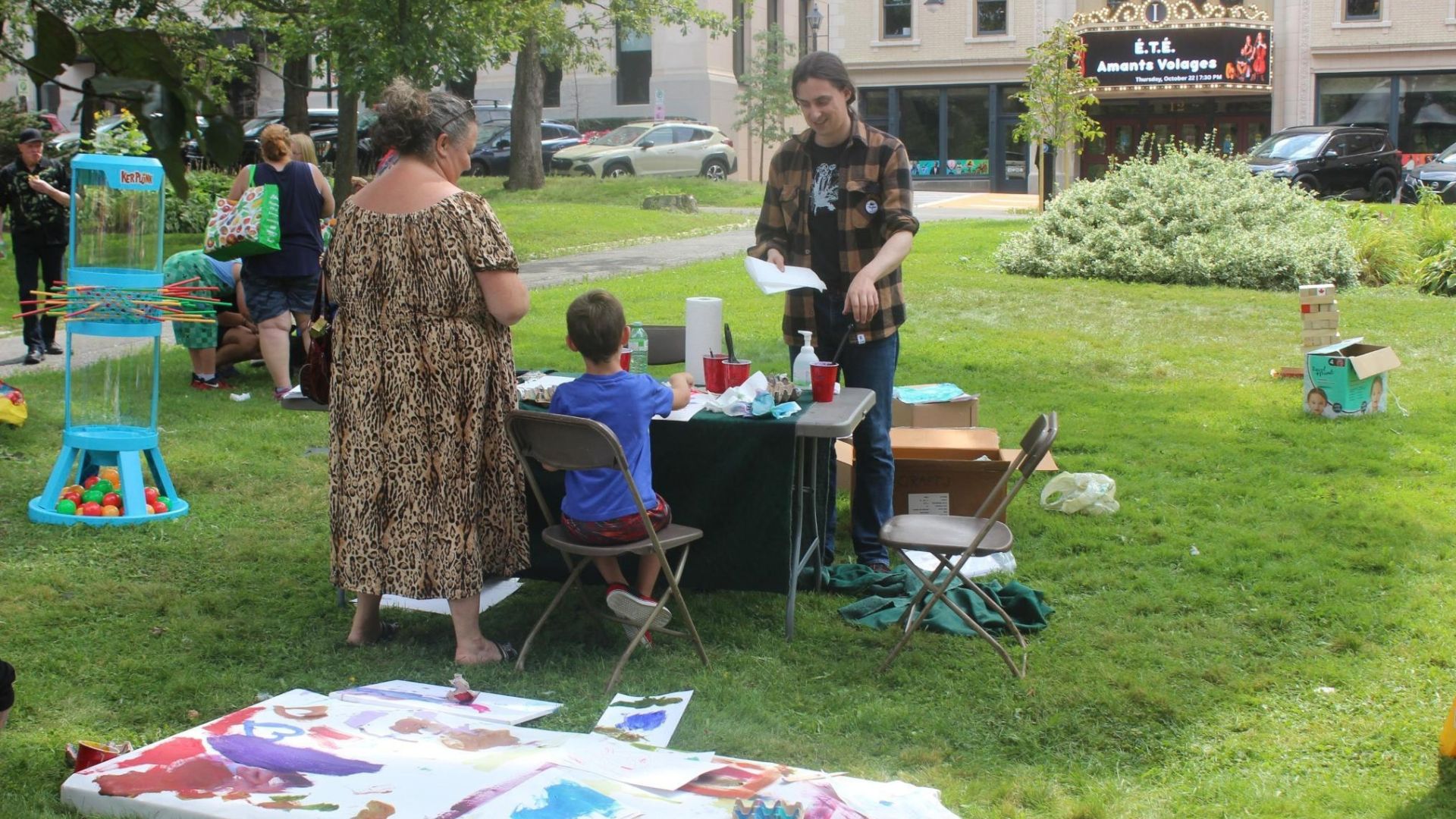
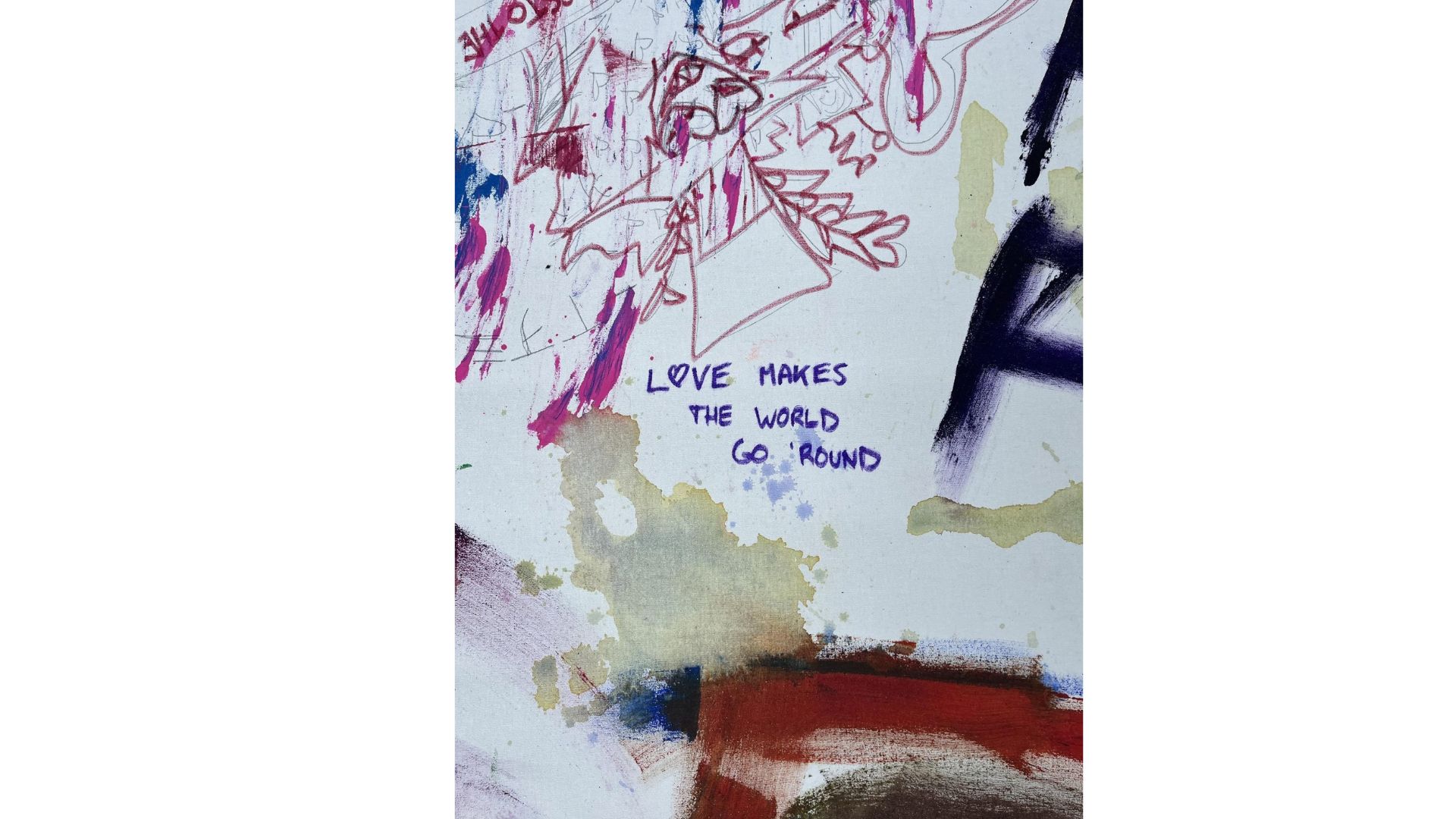
The other side of the square had a community canvas with paints and games, and a reading area with chairs, picnic blankets and books to take. These areas were taken over by families, and children in particular, who found creative and unexpected ways to use the materials. Next to this was the ‘Free Store’ part of the fair. Clothes, footwear, household items, toys, small electronics, pet food and skin care products were free for the taking.
“This event is an experiment. Everything here happens through relationships and community participation, including the decision-making. Our so-called leaders are doing a bad job. Their interests are not aligned with the well-being of most people and the ecosystem, and we see the fall out of that all around us,” said another organizer.
In particular, they were referring to the city’s zoning policies this year, labeling most of the city a “red zone” to dismantle homeless encampments along with hiring controversial private security company GardaWorld to patrol the uptown area. It is well known that treating poverty, addiction and homelessness as a crime does not address the root causes, which are unaffordable housing and a lack of social safety nets. Cities continue to take these measures in order to appease the sensibilities of business and property owners and investors.
The organizers emphasized that the roots of the event are not based in charity, a quote from the Free Fair guide book reads:
Mutual aid predates colonialism and capitalism, it is a long-term commitment to practice alternative ways of organizing our societies and thriving. Current societies exist in a state of constant competition, exploitation and violence, this is not inevitable or static. Humans have thrived for millennia in cooperation with nature, we can find that resilience again. We must not let our surroundings dictate the size of our hearts or our imagination!
“It is frustrating to rely on food banks constantly for my family, and groceries keep going up. Rent and power are a whole other thing,” said a participant sardonically, as she picked up black bean burgers for herself and her child.
Food banks are an example of the “non-profit industrial complex,” a phrase used to describe the role non-profits and charities play in filling-in for the systemic failures of economic and social policies. This occurs as racial, class-based and gendered hierarchies are reproduced and close relationships with and financial dependence on institutions responsible for the failures is maintained. Such hierarchy and entanglement prevent most non-profits and charities from engaging in mass mobilization or any serious criticism of the status quo.
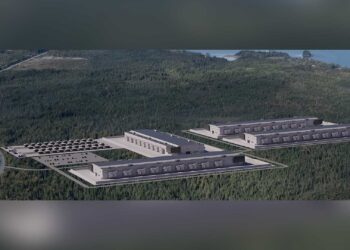
The organizers are aware of this and insist that the Free Fair is “first and foremost, a space for building relationships and capacity. Injury to one is injury to all, they’re giving us a data centre and a mine and gas plants and an explosives factory while basic needs like housing and health care are not available,” said another organizer referring to recent proposals in the province that include the Sisson mine, the Tantramar gas plant, a data centre in Lorneville and an explosives factory in Belledune.
The community coalition’s free events seem to have inspired other such events, where goods and food are given away for free in various parts of the city.
“It’s good. We need more decentralized mutual aid. But some of these spaces try to be apolitical or neutral, that’s a problem,” cautioned an organizer. Another quote from the Free Fair guidebook reads:
Mutual aid creates networks of dependence, care and generosity to meet the immediate needs of our neighbors. Solidarity helps us connect with people facing varied forms of crisis, in order to see how things are connected in a globalized world. Times of crises expose capitalism’s choke hold on all facets of our life. It is increasingly important to find community and fight systems that no longer work for us.
Nomaan X works with the Saint John Community Coalition.