Diani Blanco’s children, ages 10 and 13, were collecting recyclable bottles and cans this summer near the grounds of the YQM Country Festival when she says they were confronted aggressively by a festival security guard.
The bizarre encounter was an example of the blatant racism that has become increasingly prevalent in the Moncton area, according to the longtime area resident.
She described the incident during a panel discussion on anti-racism that she facilitated during the City of Moncton’s Social Inclusion Summit and in a follow-up interview with the NB Media Co-op. She previously outlined the experience on social media in an Aug. 29 post that was shared more than 70 times and generated hundreds of reactions.
It unfolded outside the gates of the festival grounds, where her children were collecting recyclable containers as part of efforts to save money for electric scooters and football. That’s when a security guard allegedly confronted them.
“The security guard came out of the gate and he started talking to my youngest,” she told the NB Media Co-op. “It didn’t look like a nice conversation, so I was like, ‘Hey is everything okay?'”
She said the unidentified man told Blanco and her children, who are Black, that it was against city law and festival rules for anyone other than staff to collect containers.
“He was like, ‘Oh, are you guys working with the YQM?’ I was like, ‘No.’ He said, ‘Well, you’re not allowed to pick up anything around it.’ I said, ‘Well, we’re outside the gate, so we are allowed to.'”
The man, who was white, continued to insist, so Blanco eventually suggested that he call someone to confirm that no such rule or bylaw exists.
His response shocked Blanco and her children. He said, “You people come here and think you can make any laws and do whatever you want,” according to Blanco.
In fact, she grew up in Shediac after moving there from the Dominican Republic at age 10, meaning she has lived in southeast New Brunswick for more than 20 years, and her children — who are half-Mi’kmaq — were born here.
He was also mistaken about local bylaws: a City of Dieppe spokesperson confirmed that “no municipal bylaw prohibits members of the public from collecting empty cans on public right-of-way. The individual referenced in this incident is not a City employee.”
The city spokesperson, Julie Albert, said the City of Dieppe “does not tolerate racism in any form.” She said the city had granted control of the site to the event promoter for the duration of the festival.
“We understand that, as part of the event arrangements, the promoter had authorized certain community groups to raise funds by collecting cans on the site,” Albert said.
Blanco said it’s the third year that her children have collected recyclable containers outside the festival grounds. In the past, volunteers have always been friendly and even gave them a bag of cans at one point, she said.
No response from YQM
The security guard drove away from the scene after Blanco took out her phone and started recording, asking the man to repeat his comment, she said.
Her sons, who continued collecting containers, were perplexed by the man’s remarks. “My kids were like, ‘I don’t even know why he would say that. I’m Canadian.'”
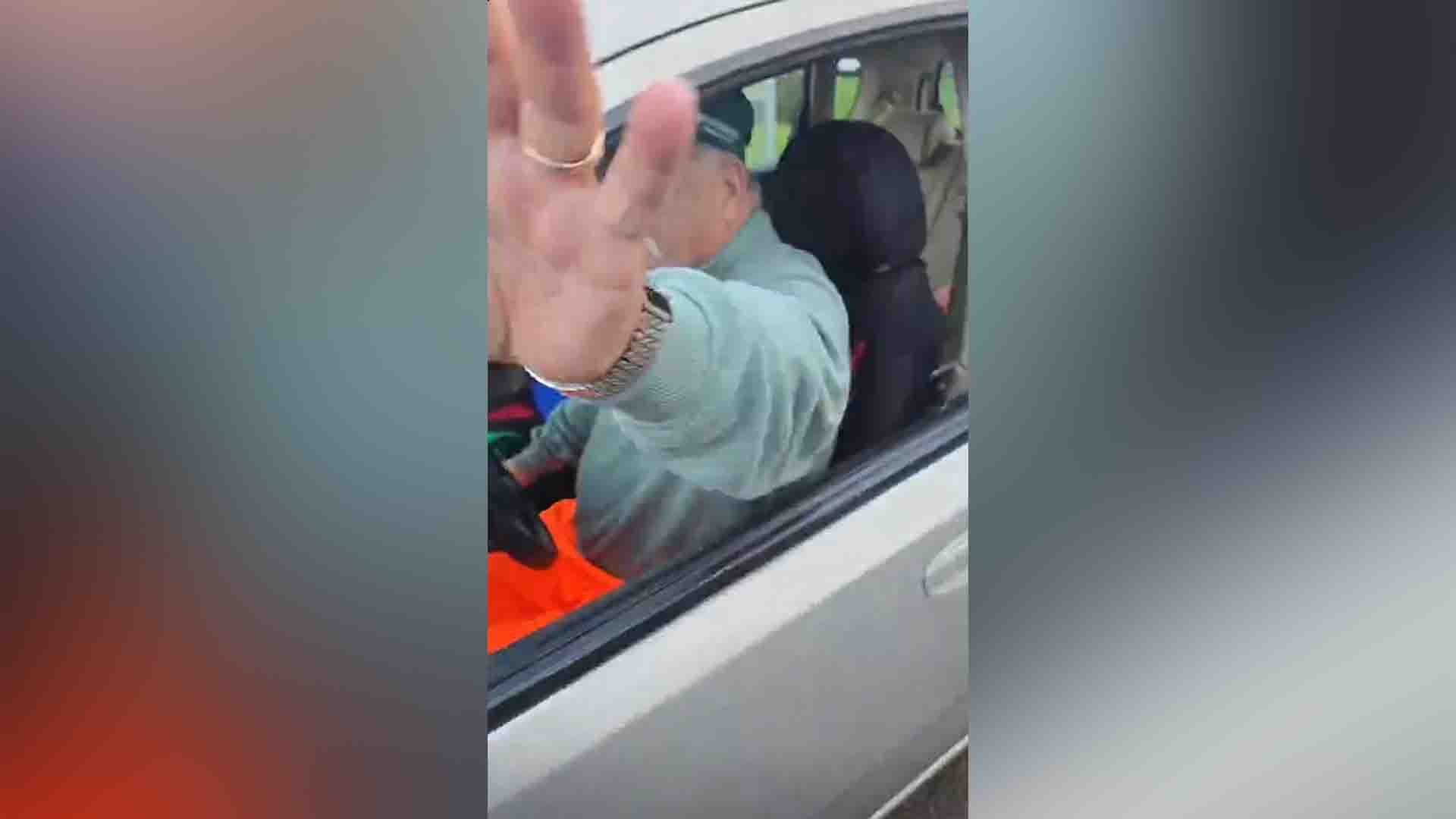
Blanco posted screenshots from her video on Facebook. In one image, a man is shown in the driver’s seat of a vehicle, with his outstretched hand blocking his face.
Blanco said she chose not to show his face “because I’m not trying to give more hate.” She hoped that the man would see her post and apologize, even if it meant sending her a direct message on social media. So far, she hasn’t heard anything from the man or the festival.
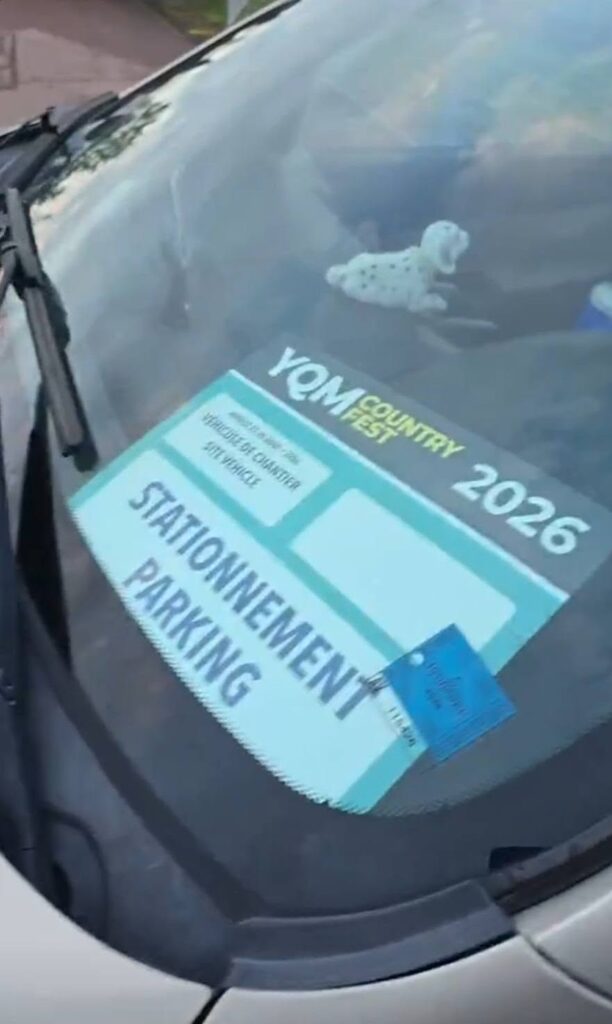
Although the man’s face is obscured, his identity should be readily apparent to festival staff, based on details visible in the images. For example, a small figurine of a dog is visible on his dashboard in one image. It also shows a permit indicating that he was driving a YQM Country Fest “site vehicle.”
The NB Media Co-op attempted to contact the YQM Country Festival multiple times for this story, reaching out through the festival’s official email address and Facebook account, and through the communications office at the City of Dieppe.
Has the man in question faced any discipline? What kind of training do security guards and other public-facing staff undergo, and will the festival take steps to ensure that similar incidents don’t happen again next year?
YQM Country Fest didn’t respond or acknowledgement those questions by publication time.
Racism in school, on the streets
Blanco and her family are no strangers to racism in New Brunswick.
When she moved to Shediac more than 20 years ago, Blanco said, she was the “only little Black Latino” in the area, and experienced racist bullying from children and grown-ups, “from my hair, my lips, how I spoke because I had an accent — it was always there.”
Even if racism was already present, it has worsened in recent years. In one recent incident at a local grocery store, her gaze landed on another shopper, who snarled at her using the N-word, a hateful anti-Black slur: “What are you f–ing looking at, n–?”
In another incident last year, her children were walking to school when someone shouted at them from a passing vehicle, telling them to “go back where you’re from,” also using the N-word.
Her youngest son has also described being subjected to the N-word in school. In some cases, when he reported it to teachers, they have ignored him, according to Blanco.
“My youngest got in trouble many times for getting angry,” she said. “I’m like, ‘Why did you get detention?’…. ‘Well, this kid called me the N-word.'”
She continued: “A lot of times, I tell him… those people know exactly where to push you. If you get more angry or if you push them, then you’ll get in trouble. But he’s like, ‘Well, I told the teacher, but they didn’t do anything’… How do you help your kid navigate that in a way that is positive?”
Blanco, who just completed a three-year term as chair of the City of Moncton’s Social Inclusion Committee, was a candidate for the provincial Green Party in the 2024 provincial elections. She also ran for Moncton city council in 2021.
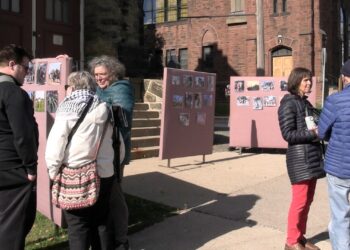
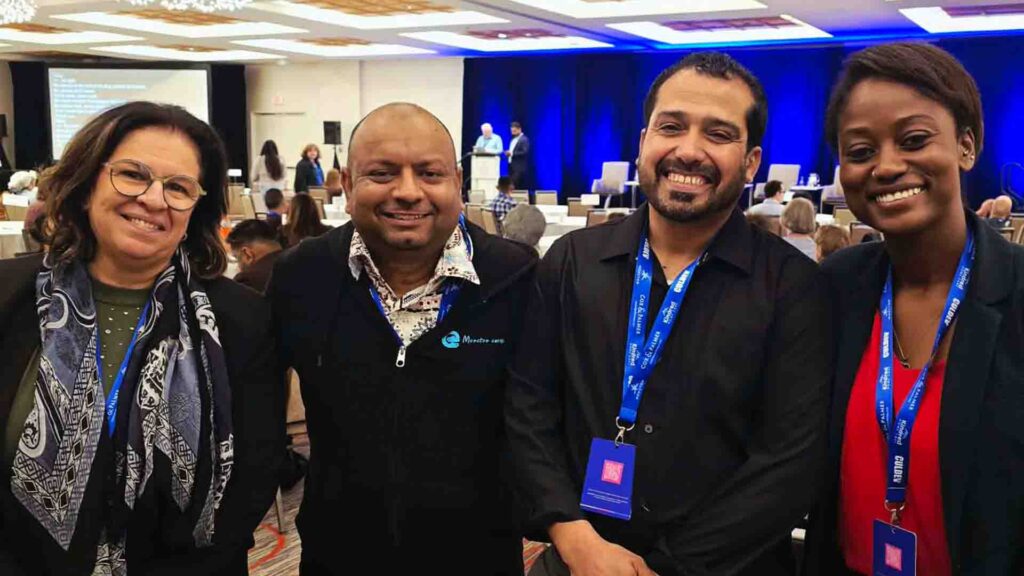
She brought her two sons with her to the City of Moncton’s Social Inclusion Summit, which took place on Sept. 29 at the Delta Beauséjour hotel in downtown Moncton.
It meant taking them out of school for the day, but it was important to show them that “they’re not alone, that it’s not just mom saying it.” She added: “I always said, ‘We have a lot of good, but we see more of the bad.'”
Cab driver faced violence
During the panel discussion that Blanco facilitated at the Social Inclusion Summit, other community leaders shared some of their experiences with racism.
Moncton Muslim Association president Ali Ettarnichi, who used to own and operate a local taxi company, described some disturbing encounters with racism as a cab driver.
During his first week operating the cab company, a passenger became hostile after learning that he was Muslim and an immigrant from Morocco.
“He was saying, ‘You guys come here and steal our jobs’… I said, ‘I have another taxi, you want a job? I can give you a job.'” But the man replied that he didn’t want to drive a cab: “That’s for you guys, immigrants.”
The absurdity of that exchange prompted laughter from the audience.
It was nonetheless a serious situation: the passenger ended up assaulting Ettarnichi, who fought back and eventually ejected the man from his taxi.
Ettarnichi also shared that story in his self-published memoir, Just a Cab Driver: My Journey from Behind the Wheel to Behind the Microphone.
He went on to become a motivational speaker and founder of Atlantic Arabic Media.
During his time as a cab driver in Moncton, “I experienced racism and was called names like ‘terrorist,'” he writes in the 2021 book.
“People would run off without paying their fares. People threatened me, but I learned how to handle it all with great courtesy and patience.”
In Moncton, recent examples of anti-Muslim racism include vandalism: the words “Go Home” were spray-painted onto the mosque on High Street in June.
The following month, the Council of Canadian Muslims published video on social media showing a violent altercation in a Moncton parking lot during a car rally, where a family was allegedly accosted by a group of people who yelled obscenities at them, telling them to “Go back to your country.” A Muslim woman was beaten in front of her son, according to the group.
In a second video apparently showing the moments before that altercation, people can be heard shouting anti-immigrant comments including “Ship them back” and “You’re in our f–ing country, get the f– out of here.” Police said they were investigating both incidents.
Immigrants scapegoated
Ketan Raval, founder and executive director of Moncton Cares — a group that provides support to immigrants — noted during the panel that anytime you go online “there will be at least one post about Indians being part of the problem in society.”
Indeed, racism against people from the Indian subcontinent — or those perceived to be Indian — has become increasingly prevalent on the far-right in Canada, as immigrants have been scapegoated for the cost-of-living crisis.
That anti-immigrant backlash has persisted despite deep cuts to immigration levels announced by the federal government in 2024.
Raval said that his young daughter has also faced racism in school. At one point, she told her parents that she didn’t want to take Indian food to school anymore after being teased by other children.
“Mostly this happens because of not being exposed to multiculturalism,” he said. “But it does exist at all levels.”
Maha Imazitene, head of the Multicultural Agency of the Greater Moncton Area (MAGMA), said that everyone should remain alert to racism, even if it doesn’t affect them directly. “Sometimes as humans, our brain is wired to ignore what is not ours,” Imazitene said.
She was encouraged to see people coming together at the Social Inclusion Summit from different walks of life, but she cautioned that it’s important be aware of the “real political ambiance that we are seeing worldwide” and the danger that it represents. “Let us not be naive about the threats.”
David Gordon Koch is a staff reporter with the NB Media Co-op. This reporting has been made possible in part by the Government of Canada, via the Local Journalism Initiative.