

Ontario’s electricity rates will jump 29 per cent starting Nov. 1, driven largely by higher spending for nuclear power and a shortfall in last year’s budget, the Ontario Energy Board says.
The regulator says the average supply cost for residential customers will rise from 9.94 cents to 12.79 cents per kilowatt-hour. Most households will not see the full increase on their bills because the province is boosting the Ontario Electricity Rebate from 13.1 per cent to 23.5 per cent, masking the rising system costs through taxpayer funding. The board says a typical home using 700 kWh a month will see about $36 removed from its bill through the higher rebate.
Experts warn using subsidies to hide rising power costs only shifts the burden to taxpayers. Ontario already has a $14.6-billion deficit, and critics say the rebate hike will add billions more.
“Doug Ford is trying to disguise the fact that nuclear power is our highest-cost option to keep the lights on,” said Jack Gibbons, chair of the Ontario Clean Air Alliance. “Instead of investing in lower-cost wind and solar, the government is doubling down on expensive US-designed reactors. This increase is being hidden by a massive taxpayer subsidy. It is the most expensive way to pretend rates are affordable.”
The increase is tied to clearing a $648-million deficit in the Independent Electricity System Operator ’s electricity system variance account and updated forecasts that reflect “higher-than-expected nuclear generation” and more spending on conservation programs.
The report does not explain whether the nuclear cost pressures come from refurbishments, new construction or operating costs. The Ford government is investing billions to rebuild its existing reactors and planning new large nuclear units and small modular reactors to meet future demand.
Ontario currently gets about half its power from nuclear, about one-quarter from hydro, roughly 16 per cent from gas, nine per cent from wind and just over two per cent from solar.
Ontario’s electricity rates will jump 29 per cent starting November 1, driven largely by the higher price of nuclear power and a shortfall in last year’s budget, the Ontario Energy Board says.
Under the Ford government’s long-term plan, nuclear power could supply more than 70 per cent of Ontario’s electricity by 2050 as demand climbs. The plan also shows increased gas use and rising emissions over the next decade before declining after 2030.
Ontario’s nuclear fleet — the Bruce, Darlington and Pickering power stations — provides roughly 12,000 MW of capacity. The plan says the province may need up to 17,800 MW of new nuclear power by 2050, the equivalent of five new Darlington-sized stations.
The government says nuclear projects are complex and costly and plans to explore private financing models to support expansion.
Energy experts and environmental advocates say the province’s nuclear-heavy strategy could raise costs and slow the transition to clean energy.
Studies show electricity from new nuclear facilities could cost more than three times as much as solar and up to 3.6 times more than onshore wind.
The Ontario Energy Board report also lists conservation spending as another factor driving the cost of electricity. However, Gibbons says that’s misleading because efficiency programs lower demand and save money over time. “When you spend more on conservation, you avoid much higher-cost supply,” he said.
An analysis from Western University’s Ivey energy centre last year estimated Ontario’s electricity system costs about $25 billion a year. The brief says subsidies used to hold down hydro bills carry a hidden cost for taxpayers.
It found the province spent $5.8 billion in 2023 on rebates and other programs to lower bills — money that ultimately still comes from the public.
The analysis says subsidies may ease political pressure over rising rates, but should be temporary and phased out over time.
“Tomorrow, Ontario electricity rates will go up again because the Ford government refuses to make the necessary changes to modernize Ontario’s aging grid,” said Ontario Green Party Leader Mike Schreiner in a statement released on October 30. “We need to expand and update Ontario’s electricity grid. The cheapest, fastest way to do that is to invest in Ontario-made wind, solar and energy storage solutions that will create jobs and lower bills for decades to come.”
Schreiner criticizes the government for leaning on more gas generation, which he says will cost consumers more, increase emissions and delay the transition to cleaner power.
Canada’s National Observer reached out to the Ontario Energy Board for comment but did not receive a response in time for publication.
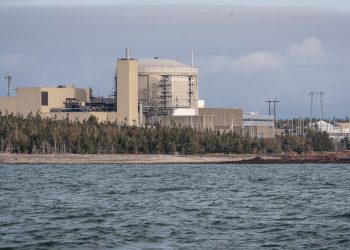
The NB Media Co-op is re-publishing this National Observer story from Ontario, where, like in New Brunswick, the government and public utility are planning to add more nuclear power to the grid, the most expensive way to generate electricity.
Abdul Matin Sarfraz is a Local Journalism Initiative reporter with the Canada’s National Observer, where a version of this story was first published on October 31st, 2025. He received a BA in law from the University of Takhar, Afghanistan, and a master’s in journalism from the University of Hong Kong HKU through a scholarship.




![University security closely monitored pro-Palestine activists, documents show [video]](https://nbmediacoop.org/wp-content/uploads/2024/11/20231129_131826-120x86.jpg)


