![Interview: Minister of Indigenous Services says ‘very discriminatory’ second-generation cut-off needs ‘multifaceted solution’ [video]](https://nbmediacoop.org/wp-content/uploads/2025/12/895.jpg)
The Minister of Indigenous Services says the second-generation cut-off is a “very discriminatory part of the Indian Act” but that more consultation is required to find a solution.
The second-generation cut-off is a provision that removes Indian status — a legal category linked to identity and rights — after two generations with one non-status parent.
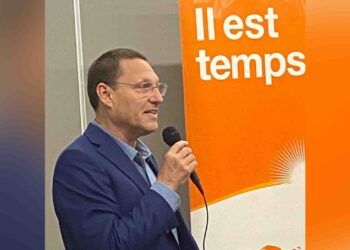
In an interview, Minister Mandy Gull-Masty said it’s “is probably one of the most harmful things that we see” but that more consultation is required to create a “multifaceted solution.”
Watch the full interview:
The Minister, who is the first Indigenous person to hold the Indigenous Services portfolio, was responding to amendments to Bill S-2 recently put forward by Sen. Paul Prosper, a Mi’kmaq senator from Nova Scotia.
Those amendments, which would replace the second-generation cut-off with a one-parent rule, were recently approved by the Standing Senate Committee on Indigenous Peoples in a 10-1 vote.
“Maybe people don’t always understand that the senatorial process of making a decision is very different than one of a minister,” she said, citing the government’s duty to consult under Section 35 of the Canadian Constitution. “I have to follow a path that’s required of me, which is to ensure that I uphold the duty to consult.”
Supporters of the amended bill include Mi’gmawe’l Tplu’taqnn Inc., the Mi’kmaw Grand Council, the Assembly of Nova Scotia Mi’kmaw Chiefs, and at least one Wolostoqey chief. Proponents argue that no more consultations are needed and that abolition of the cut-off is crucial to avoid the “bureaucratic extinction” of people with status.
However, the amended legislation is unlikely to make it into law without support from the Liberal government.
Bill S-2, as originally crafted by the government, has a more limited focus: namely to restore status to some 3,500 people who lost it through discriminatory practices known as enfranchisement. The bill is also meant to remove certain derogatory language from the India Act.
A government-led “collaborative process” that’s currently underway is expected to lead to formal consultations next year, according to the Minister. Those consultations will also look at Section 10 of the Indian Act, which allows First Nations to take control of their membership codes if they attain a double-majority voting threshold.
A larger number of electors in First Nations is likely to follow changes to the second-generation cut-off — that could make it more difficult for First Nations to meet the double-majority threshold and assert governance over their membership.
“I think that it’s really important that we do the work with community for them to identify and determine who their members are, who are citizens of their nation,” the Minister said.
“A one parent rule could work in some places. In some nations, they could apply different criteria.”
Gull-Masty, who is Cree from the Waswanipi Cree Nation in central Quebec, is the first Indigenous person to serve as Minister of Indigenous Services since the creation of that role in 2017.
That’s when Prime Minister Justin Trudeau split up Indigenous and Northern Affairs Canada, making Indigenous Services responsible for crucial issues such as drinking water, housing, health care and more.
Austerity budget
Gull-Masty expressed confidence in the new federal budget, even though it’s marked by deep budget cuts. Indigenous Services is slated to find two per cent in savings, amounting to $494 million annually.
“We were one of the departments that was actually asked to explore what a 15 per cent reduction would look like,” she told the NB Media Co-op.
“We did that exercise, we did the evaluation. We were alarmed with what the outcome looked like. We took it to the Prime Minister, we took it to the Minister of Finance. They made the decision … that we would stay within a two per cent space.”
To achieve that goal, she said, “we are trying to streamline, we’re trying to modernize, but we’re trying to make sure that the programs and services that we have are hitting the targets that they’re intended for.”
It remains to be seen how those changes will affect communities already experiencing funding shortfalls for crucial services, including programs previously sustained under Jordan’s Principle.
That’s a legal principle meant to ensure that First Nations children can receive government-funded health, educational and social services, regardless of where they live, without their cases being delayed because of disputes over jurisdiction between the provinces and federal government.
However, there have been widespread reports about a backlog of requests as the federal government has tightened funding, putting services in limbo.
“We really want to address those issues and we believe that in doing that work with community, we can identify a good process to respond to the people that need to use Jordan’s principle,” Gull-Masty said.
The interview took place just as news broke that Minister of Canadian Identity and Culture Steven Guilbeault — formerly Minister of Environment and Climate Change — had resigned from Cabinet over the government’s pipeline deal with Alberta.
Gull-Masty declined to comment, saying she’d just learned about the resignation. “I really want to respect the space that he’s in,” she said. “And that was tough news to hear.”
David Gordon Koch is a staff reporter for the NB Media Co-op based in Moncton. Lisha Francis is a student at St. Thomas University who lives in Elsipogtog.
This reporting has been made possible in part by the Government of Canada via the Local Journalism Initiative.
![Is a Moncton company helping to build jet fighters bombing Gaza? [video]](https://nbmediacoop.org/wp-content/uploads/2024/06/ApexMay192024-350x250.jpg)
![Massive increase in military spending imposed by U.S. with little media pushback [video]](https://nbmediacoop.org/wp-content/uploads/2026/10/AlexCoshSept232026-350x250.jpg)
![Amid push for ‘nation-building projects,’ critics warn of ecological devastation [video]](https://nbmediacoop.org/wp-content/uploads/2026/10/MineBabyMineSept242026-2-350x250.jpg)