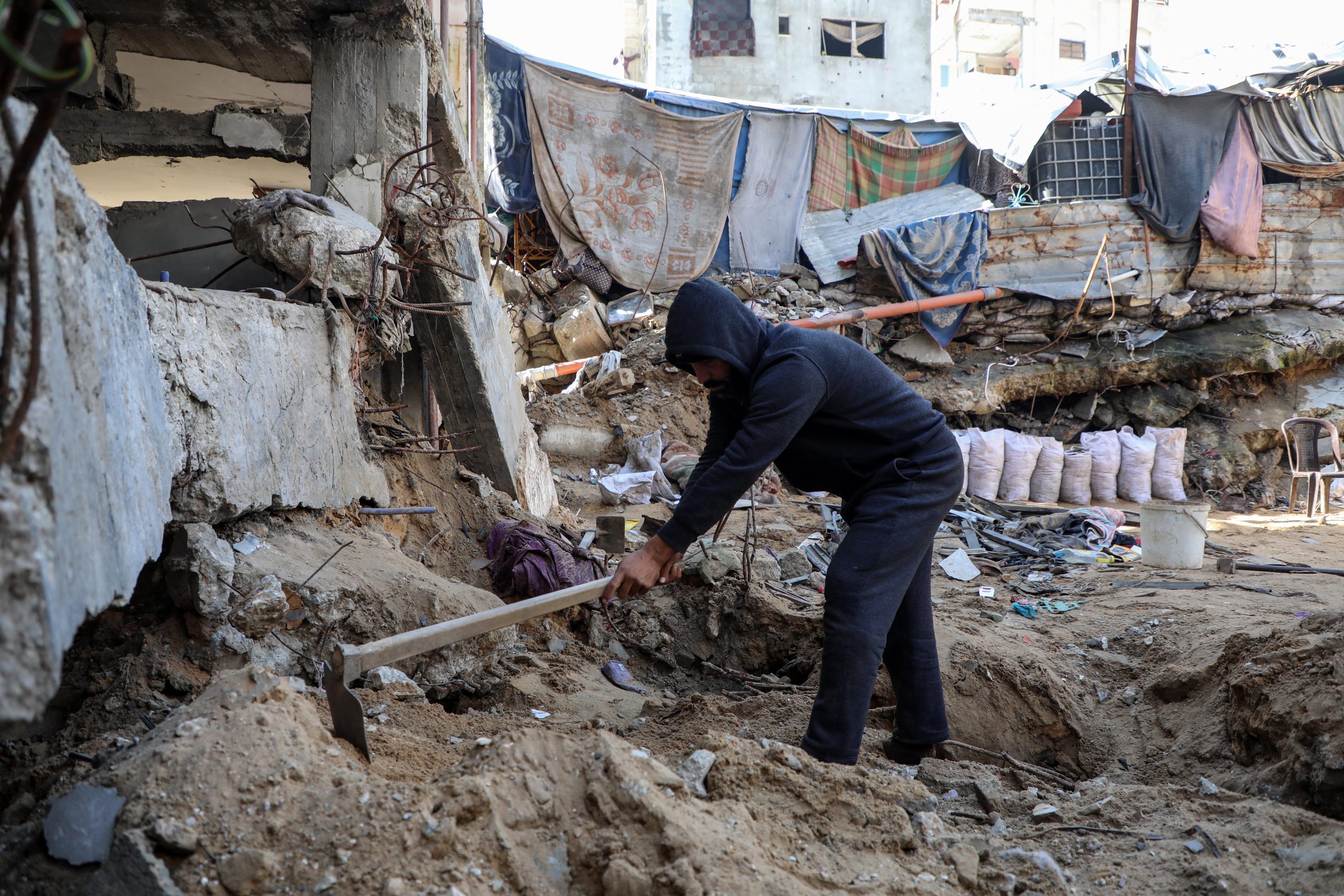
Editor’s note. This is the latest photo essay by Rizek Abdel Jawad, a photojournalist from Gaza City whose work has previously been featured in these pages, documenting life in the shadow of Israel’s genocidal assault on the besieged territory.
Content warning: this photo essay includes images of human remains.
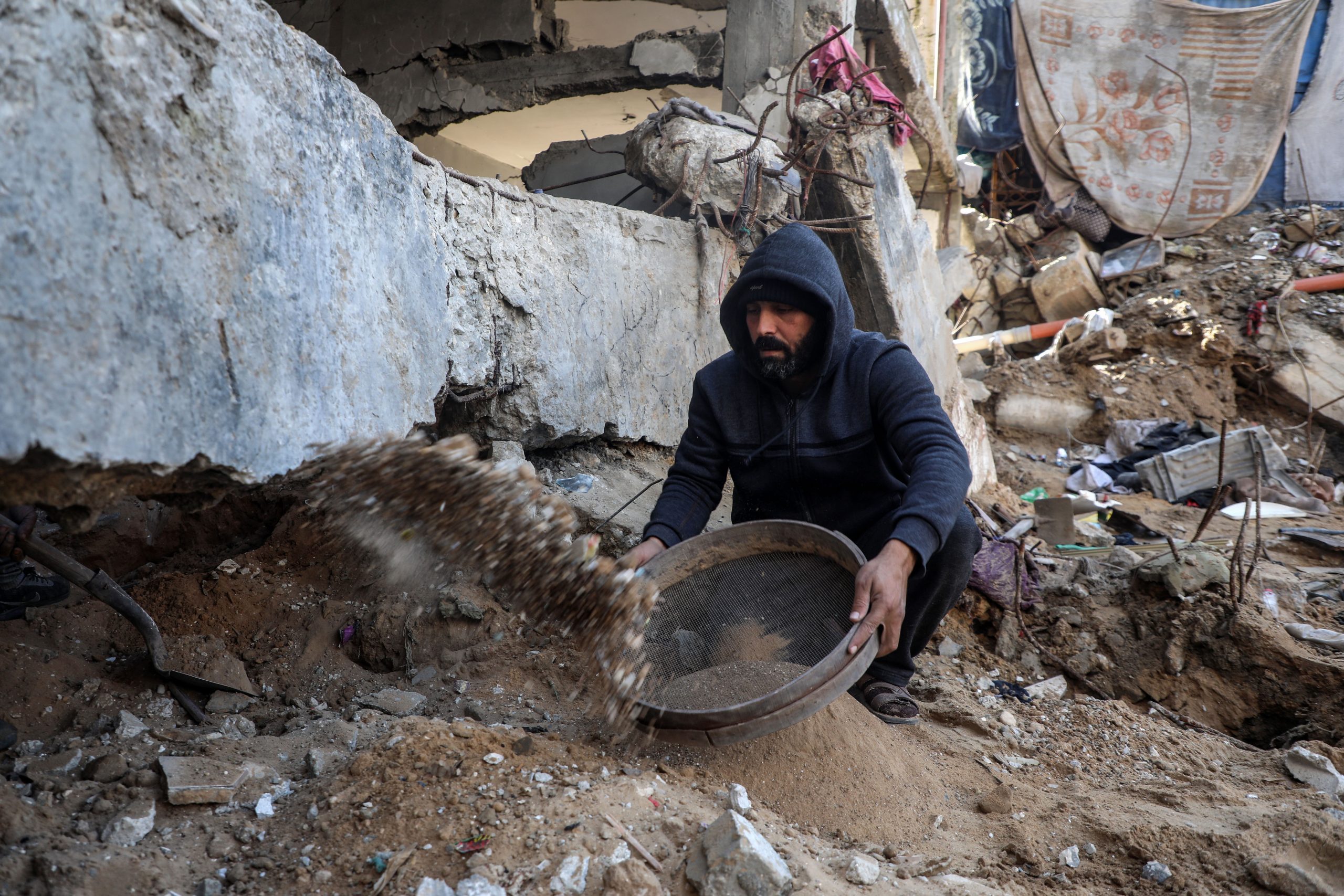
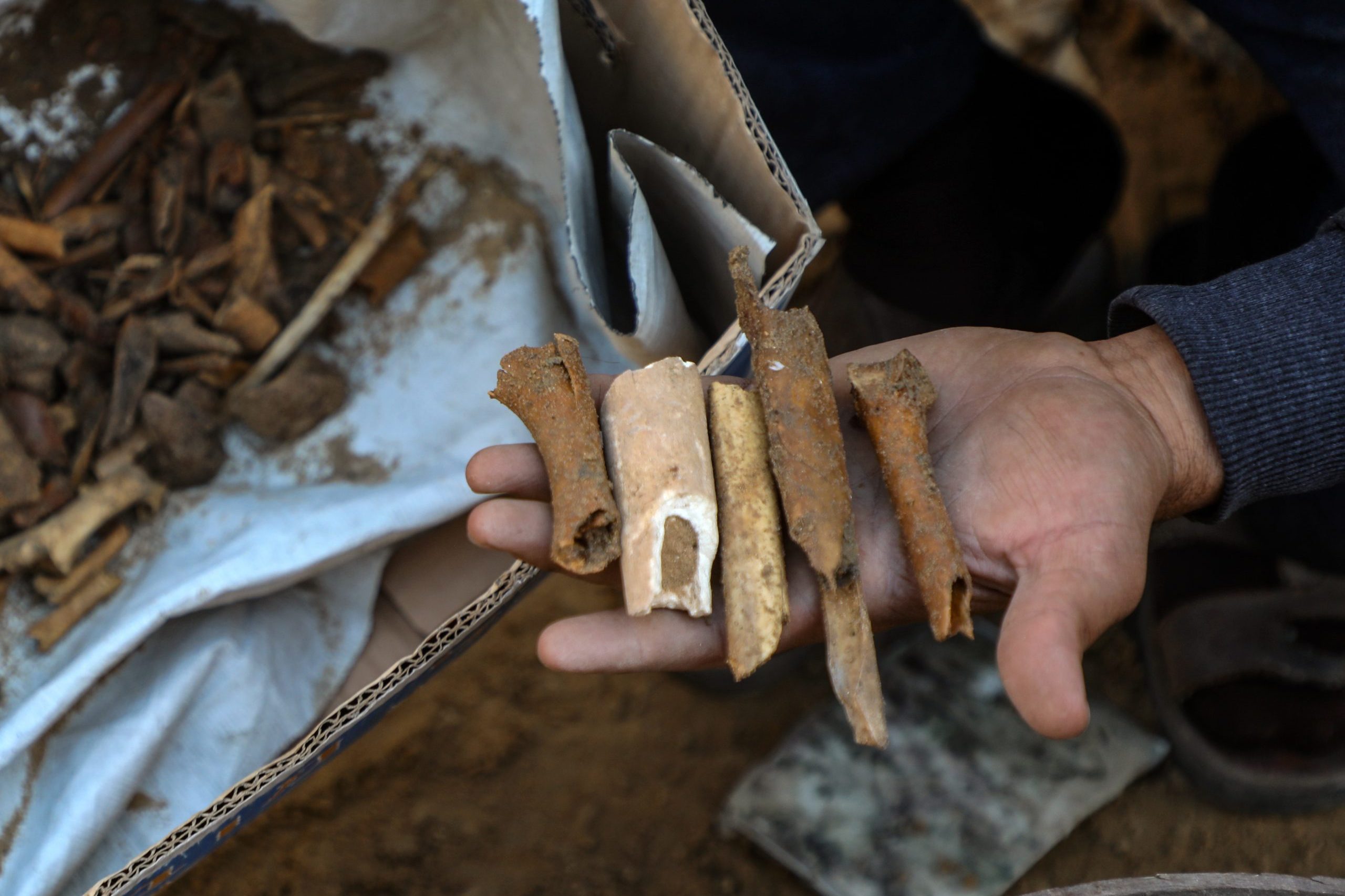
Mahmoud Hammad, 37, a law graduate from Al-Awda University College, is a survivor from an Israeli bombing who now searches for the remains of his family in the rubble of his former home.
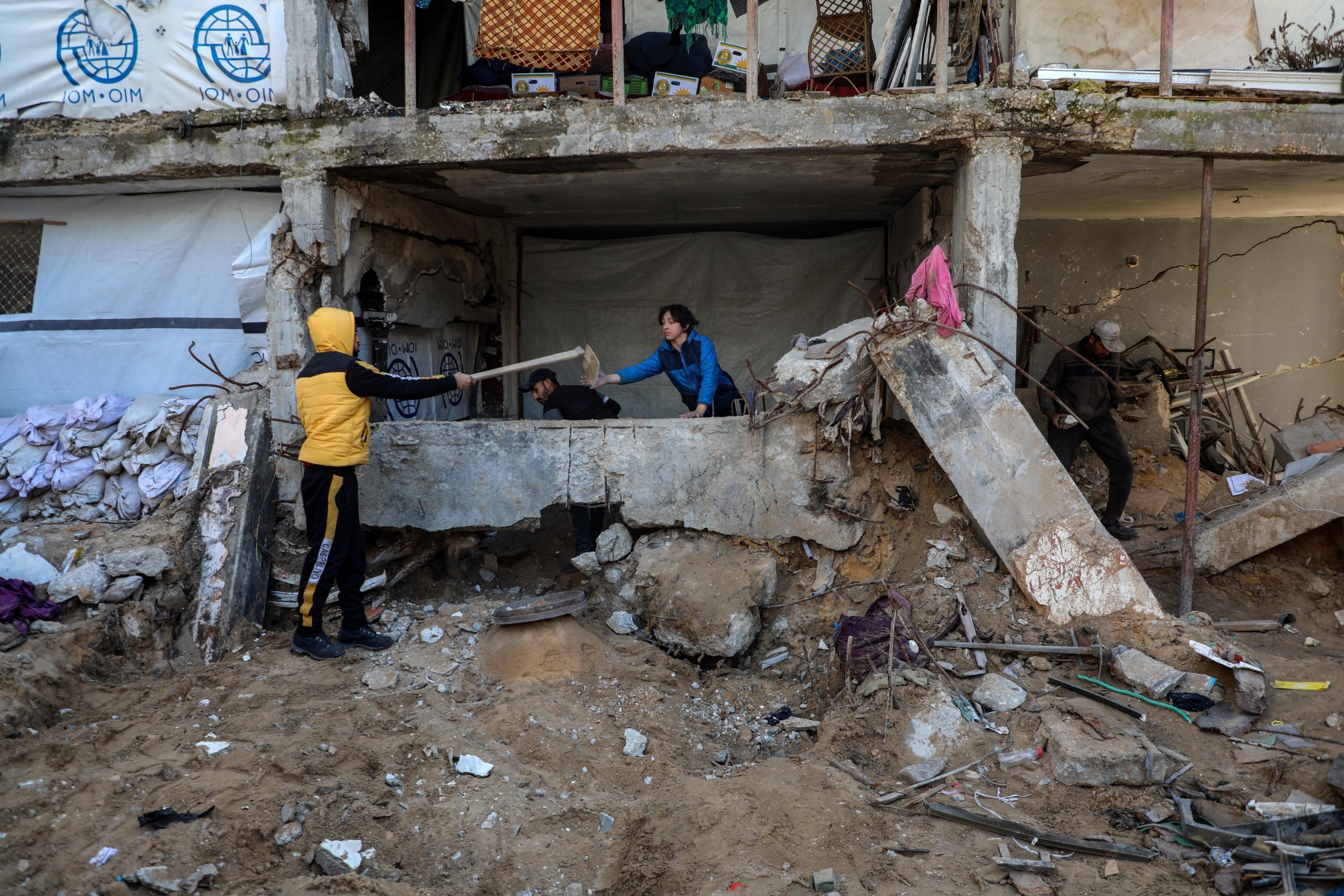
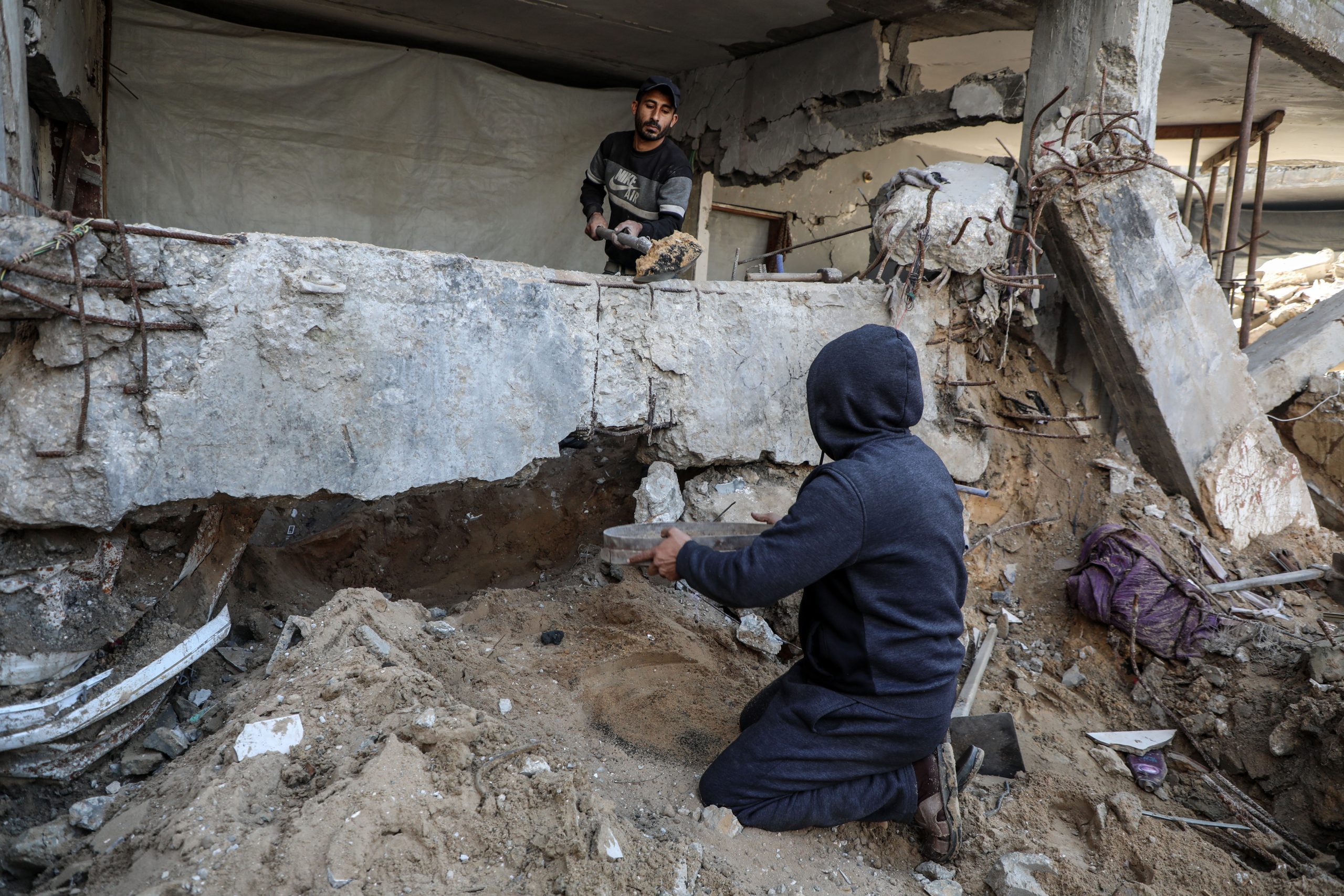
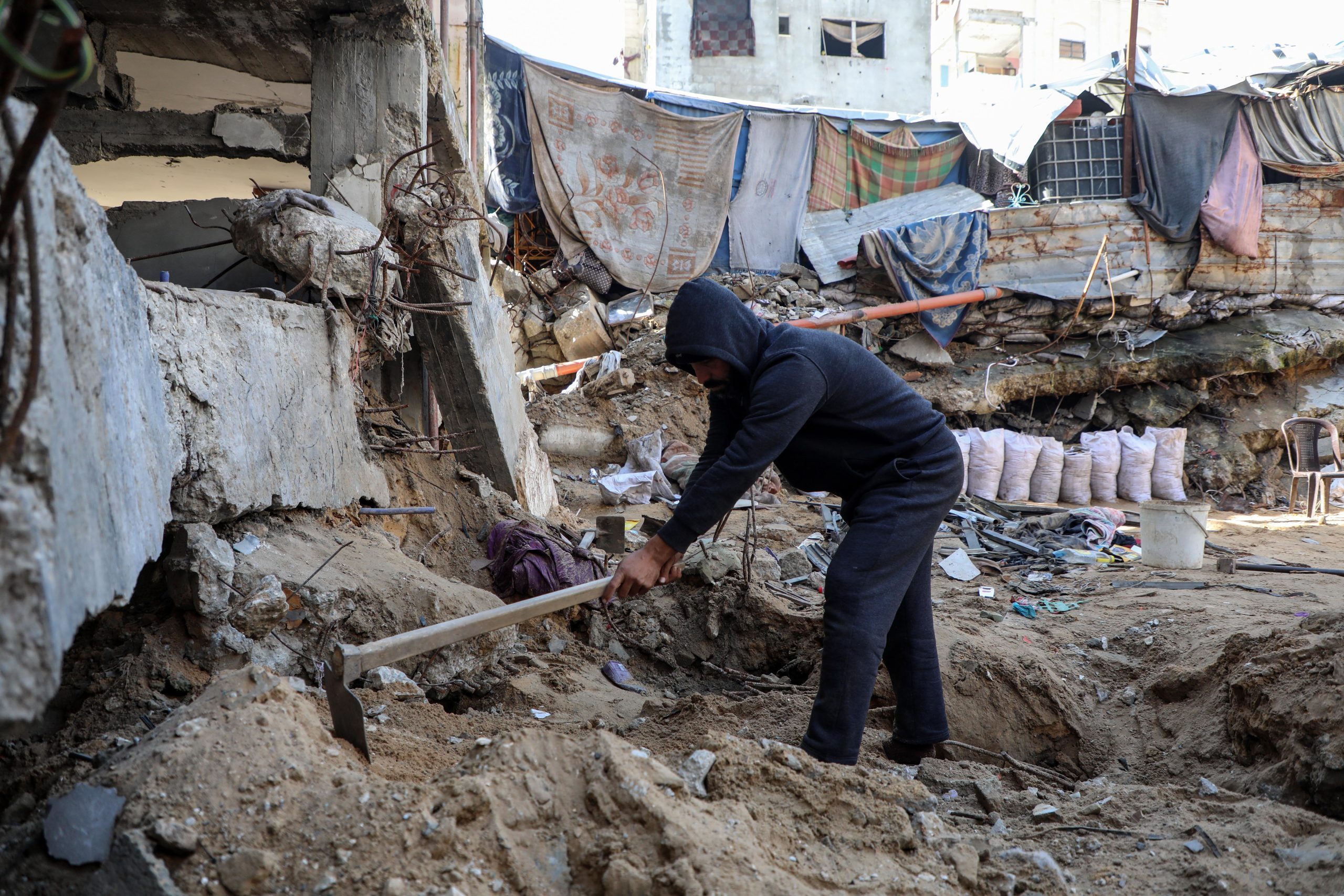
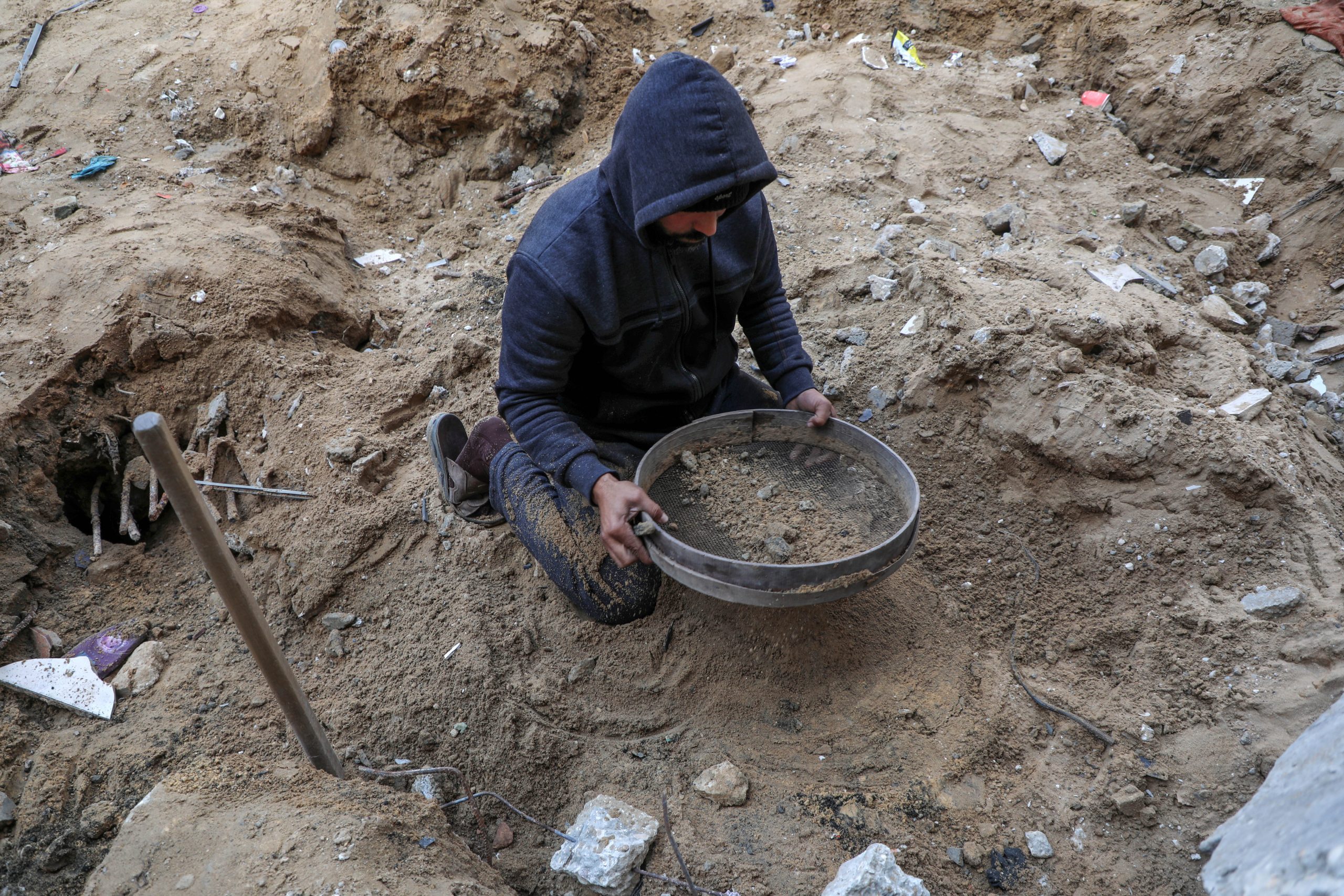
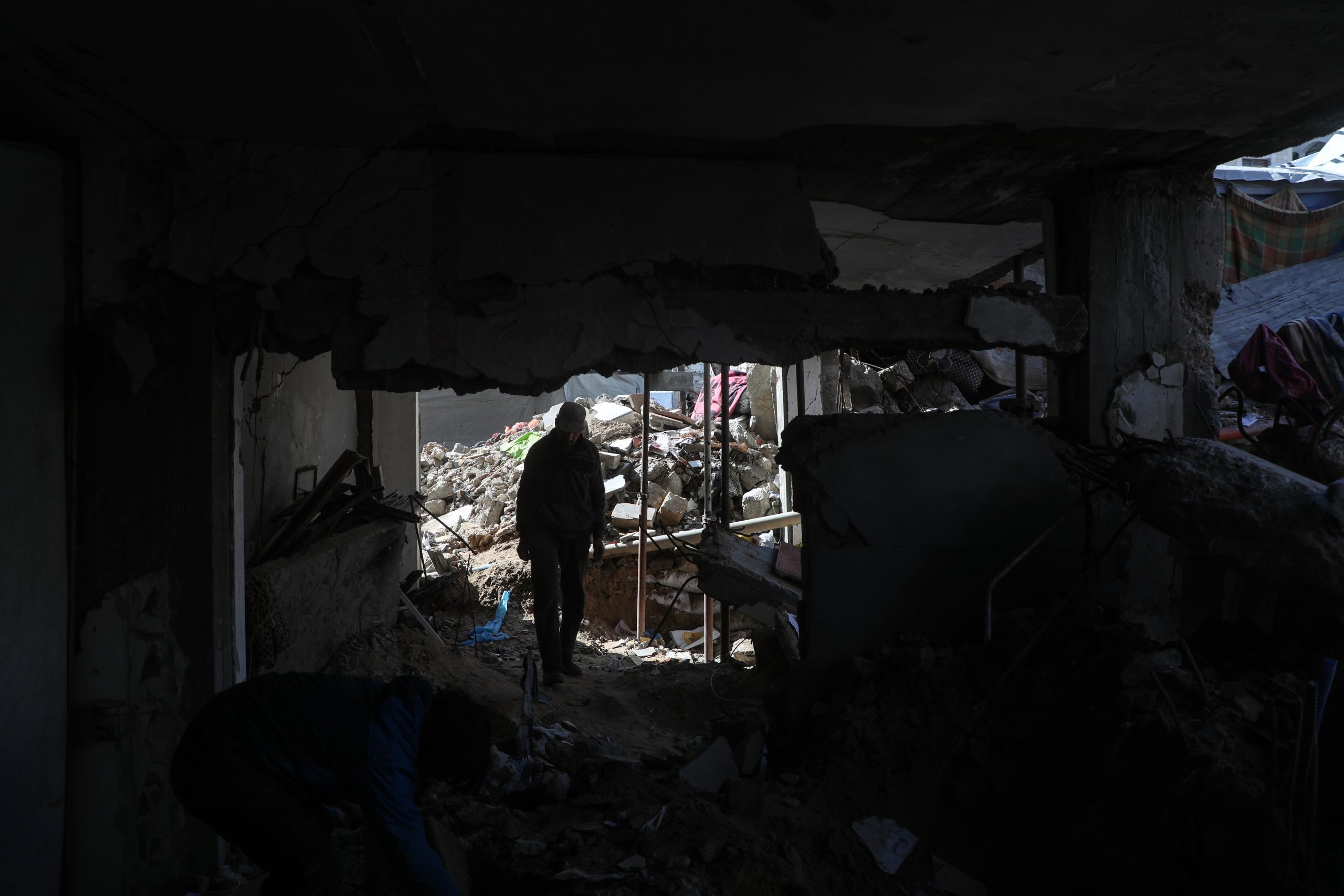
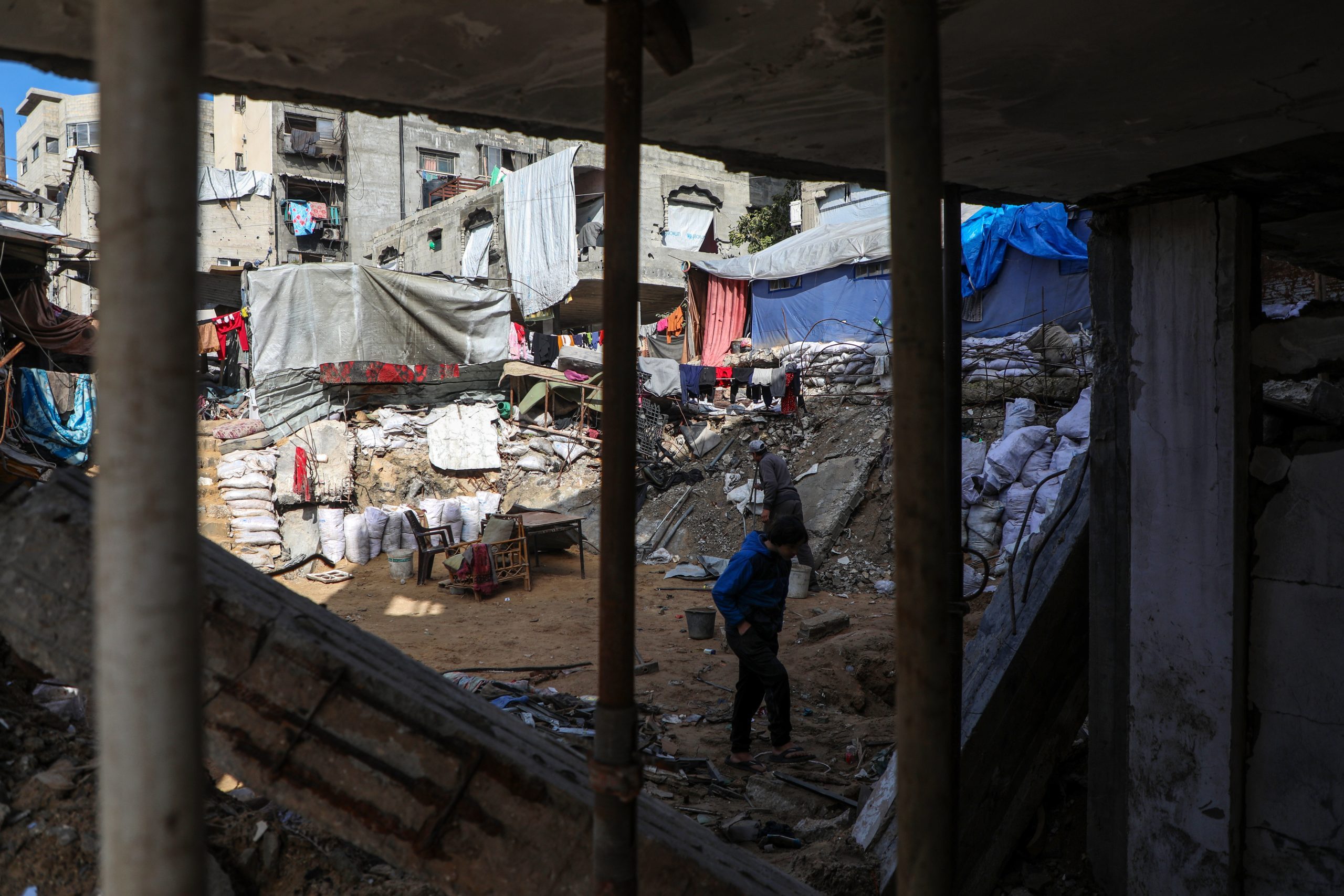
The suffering of Gaza residents intensifies daily due to the ongoing Israeli blockade, which prevents the entry of temporary housing, food supplies, and the heavy equipment necessary to remove rubble and recover the bodies of victims still trapped beneath it.
This bitter reality has driven many families to search for the remains of their loved ones by hand, using basic tools, in the absence of any support or assistance.
“This is the least I can do for my wife and children,” said Mahmoud Ismail Hammad, of the Gaza Strip, who is working to recover the remains of his family. He has endured intense suffering under the siege and destruction.
“The crossings are completely closed, and heavy equipment has been bombed, so we are forced to use primitive tools like hammers and sieves to extract what remains of my family’s bones and remains.”
All that remains of the six-storey building where he once lived with his extended family are memories, and all that remains of his family are their names, after the bombing erased everything during the war of annihilation on Gaza.
For more than two years, Mahmoud has been digging tirelessly. He began his efforts in coordination with Palestinian Civil Defence, but due to the lack of resources caused by the siege, he is now forced to rely on his own efforts.
Under the scorching sun of summer and the bitter cold of winter, he continues his work using simple tools.
Hamad revealed that despite his serious physical injuries — including twenty fractures in his chest and spine — he has continued to carry out his search.
“Our building had six floors. The first roof was destroyed, then the second, then the third. The remains of my brother, his wife, and their four children were recovered, and they are now in the Muslim cemetery.”
His story is not an exception, but rather one of many in cities in the Gaza Strip that have become temporary graves for thousands of civilians.
His wife was nine months pregnant at the time of the bombing. “On Dec. 6, 2023, our house was bombed, and the fetus in my wife’s womb died, along with its mother,” he said. “When I saw the fetus’s bones, I knew for certain that my wife had been martyred while pregnant.”
With each bone fragment he finds, he sends a picture of it to specialists to confirm its identity, enduring the pain of discovering it piece by piece.
Rizek Abdel Jawad is a photojournalist based in Gaza City. To see more of his work, follow him on Instagram and Facebook. He is part of the Connecting Gaza initiative, which helps families in Gaza survive. You can support them by going to www.connectinggaza.org/donate.
![Science exhibition showcases students’ creativity amid wreckage in Gaza [photos]](https://nbmediacoop.org/wp-content/uploads/2026/09/PulseofScienceAug252026-1-350x250.jpg)