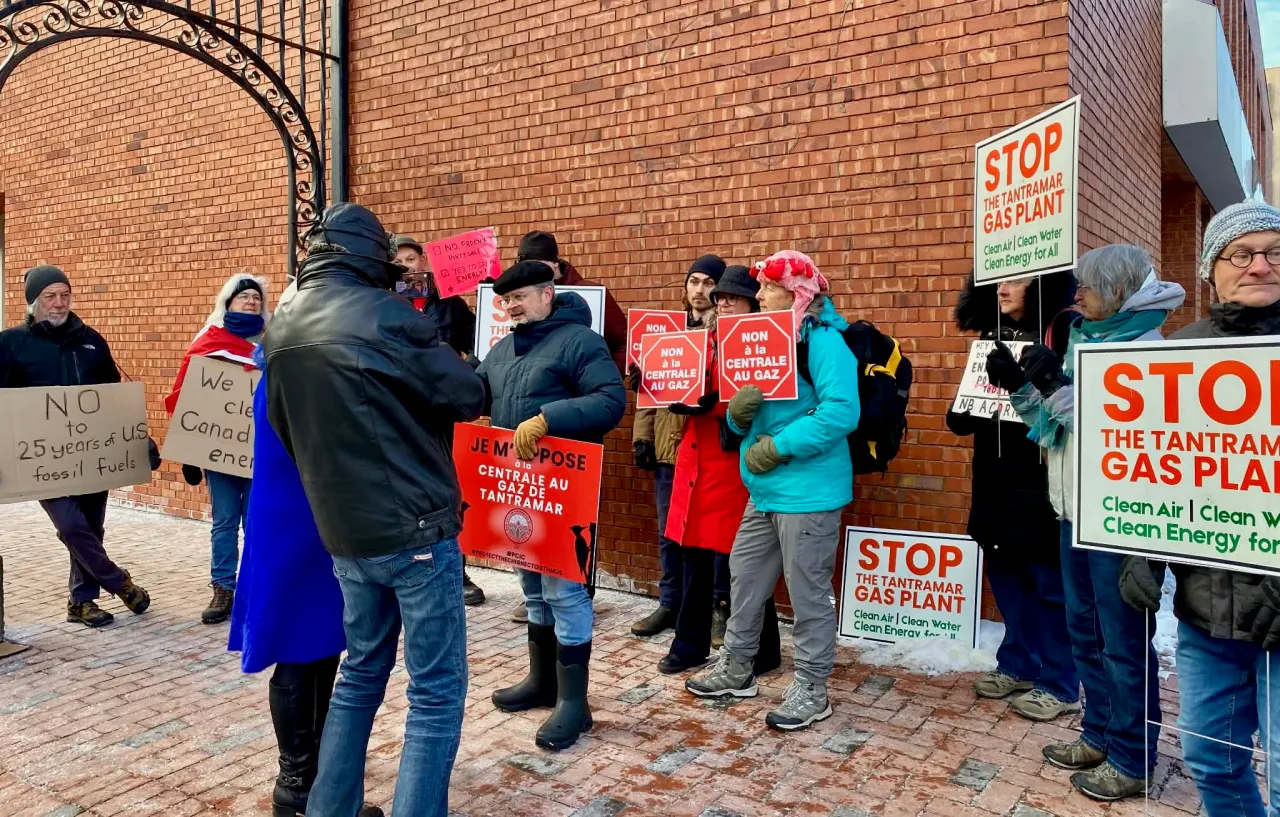
A cure worse than the disease
Nonmalesficence is the ethical obligation to “do no harm.” NB Power’s proposed diesel and gas peaker plant in the Chignecto Isthmus is a textbook violation of that principle. It is in the language of public policy a “fatal remedy,” an intervention that while purporting to solve a problem, creates new and more severe ones.
Scare tactics in place of evidence
Since this project was announced, New Brunswickers have been told that without this plant, “public safety is at risk—people will die.” Project proponents have invoked a 2014 Newfoundland blackout—in which one person died from carbon monoxide poisoning after using a generator indoors—as the centerpiece of their public safety argument.
This is fearmongering dressed up as policy. Deaths directly attributed to rolling blackouts in Canada are vanishingly rare. New generation only prevents blackouts caused by grid overload—not downed lines, not storm damage. The proponents are using an extreme hypothetical to justify an irreversible infrastructure decision.
“Direct deaths from rolling blackouts are rare and preventable. Deaths from fossil fuel emissions number in the thousands every year.”
The real death toll is in the emissions
The World Health Organization estimates air pollution kills 7 million people annually worldwide. Health Canada links ambient air pollution to up to 15,300 premature Canadian deaths per year. In the U.S., peaker power plants contribute to 91,000 annual premature deaths from air pollution—with an estimated 32 million Americans living within three miles of one. A 2021 Harvard-led study found fine particulate matter from fossil fuels responsible for 1 in 5 deaths worldwide. Peakers run during peak demand, precisely when air dispersion is worst, releasing concentrated bursts of particulate matter (PM 2.5) and nitrogen oxides (NOx) directly into surrounding communities. NB Power’s proposed Tantramar peaker plant would operate at roughly 7 per cent capacity. The “low usage” framing changes nothing. The historical record is unambiguous: they all pollute, and they all cause harm.
Bypassed communities, buried science
NB Power did not consult local or Indigenous communities before signing a contract with PROENERGY. Their own internal oversight committee warned them not to skip that step. The provincial government, rather than enforcing accountability, issued permits under the guise of water testing, allowing an access road to be bulldozed through ecologically sensitive habitat before final approvals were granted. A comprehensive environmental assessment was blocked entirely. Hundreds of the province’s leading academics, health professionals, and environmental organizations have formally opposed this project. The response from government has been obstruction and silence.
The stakes are personal—and regional
I live with heart failure. My wife is a cancer survivor. Recent studies have recommended a buffer distance from a peaker plant for people with conditions like ours can be up to ten miles or farther. That radius covers Tantramar, Strait Shores, Cap-Acadie, Memramcook, and communities into Cumberland County, Nova Scotia. Children, seniors, and people with pre-existing conditions across that area are being placed at documented risk—not protected from it. This is also not an isolated decision. Identical PROENERGY facilities are being proposed in Scoudouc, PEI, and two sites in Pictou County, NS. Tantramar may be the template for an Atlantic-wide strategy. And local MP Dominic LeBlanc—who may have more influence over these projects than any other elected official—has not said a word.
“Bad science. Bad math. Bad governance.”
The Chignecto Isthmus, its wildlife, and the communities that depend on a healthy environment should not become the casualties of a “fatal remedy.” This project cannot proceed.
Barry Rothfuss is the Executive Director of the Atlantic Wildlife Institute.