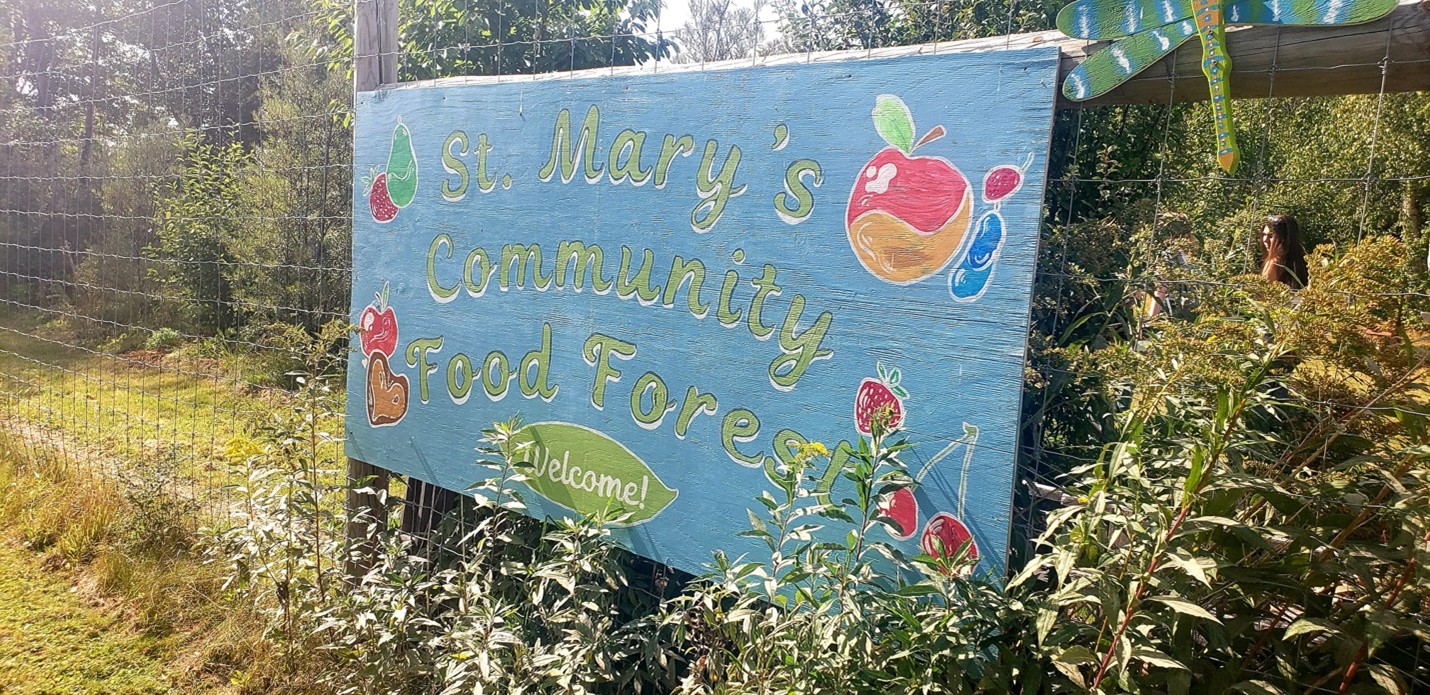
A food forest is similar to a community garden but mimics the natural forest system with native fruit trees and perennials. This system makes food growth more reliable and resilient against weather conditions.
A mid-April conference titled, Growing Resilience: Regenerative Food Forests in our Communities, will take place in Odell Park in Fredericton. This event will explore how community food forests can help address food insecurity in New Brunswick.
Since 2019, Food Banks Canada reports that food bank use in New Brunswick has increased by 45 per cent. The vast majority of New Brunswick’s food is sourced from outside the province or country, making food prices particularly susceptible to price increases from supply chain disruptions.
Communities in New Brunswick most affected by the rising cost of food are Indigenous and racialized populations, with 34 per cent of racialized people and 41 per cent of Indigenous people experiencing food insecurity, as reported by the Human Development Council.
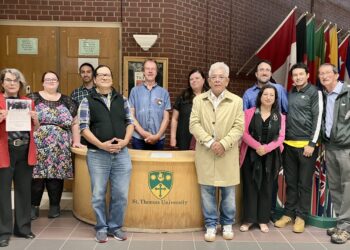
Looking for creative long-term solutions, a collection of non-profit organizations and professors from the Sustainability and Environmental Studies program at St. Thomas University have been working together to form a network of community food forests around the province.
The goal of this conference is to create a space for people from different perspectives to exchange knowledge around food forests and encourage policy change to further address hunger in the province.
Food forests, such as the St. Mary’s Community Food Forest on the north side of Fredericton operate under the principal of take what you need and leave what you don’t, allowing for as many people to be fed as possible.
Andrew Mathis, an organizer for the St. Mary’s Community Food Forest, saw a need in the community about five years ago which led him to develop the project.
Mathis explains, “After seeing other community gardens facing thefts of vegetables during the harvest season, St. Mary’s Anglican Church decided to contribute to local food security by creating a publicly available garden to grow fruit, berries, nuts, and herbs that anyone could harvest as needed.”
The success of this initiative to feed the community, is what has led Mathis, along with a dedicated group of partners to plan a conference for mid-April.
Although food forests alone will not address food insecurity in the province, they can be a community-led way to address a small part of the problem.
The conference will bring together local Indigenous representative, farmers, growers, academics and interested members of the public with the goal of creating a network of regenerative food forests around the province.
This mission has the potential to connect communities and provide free, fresh produce to those who need it most.
The Growing Resilience event at the Lodge in Odell Park on April 17 and 18 will include a guided plant walk with Indigenous Elders and optional visits to local food forests. Registration is open on Eventbrite.
Shanna Comeau is a research assistant on the Growing Resilience: Regenerative Food Forests in our Communities project and a student at St. Thomas University.
This project is made possible thanks to a collection of generous funders Including the Fredericton Botanic Garden, National Farmers Union, Food For All NB, Centre for Local Prosperity, the City of Fredericton, Social Sciences and Humanities Research Council of Canada, and St. Thomas University.