The soaring comeback of the bald eagle uplifts Ethan Augustine.
The senior biologist with the North Shore Mi’kmaq Tribal Council says the banning of the pesticide DDT in New Brunswick in 1968 allowed the large bird of prey to thrive once again.
“I remember being a kid and you’d be, like, ‘oh, there’s an eagle. That’s so cool,’ because it was so rare,” said Augustine, 29, in an interview, who calls the Mi’kmaq community of Metepenagiag, near Miramichi, home. “But now you’ll see six in one tree, and then you’ll go 15 minutes down the road, and there are four more in another tree. You’re seeing all kinds of them.”
Massive amounts of aerial spraying of the chemical in the 1950s and 1960s killed spruce budworm – an enemy of the lumber and paper industry – but also made its way into fish that the eagles would eat. The contaminants in their bodies made their eggshells thinner and weaker, causing them to break before chicks could hatch.
Over time, the bald eagle population plunged, until the chemical was banned.
“It is good that they made a comeback because the eagle is such a culturally important species for the Mi’kmaq and Wolastoqey,” he said, referring to his people in eastern New Brunswick and the other major Indigenous group on the western side of the province.
“We never got so much as an apology for almost wiping out one of our most culturally important species, right?”
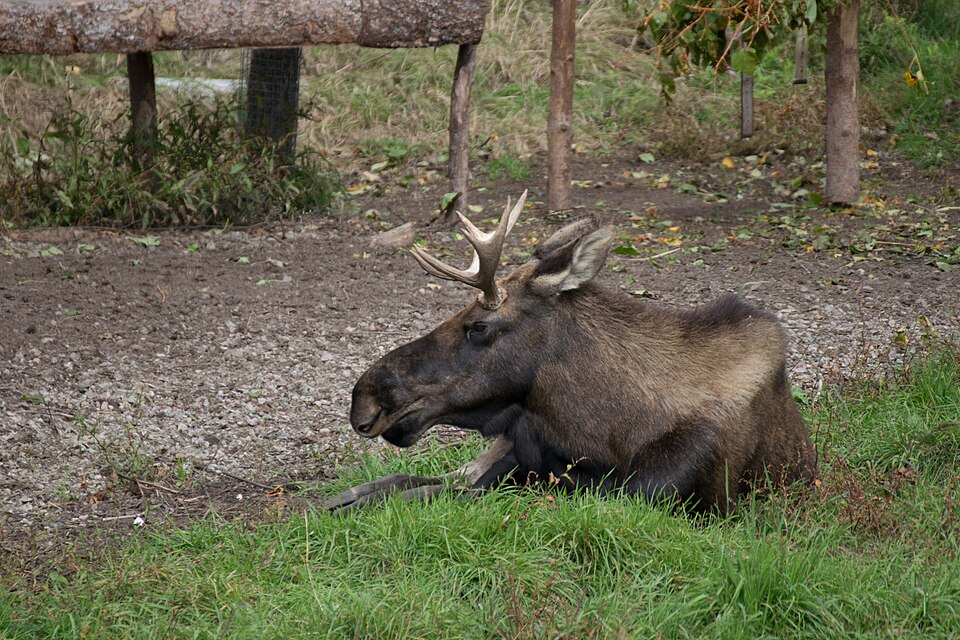
Augustine also wonders how the old use of DDT and the chemical glyphosate, still sprayed by the pulp and paper industry to kill young broadleaf trees in favour of evergreens, has affected another culturally significant species: moose.
This week, his tribal council announced it had secured $150,000 in federal funding to study whether those chemicals are affecting moose, or tia’m, the traditional food for Mi’kmaq. The project will test moose liver tissue for DDT, glyphosate, and their metabolites in the Miramichi area and Acadian peninsula.
It will combine lab testing with community knowledge to help understand whether contaminants are entering the food source and what more action could help prevent contamination.
Moose hunting was completely banned in New Brunswick between 1937 and 1960 because of overhunting, but since then, the animals have had a successful resurgence of their own.
Last year, more than 58,000 New Brunswickers – or seven per cent of the entire population – applied for just under 4,800 available moose hunting licences, one of the most popular lotteries around.
Indigenous communities hold their own fall moose hunts, typically in the weeks after New Brunswick’s strictly regulated five-day hunt that takes place during the peak rut in late September.
Augustine said the regular and Indigenous hunts are separated to ensure less pressure is put on the animals and the environment.
Each First Nation, he says, will typically bag between two and 10 moose for communal purposes, dividing them up for elders and families. Individuals who want to exercise their Aboriginal treaty rights can also go hunt in the fall when they want.
Augustine, who has successfully hunted four moose himself over the years, said his people have a great interest in ensuring the animals remain healthy.
The study hopes to combine traditional Indigenous knowledge and western academia, using what the Mi’kmaq call Etuaptmumk, or Two-Eyed Seeing.
The liver tissue of 40 moose will be tested for DDT, glyphosate, and their metabolites through accredited analytical laboratories based at Canadian universities, with support from academic researchers. The project will begin with community talks ahead of sample collection during the 2026 and 2027 fall hunts.
Community feedback will help guide how information is gathered, understood, and shared, the organizers say, with the results “brought back to communities and leadership to support future conversations about moose, traditional food, and pesticide concerns in New Brunswick forests,” according to a release.
Joshua Kurek, a professor at Mount Allison University in Sackville who’s studied the persistent effect of DDT on lake trout in New Brunswick, and Katherine Chong, a PhD student at McGill University in Montreal who studies Indigenous health, are also participating in the research.
“This project is about making sure concerns from our communities are taken seriously, especially when they involve traditional food and what is happening in our forests,” said Jim Ward, the general manager of the tribal council, which represents seven of nine Mi’kmaq communities in New Brunswick.
“We are going to look at this through Indigenous Knowledge and lab testing, and make sure what we learn is brought back to our community members.”
Augustine believes that the banning of DDT spraying likely improved moose health over time. However, Kurek’s research showed that the chemical is still in the environment of north-central New Brunswick, 58 years after it was last sprayed.
“Where we’re finding it in the bottom of lakes and in lake sediments, that’s where moose often forage,” Augustine said. “Moose are known to go underwater up to 20 feet to eat the aquatic plants they love. So, DDT could be in their system too, not just trout. It could be that it affects their liver, but not their muscle tissue. It could be found in both. We just don’t know.”
The scientist said once the findings are ready, they’ll be made public.
“If for some reason DDT is adversely affecting our traditional food sources, we want someone to be held accountable for it, right?”