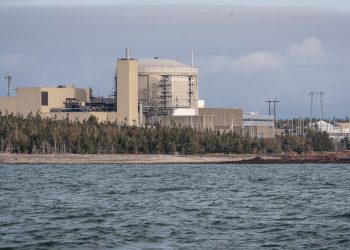
With NB Power’s Coleson Cove Generating Station near Saint John set to sunset in about 15 years, will the provincial Crown corporation switch from burning one kind of fossil fuel to burning another kind?
Coleson Cove burns bunker C oil, a heavy, tar-like leftover petroleum product, to produce electricity. Currently, the Coleson Cove plant is turned on only at peak times in the winter when NB Power is running short of power.
Earlier this year, NB Power said it was considering converting Coleson Cove from burning bunker C oil to burning fossil gas. But, on Tuesday, Oct. 6, NB Power released its 2026 Integrated Resource Plan that included no such consideration of extending its life or fuel conversion “due to the age of the asset.
The plan states that Coleson Cove’s operations are assumed to end in 2040 or 2041.
With the Holt government conducting a review of 12-year moratorium on fracking for shale gas, one has to wonder if a conversion of Coleson Cove to gas is really off the table.
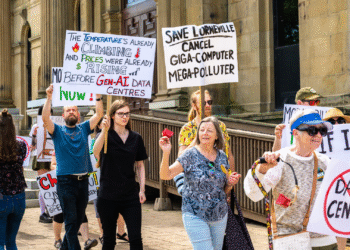
The government will decide in January whether to lift the legal requirement for the “social license” before any drilling for shale gas can begin or resume. Promising the review to be comprehensive, they are seeking approval from First Nations and the public. You can let Premier Holt know how you feel about lifting the moratorium here.
Not surprisingly, the government sees an opportunity to provide locally fracked shale gas for the province’s electricity generation and potentially for export. Extracting shale gas in New Brunswick instead of importing it from the U.S. is another perceived bonus.
NB Power plants are already among the top greenhouse gas emitters in the province, according to the 2024 National Pollutant Release Inventory Database. Coleson Cove was the third largest emitter in the province, behind NB Power’s Belledune coal-fired power plant. The fourth largest emitter was NB Power’s Bayside natural gas-fired power station. The largest emitter continues to be the Irving Oil Refinery in Saint John.
NB Power has a choice: instead of continuing to rely on thermal power generation, burning fossil fuels and fissioning uranium, they can redesign their electricity grid to be powered by distributed renewable energy and storage systems.
Renewable solar and wind energy with battery storage is now considered the lowest costing energy source, and costs continue to decline. The additional benefit is that the fuel for renewables is free and not affected by market fluctuations during operation, unlike fossil fuel generators. Building renewable energy installations close to where the power is needed also reduces transmission losses.
With the sunsetting of Coleson Cove, NB Power should end burning fossil fuels and create transmission infrastructure for onshore wind energy with backup battery storage. This is the obvious solution advocated by the Coalition for Responsible Energy Development in New Brunswick (CRED-NB). CRED-NB has a credible plan for future electricity generation in New Brunswick that is available on our website.
The fossil fuel industry must be opposed. And now that the U.N. has confirmed that the world has failed in its goal of limiting global warming to 1.5 degrees Celsius above preindustrial times, New Brunswick and all jurisdictions must make the moral choice to use only renewable energy to generate electricity.
Sam Arnold is a core member of the Coalition for Responsible Energy Development in New Brunswick (CRED-NB).