Citing tariff feuds with the U.S. and $1.7 billion deficit as reasons to reconsider the moratorium on fracking for shale gas, Premier Susan Holt is backtracking on election promises of promoting green energy. Her party’s platform on the environment stated, “We are at a turning point… not enough is being done to protect people and our environment.”
Before her election, Holt spoke openly against the Blaine Higgs Conservatives’ notion of reconsidering hydrofracturing, or fracking, stating Higgs was looking in the “rearview mirror” and that “no one is looking to invest in [fracking].” Holt said this in reference to Higgs’ 2023 European trip to pitch hypothetical energy options to transition from fossil fuels.
Holt had adamantly expressed her disdain for fossil fuels when she said, “Here we have a government where the premier takes the world stage to pitch yesterday’s energy solution. Aside from it being a poor business strategy, it’s also pretty embarrassing.”
The Liberal Party’s election platform also stressed the need to develop clean energy and to build partnerships with Indigenous communities as a priority, promising to “Increase our conservation lands and waters from 10 percent to 15 percent and work with communities, First Nations, and experts to develop a plan to reach 30 percent.”
Previously, in February 2024, the New Brunswick Liberal Party passed a resolution that the future Liberal government will implement a permanent moratorium on the exploration and exploitation of natural gas.
Holt’s Liberals have now made a swift shift. When announcing the review on fracking, CBC reported Holt saying, “How do we manage a deficit in our health-care system to deliver the care New Brunswickers deserve and our fiscal deficit where today’s revenues do not cover tomorrow’s expenses.”
The announcement surprised many across the province, including Neqotkuk Chief Ross Perley who said his community was not meaningfully consulted. Then, last Thursday, the Wolastoqey Nation in New Brunswick announced their opposition to lifting the provincial shale gas moratorium, saying the government’s review process lacks “meaningful community engagement and consultation.”
The environmental harms and adverse human health impacts of fracking are well established.
According to Yale environmental health expert Dr. Nicole Deziel, fracking may lead to air and water contamination and harm the health of people who live near the industrial sites.
Exposure to chemical contamination associated with fracking has been connected to negative effects on human cells at the chromosomal level, which, in turn, cause cancer, damage to the respiratory and cardiac systems, and birth defects.
Current research has found associations “between exposure to well proximity/density and increased odds of cardiovascular and respiratory outcomes,” with rural, lower-income, and Indigenous communities being disproportionately impacted by exposure to the fracking wells.
Fracking as a potential revenue stream for New Brunswick must also be scrutinized.
Natural Resources Minister John Herron told CBC in September that the review on the fracking moratorium will attempt to answer, “How much would it help us to fund what we all need, like collaborative health-care clinics in your communities or better health-care access or help in paying the bills?”
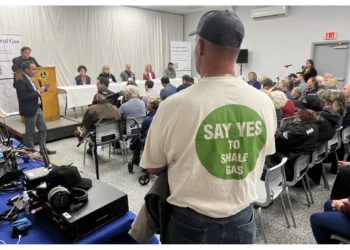
Herron is the past president of the Atlantica Centre for Energy, a think tank that has championed shale gas. A participant at a tense government public meeting on reviewing the shale gas moratorium in Sussex on Nov. 3 commented that Herron could not be trusted because of his past association with the Atlantica Centre for Energy.
Jim Emberger, spokesperson for the New Brunswick Anti-Shale Gas Alliance, said the province could experience significant delays in receiving financial benefits.
As a way to attract investment, New Brunswick set up a two-tiered shale gas royalty system, where companies pay lower royalties at the start of their operations and more once the operations become profitable.
In 2014, economists noted fracking royalties “would not make a significant contribution to the province’s finances in the early years of development, and would only do so in the longer term with high well productivities.”
Even shale gas proponents are unable to make a strong case for ending the moratorium.
Natural gas trader Todd McDonald of Energy Atlantica, a wholesale energy marketing and trading firm, told CBC that even if the moratorium is lifted, the sector would need five to ten years to develop, and it is estimated that it would take three to seven years for the province to see any tax revenues from the gas development.
McDonald also signaled the gas industry will need to be convinced to come back to the province, stating, “So many things went wrong [in 2013 and 2014] that to convince them to come back, you’re going to hold their hand a little bit and give them some incentives.” For McDonald, that involves lower royalty rates during their startup phase and assurances that legislation will not change again and large-scale protests will not impact their operations.
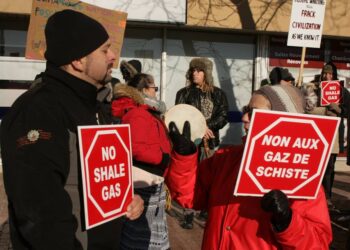
Gas companies likely remember the strong opposition just over a year ago. With the review of the moratorium, those protests have already resumed.
So, is fracking for shale gas the only option for potential revenue? What about ending the corporate welfare state?
For decades, Liberal and Conservative premiers in New Brunswick have provided tax relief and subsidies to wealthy corporations, benefiting the province’s ultra-wealthy, such as the Irving conglomerates.
In February, Opportunities New Brunswick announced it was providing Irving Paper with $45 million in tariff relief over three years. Irving Oil Ltd. has had a 45-year-old property tax exemption, which has cost the province a conservative estimate of $20 million from 1981-2023 alone.
On lifting the moratorium, Holt has stated, “Nothing will be decided without listening to New Brunswickers and considering the evidence.”
The public opposition and evidence point to the need for a permanent ban on fracking for shale gas.
Alison M. Parrell is a graduate student in the Department of Sociology at the University of New Brunswick.