A group of activists has penned an open letter calling on the Government of New Brunswick to increase taxes on its richest residents instead of going ahead with wide-ranging austerity measures.
The letter, addressed to Premier Susan Holt and Minister of Finance René Legacy, has gathered more than 200 signatures, according to a representative from the grassroots group.
Supporters want next week’s Liberal budget to include a “wealth tax or surtax on the top 0.5–1 per cent ensuring high-income earners contribute their fair share,” among other policy changes.
It follows pre-budget consultations that included a government survey gauging public support for various spending cuts.
“We were disappointed to see your public survey leaning towards reducing the civil service, closing schools, privatizing cultural sites, [and] cutting grants to essential social and community services, rather than strengthening revenue streams,” the letter states.
“As the survey did not allow for comment, we wish to offer recommendations that would better serve the long term well-being of all New Brunswickers — particularly those most vulnerable to service reductions — while also strengthening communities and helping prepare us for the realities of climate change.”
As part of consultations, the Department of Finance published a report titled “Difficult Decisions” listing proposals that included a new “arts and culture levy on relevant ticket sales,” and the closure of schools with fewer than 100 students.
Other proposals included reducing grants for non-profits, community organizations and educational institutions, and the privatization or closure of tourism, heritage and cultural facilities that attract fewer than 5,000 visitors annually.
The government report also referenced “opportunities” to recover debt including unpaid student loans and medical bills, among other measures.
For example, the provincial government has floated ideas for increasing revenue such as a general review of government fees.
Many of the more than 2,000 fees charged by various government departments “need review, with some overdue by more than a decade,” the report stated.
Small schools or medical clinics
A survey connected to those proposals included a question suggesting that New Brunswickers might have to choose between small schools and health clinics.
“Do you agree that schools with less than 100 students should be consolidated with other (larger) schools, if reducing the number of these smaller schools could help fund other priorities such as collaborative care clinics?” it asked.
It was a straw poll, meaning that it didn’t involve statistical methods allowing the results to be generalized to the larger population.
Still, the results might be a sign of things to come: 51 per cent of respondents either agreed or strongly agreed with the proposal, according to a report published by the Department of Finance.
Summerville resident Liane Thibodeau is among a group of women with roots in environmental and social activism who feel dismayed by the Government of New Brunswick’s current trajectory.

Poor and middle-class people pay “proportionally a lot more of their income towards tax than the super wealthy,” such as the billionaire Irving and McCain families, Thibodeau said in an interview.
“And I think that’s an area where we could raise revenues — instead of deciding whether we can fund a small school or a community health venture — and we can have both, if we look at things differently.”
Some of the government’s proposals appear to correspond, at least in part, with ideas put forward by the letter-writers.
For example, the government proposed to review the Crown land fee structure and to increase mining royalties, at a time when the province is aggressively promoting itself as a jurisdiction friendly to mining companies.
The open letter calls for increased mining royalties “to fully account for lingering environmental and social costs,” along with higher Crown land stumpage fees, and for the province to “reduce management fees paid to forestry companies.”
It also expresses support for highway tolls on out-of-province vehicles, an idea the government has proposed to fund expenses such as roads and bridges.
Corporate subsidies, civil service cuts
Additionally, the open letter calls for an end to subsidies for “large, profitable corporations, particularly those that offshore profits,” saying those funds should be redirected to small and medium-sized businesses.
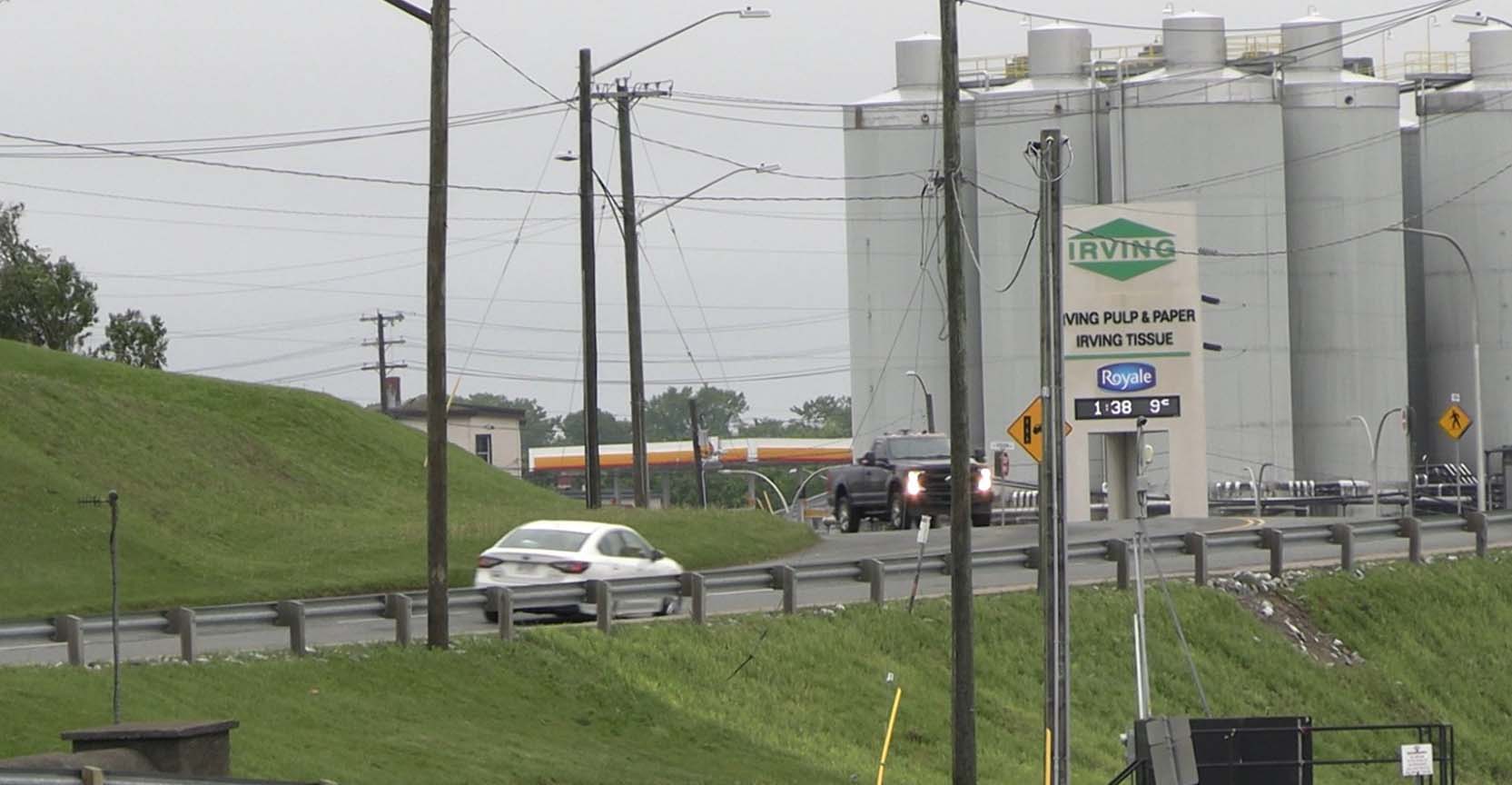
Opportunities New Brunswick, a provincial Crown corporation, recently announced conditional support worth up to $45 million over three years in support for Irving Paper Ltd., part of the billionaire-owned J.D. Irving Ltd. conglomerate.
Last year, that company slashed its operations and cut 140 jobs, citing “uncompetitive” industrial electricity rates. Irving-owned companies have been widely criticized for accepting subsidies while using offshore tax havens.
The open letter calls for the government to avoid cuts to post-secondary education — a proposal that has generated controversy in recent weeks — and to invest locally through initiatives such as community economic development corporations.
The provincial government recently projected that this year’s deficit would reach a record $1.3 billion for the 2025–26 fiscal year. The Liberal Party campaigned on a pledge to balance the budget in each year of their mandate.
Against that background, the provincial government has floated the idea of a reducing the size of the civil service, saying it has grown significantly “in part due to population growth and the introduction of new programs and services.”
Thibodeau, who ran a human resources consultancy before she retired, warned in particular against drastic cuts to the civil service. That kind of measure can be costly, she said, because the government ends up using public funds to cover early retirements and buyouts.
“In the meantime, they don’t have the people they need to deliver the services and they hire consultants,” she said. (The province has also proposed a reduction in consultant contracts.) “And if you do away with some of your best performers… your most creative people leave.”
Dependence on United States
Thibodeau said she’s particularly concerned about government decisions that will make New Brunswick more dependent on the United States.
For example, she pointed to NB Power’s selection of U.S.-based ProEnergy for a controversial gas-fired power plant in the Tantramar area, and the proposed Sisson mine, which has received millions of dollars in financial backing from the Pentagon.
The letter also calls for the government to “shift economic development focus toward energy efficiency and renewable energy initiatives.”
Thibodeau said the letter-writing initiative is meant to present policy alternatives to decision makers who are regularly subject to corporate lobbying.
“I guess that’s our goal, is to get in front of the decision makers and present them with alternatives.”
David Gordon Koch is a journalist with the NB Media Co-op. This reporting has been made possible in part by the Government of Canada, via the Local Journalism Initiative.
![Photo exhibit shows dangers faced by journalists, daily struggle to survive in Gaza Strip [video]](https://nbmediacoop.org/wp-content/uploads/2026/10/RizekExhibitOct222026-5-350x250.jpg)