

In early September, the organization behind Canada’s push for small modular nuclear reactors (SMRs) quietly signalled their demise.
In 2016, the president of Canadian Nuclear Laboratories proclaimed that “SMRs can live among the annals of great Canadian innovations.” Ten years later, the organization announced the termination of its two programs to support SMR development.
During the intervening decade, the companies promoting the 10 SMR designs in Canada had either left the country, lost their proponents, filed for bankruptcy protection, or failed to secure private sector backing for their projects.
An SMR is a nuclear reactor designed to generate 300 megawatts of electricity or less, compared to Canada’s existing CANDU reactors which generate 500 megawatts or more.
Canadian Nuclear Laboratories (CNL) manages Chalk River, the federal research campus where Canada’s top nuclear researchers conceived and designed the CANDU reactor. All the power reactors operating in Canada are a similar CANDU design, and CANDUs also operate in six other countries. But the last unit to connect to an electric grid in Canada was in 1993, and CANDU exports dried up decades ago.
CNL’s idea for a transition from large CANDU reactors to smaller reactors was an attempt to reenergize a moribund domestic nuclear industry. The concept was to lower the cost of nuclear reactors by making them smaller and building multiple modular units in factories.
The Canadian Nuclear Laboratories president made his bold claim in 2016 about a stellar future for SMRs during a pitch to the federal government for hundreds of millions of public dollars to transform Chalk River to focus on SMR research.
Since that public money began flowing, Chalk River’s upgrades included the Advanced Nuclear Materials Research Centre for SMR research, still under construction and projected to open in 2028. The cost for the new facility ballooned from $370 million in 2018 to an estimated $1.025 billion in 2025, about half the cost of the overall SMR transformation of the Chalk River site.
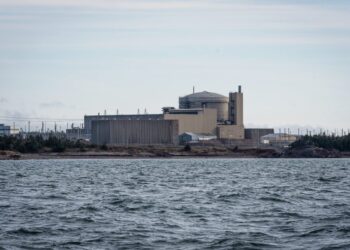
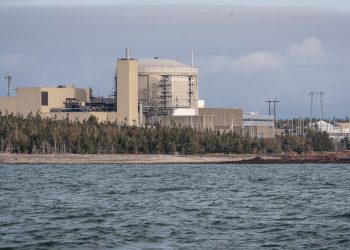
The new research centre’s focus is on “advanced” nuclear fuels for SMRs, including plutonium. One of Canadian Nuclear Laboratories’ first research collaborations for SMR fuel was with Moltex, a UK start-up company that had set up in Saint John in 2018. Moltex proposed to use plutonium to fuel an experimental “advanced” SMR it wanted to build at the Point Lepreau nuclear site on the Bay of Fundy.
Moltex lost its proponent in 2025 when New Brunswick Minister of Energy René Legacy told CBC the province was no longer willing to take on the risk of supporting first-of-a-kind experimental SMRs. A second “advanced” SMR slated for the Point Lepreau site also lost government support. At that point, the provincial and federal governments combined had spent nearly $130 million on SMR activities in New Brunswick without attracting private sector interest.
The New Brunswick SMR projects were two of the 10 SMR designs in Canada reviewed in a recent research report by the CEDAR project at St. Thomas University. Of the remaining eight, most have decamped to their U.S. home base after attracting no proponent in Canada.
So far, however, only one SMR is under construction here: an American design at Ontario Power Generation’s Darlington nuclear site on Lake Ontario.
By March, 2026, the “Darlington New Build” project was still in pre-construction phase yet had already received the lion’s share of the $4.5 billion in SMR subsidies by federal and provincial governments. In June, the federal and Ontario governments gave $715 million more via a “loan guarantee” to seven First Nations that flowed the funds through to the project. In return, the First Nations have an “equity guarantee” in the project if a fourth SMR at Darlington should ever be built.
Despite the public spending largesse, and after heroic promotional efforts by Ontario Power Generation and the federal and Ontario governments, there are no reports of private investment in the Darlington SMR, and none have been ordered in Canada or elsewhere.
The high price tag per unit, $6.1 billion plus $1.6 billion in associated infrastructure that could be shared with future SMRs on the site, makes Darlington considerably more expensive than alternative sources of electricity generation, and about the same price per megawatt as the most expensive large reactors ever built in the U.S. No doubt the exorbitant cost explains the investor reticence and lack of orders.
In addition to the Darlington SMR’s financing challenges and empty order book, and the abandonment of the “advanced” SMR projects in New Brunswick, the most spectacular SMR failure is a project designed and championed by Canadian Nuclear Laboratories.
In the “Roadmap” that launched Canada’s SMR strategy, CNL was to develop the country’s first SMR, a “micro modular reactor” to be in operation by 2026. The reactor was meant to serve mining and remote communities. CNL put together a consortium of companies to build the SMR at Chalk River and develop “advanced” fuel to keep it running.
However, in February, 2024, the lead company in the consortium, Seattle-based Ultra Safe Nuclear, announced it was scaling back operations, complaining in a media release that “only a subset” of potential customers “have shown the resolve to incorporate advanced reactors in the near term.” Several months later, the company filed for bankruptcy protection in the U.S., owing more than US$600,000 to Canada’s nuclear regulator and lesser amounts to many Canadian small businesses.
The same year the SMR project at Chalk River flopped, Alberta oil and gas giant Cenovus Energy abandoned a market study of the potential of SMRs for oil sands extraction, finding that: “from a business perspective… SMRs are not economic or commercially feasible at present or in the near future. The capital costs are high, the timelines are long and uncertain, and technology and supply chains lack maturity.”
The Cenovus market research outcome was foreshadowed by academic research published in 2020 which found that the market for SMRs in mining and remote communities was “too small to be viable.”
Despite the failure of its flagship SMR venture, and the death knell sounding for SMRs in Canada overall, Canadian Nuclear Laboratories is persisting in its quest to find a market for SMRs. After all, the organization should need at least to attempt to justify the billions in public funding it has spent so far upgrading Chalk River for SMR research.
According to its September media release announcing the demise of its two SMR support programs, Canadian Nuclear Laboratories “is playing an important role in advancing microreactor technologies for off-grid and remote applications, with multiple, targeted, initiatives under way for federal partners.”
Apparently, old SMR ideas never really die. They will just, eventually, fade away.
An earlier version of this article was published in The Energy Mix on September 22, 2026.
Susan O’Donnell leads the CEDAR project at St. Thomas University and, along with M.V. Ramana, is co-author of a report from March 2026 on SMRs in Canada, which has been downloaded more than 10,000 times. A French translation of that report will be published in October. Susan is a member of the NB Media Co-op board of directors.


![NB Update: What comes after the crisis in local journalism? [video]](https://nbmediacoop.org/wp-content/uploads/2025/06/LabourUpdateApr132025-120x86.jpg)
![University security closely monitored pro-Palestine activists, documents show [video]](https://nbmediacoop.org/wp-content/uploads/2024/11/20231129_131826-120x86.jpg)

