A 1696 battle at the confluence of the Wolastoq and Nashwaak rivers is one of the stories told in Andrew MacLean’s fifth book in the series called Backyard History: Wartime Stories From The Maritimes.
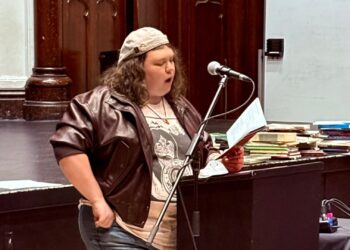
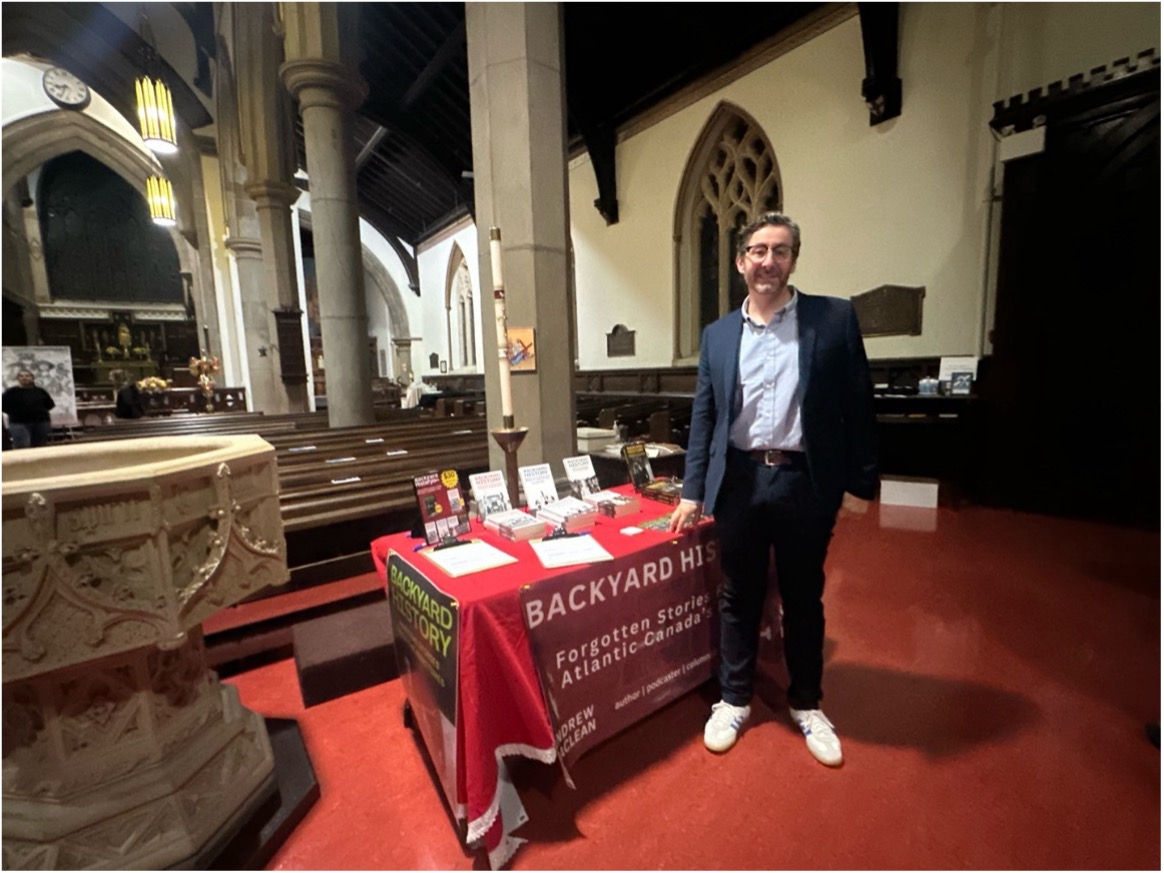
Historic Christ Church Cathedral was the setting of MacLean’s talk about the book on October 14. “The Battle of Fort Nashwaak” is one of 25 stories from the most recent collection translated into French and released this month.
MacLean also writes for a show on Bell Fibe TV called Backyard History.
The story of the battle of Fort Nashwaak goes back 330 years. It was part of a series of wars fought between New England and New France for control of the colony that was called Acadia. At the time, Acadia consisted of modern-day New Brunswick and Nova Scotia.
MacLean started with the story of the pirate captain Pierre Maisonnat dit Baptiste, known as Pierre Baptiste, who was feared by the English. The story begins with a prisoner swap with the English. As part of the swap, the English sent two heavily armed gun boats to try to destroy Baptiste’s ship. They successfully sunk his ship but had failed to capture Baptiste.
It had been four years before the King William’s War had taken a turn for the worse for the French. Fort Nashwaak became a target for the English.
The English began their assault on what was and remains unceded Wolastoqey territory on October 18, 1696. Each side had two cannons that fired at each other. Due to losses and the weather, the English were forced to retreat to New England.
It was a very unusual group that had been forming for the French defense. Pierre Baptiste showed up to the Fort with 28 pirates. Another group that showed up were 36 allied Mi’kmaq warriors that came with a priest that was against violence, MacLean said.
A peace treaty was signed and the war eventually ended in 1697. The Fort was decommissioned and its parts were sent to Fort La Tour, located in modern day Saint John.
In his research, MacLean gets his information from diaries and other pieces of writing from people who lived through the events. In this case, he worked with New Brunswick Archives to find information.
As this is also folk history, MacLean asks people for diaries and other writing from descendants. If they do not wish to give the physical copy, he asks if they will tell him about it.
When asked how he decides whose story is worth being told, MacLean said: “Finding people vouching for themselves.” By using the diaries and other pieces of writing from the time, MacLean is able to bring stories to life from real people. These people all have unique lives that are worth sharing.
It was very fitting for this event to be held in Christ Church Cathedral as it holds so much history.
At the beginning of the event, the Cathedral was described as opening on August 31, 1853, almost two centuries after the Battle of the Nashwaak and along the banks of the river.
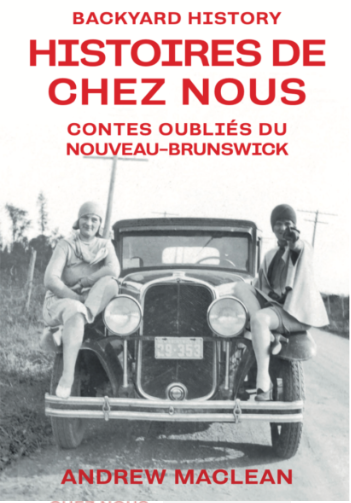
MacLean translated the book into French with his friend Marc-André LeBlanc because French is really important in New Brunswick and to its history. MacLean believes that every New Brunswicker should be able to read about their history. Another reason he wanted this book translated is because he has family who live in the North Shore of New Brunswick.
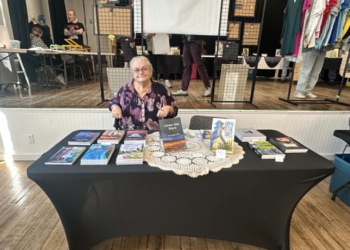
MacLean’s book, in both French and English, can be purchased from his website Backyard History: Wartime Stories From The Maritimes.
Emma Benjamin is a UNB student studying English and is originally from Nova Scotia. She is completing an Arts 3000 Internship with the NB Media Co-op.