
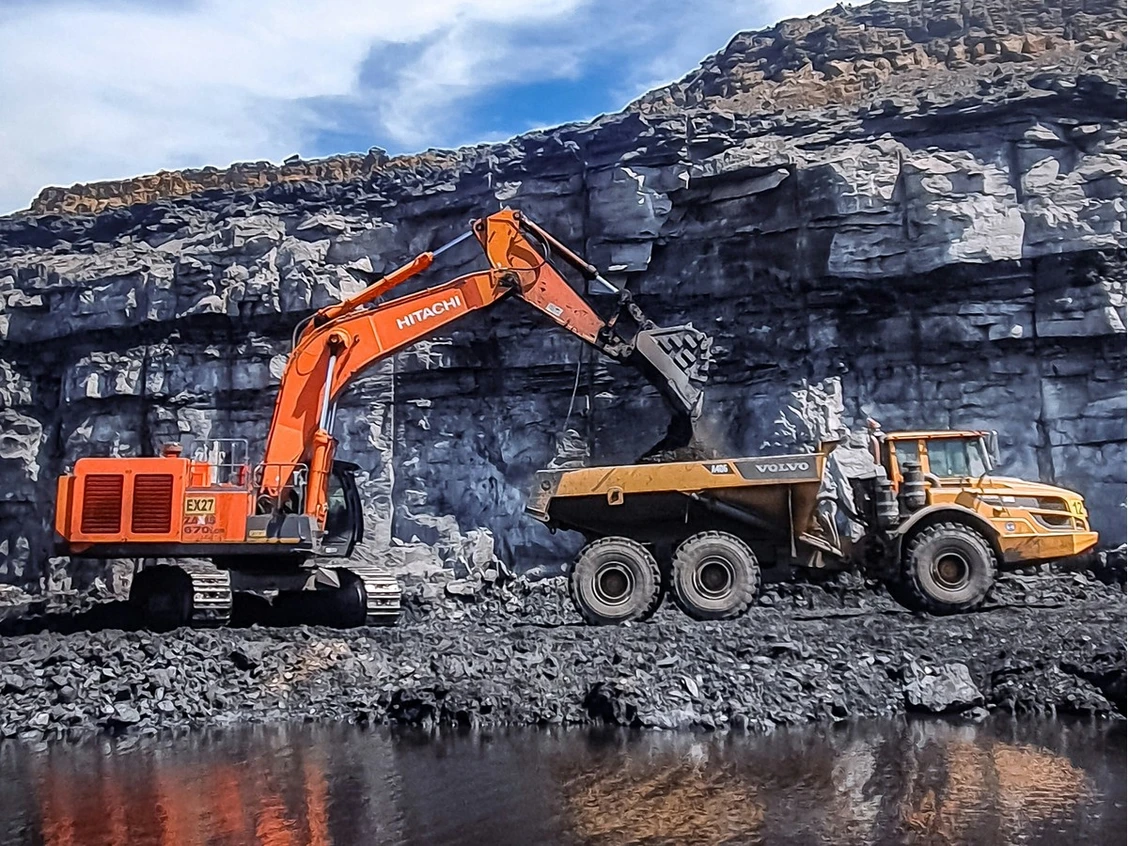
Groups opposed to a big new mine in central New Brunswick are demanding that the provincial government scrutinize the project’s latest plans, including changes to a tailings pond and massive earthen dam that would hold back toxic wastewater.
Northcliff Resources, a firm in Vancouver, recently published a summary of a new feasibility study that showed the $1.5-billion Sisson mine would be a big money maker.
The open-pit mine, which would dig up the critical metals tungsten and molybdenum, is supposed to create 500 jobs during construction and 300 jobs when it’s up and running in 2030.
Over the span of 27 years, the mine about 60 kilometres north of Fredericton would generate taxes and royalties of just under $14.5 billion, the study suggests. For investors, there’s the lure of payback within less than two years.
“I don’t consider this much more than marketing material,” said Tom Cheney, the executive director of the Atlantic Salmon Federation, in an interview on Friday.
“The government should be asking bigger questions about the trade-off. Even if we do take some of this feasibility study at face value, these claims about jobs and royalties, etc., is this worth it? I mean, it is an insane risk.”
Cheney said it wouldn’t be just a few thousand people in the Nashwaak Valley who would be affected if the tailings pond failed. The Nashwaak River drains into the St. John River, home to the cities of Fredericton and Saint John.
“Do you know how many property values would be damaged? It’s a whole third of the province that lives downstream of this mine.”
Northcliff’s CEO Andrew Ing has promoted the project for a similar reason – proximity. With Fredericton and other nearby communities, such as Juniper, Napadogan and Stanley, within easy driving distance, there would be no need to build a work camp, and it would be easier to lure workers and executives to the area.
The updated feasibility study, which will be released in full on Oct. 15, also states that a special fund would be created – a bond – that would be worth $210 million by the time the mine closes in 2057 that would pay for ongoing water treatment and other reclamation in perpetuity.
“With the positive results released, I think that de-risks this project even more, which should increase the appetite for investors to participate in the building of this mine,” Ing told Brunswick News last week.
An opponent had a more cynical view.
“Essentially, the document that Northcliff Resources released is a tool for the company to get it what it desperately needs – investors,” said Allyson Huestis, the executive director of the Nashwaak Watershed Association, in an interview on Thursday. “It highlights the positive aspects to drum up investment for them.”
Huestis and Cheney are part of the Stop Sisson Mine Coalition, includes several organizations and individuals.
They have an uphill battle: both Prime Minister Mark Carney and Premier Susan Holt have thrown their support behind the project. The premier plans on pushing Sisson to private investors at a Toronto summit this week as one of eight major New Brunswick projects they should back.
Still, the mine’s opponents say the provincial government has a responsibility to scrutinize Sisson. They want it to conduct an independent, third-party study of the updated feasibility study, the same way it examined Northcliff’s first feasibility study in 2013.
That culminated in a report in April 2015 by the consulting firm Amec Foster Wheeler, which concluded that Northcliff had badly underestimated the cost of building a wastewater treatment plant – by 50 per cent.
The old report also said the firm had low-balled the cost of maintaining the site once the mine closed, when the open pit is supposed to slowly fill with water.
An updated review, Huestis said, would likely cost hundreds of thousands of dollars, money a nonprofit like hers just doesn’t have.
“We need the province to hire independent experts who can really look at it in depth,” she said.
Brunswick News asked the provincial government whether it would conduct such a study and is awaiting a response.
David Sweeney, the mayor of Nashwaak Rural Community, said his council would reserve comment until the full report is released. However, he told Brunswick News they still expected Northcliff and the provincial government to prove the mine wouldn’t pollute the Nashwaak and Tay rivers.
“We welcome jobs but not at any cost,” he said.
The Atlantic Salmon Federation, meanwhile, has embarked on a study of its own, an economic one for the Nashwaak Valley. The organization is paying $20,000 to the Pond-Deshpande Institute at the University of New Brunswick, which should deliver the research by late fall or early winter.
It will examine some of the economic consequences of the mine, including “local people whose businesses could be ruined if there’s a catastrophic breach, such as people working in the outdoors industry,” Cheney said.
The study will also include an inventory of economic assets in the region and the drivers of prosperity.
And then finally, the study will chart a path for alternatives that work with the ecology rather than against it.”
Cheney doubted Sisson would create anywhere near 300 jobs.
The first version of the feasibility study from 13 years ago also said the mine would need 300 employees, a figure that hasn’t changed.
The updated version mentions the company would optimize operations by using autonomous haul trucks and electric shovels in the open pit.
“We have to keep in mind that these are highly mechanized, highly automated processes,” Cheney said. “It just doesn’t require that much human labour.”
John Chilibeck is a Local Journalism Initiative Reporter for the Daily Gleaner. This article originally appeared in the Telegraph-Journal on September 13, 2026.
![Amid push for ‘nation-building projects,’ critics warn of ecological devastation [video]](https://nbmediacoop.org/wp-content/uploads/2026/10/MineBabyMineSept242026-2-350x250.jpg)





![Amid push for ‘nation-building projects,’ critics warn of ecological devastation [video]](https://nbmediacoop.org/wp-content/uploads/2026/10/MineBabyMineSept242026-2-120x86.jpg)
