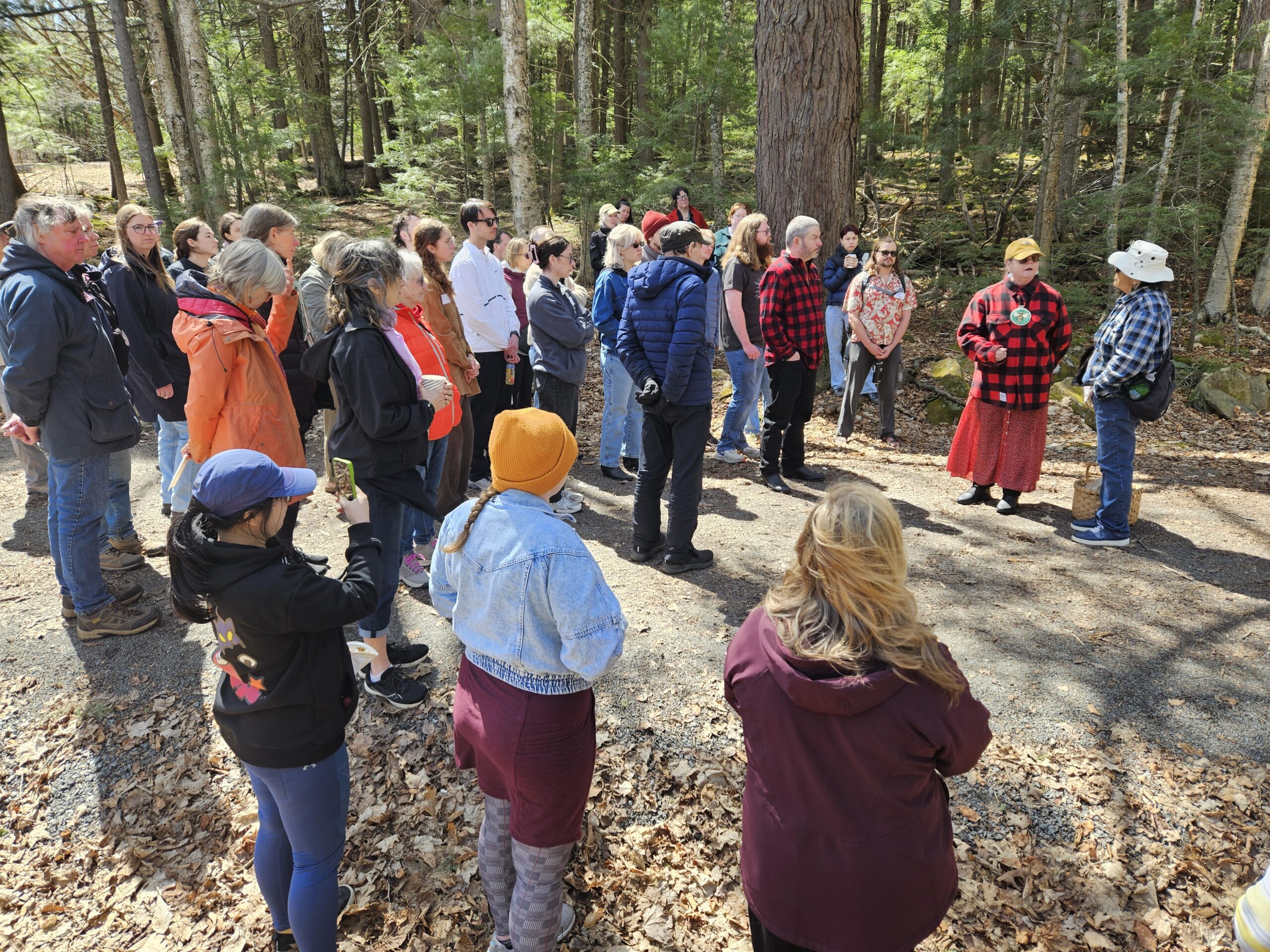
Across New Brunswick, residents are turning parks, school grounds, church properties and backyards into landscapes where food grows much like it does in a forest. These “food forests” are not new, but interest in them is spreading. With more than 20 community food forests already established, 24 more planted at school locations, and more than 20 private food forests in action, their momentum is undeniable.
A food forest uses layers of mostly perennial plants: fruit and nut trees above, berry bushes and herbs below, and vines, roots, ground cover plants and mushrooms throughout. Unlike a vegetable garden replanted each spring, a well-designed food forest that mimics patterns in a natural forest will require less digging, watering and weeding as it matures.
The approach builds on long-standing Indigenous knowledge and on agroforestry practices used around the world. In New Brunswick, it also includes newer community projects, municipal plantings and private sites that open their gates to visitors.
More projects are taking root
The first New Brunswick Food Forest Tour was held in 2024 and included nine properties. By 2025, the tour had expanded to public, private, community and commercial sites across the province. The 2026 tour has continued that exchange of practical knowledge and will continue.
Sima Usvyatsov, a dedicated practitioner in the food forest space in the province, says, “Visiting a few different sites, whether through public spaces, local garden clubs, or the NB Food Forest Tours initiative can provide invaluable inspiration and learning opportunities. New Brunswick has a lot of local knowledge and experience, and the greatest resource the local food forest community offers is the willingness to share both.”
Municipalities are participating too. Fredericton established a fruit forest in Wilmot Park to provide free fruit and improve urban biodiversity. More recently, Fredericton planted a food forest in Gourley park, through a partnership with Under One Sky, that also just completed stage of their own food forest at their Leverman location funded by Tree Canada. Moncton is also developing public food forests.
At Natoaganeg School in Eel Ground First Nation, edible trees and shrubs form an outdoor classroom connected to Mi’kmaq culture, food security and land based learning. The project shows that food forests can support cultural revitalization, education, as well as food production.
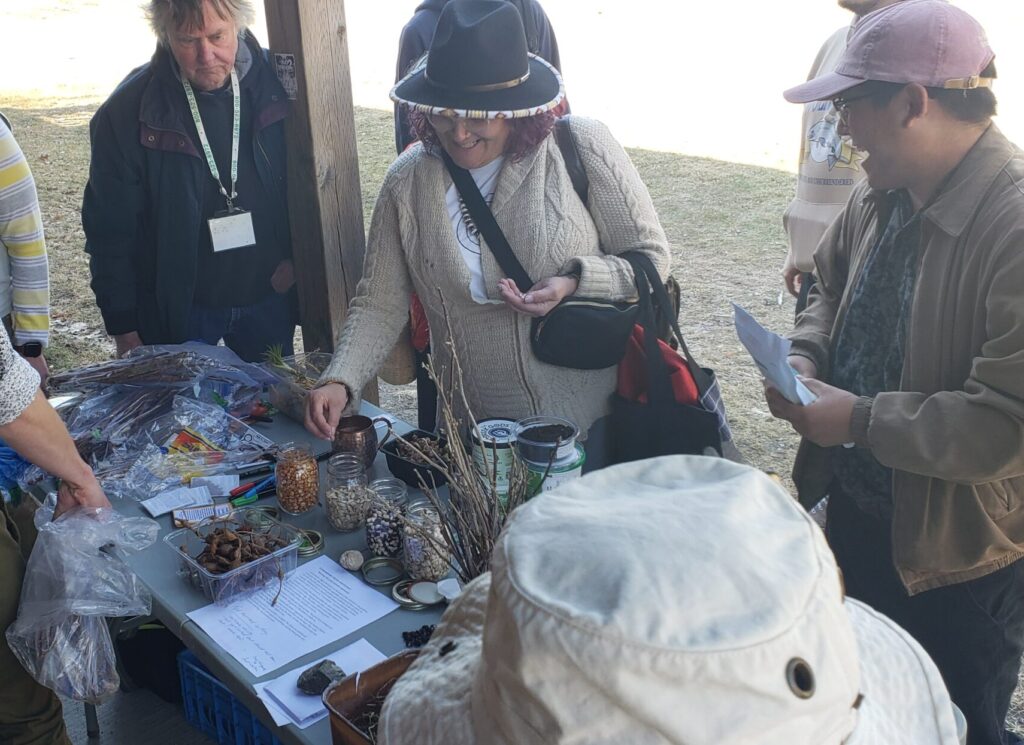
In April 2026, growers, Indigenous knowledge holders, academics, community organizers and municipal representatives gathered at Fredericton’s Odell Park for the Growing Resilience conference. The event, organized in partnership with St. Thomas University and community organizations, focused on strengthening a province-wide food forest network. The two-day event convened researchers, practitioners, Indigenous knowledge holders, policymakers, students, and community members in Fredericton, New Brunswick, and beyond.
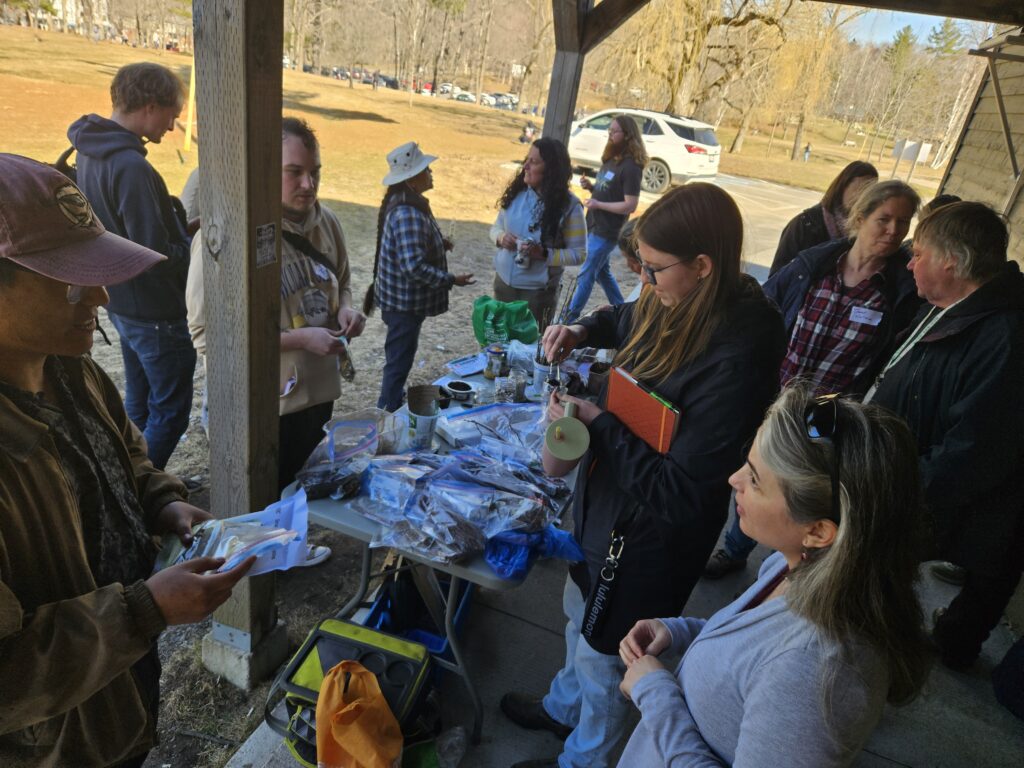
The central takeaway from the Growing Resilience conference and our research is that New Brunswick already has an abundance of people, knowledge and resources with the potential to grow a strong food forest movement. The next step is connecting and supporting them through the community and with policymakers.
That work is continuing. In August, St. Thomas University announced that its Sustainability Learning Lab will establish an on-campus food forest for teaching and research.
Benefits that grow over time
Those taking part in the food forest movement are increasingly acknowledging that their benefits extend beyond food production. Usvyatsov explains that “Food forests are particularly important in urban areas, where they offer different environmental benefits, from increased shade, diverse flowering plants that support pollinators, and a variety of foods and habitat for birds.”
Usvyatsov also points to the educational value of these spaces, particularly for children: “A food forest, whether private, community-based, or public, offers many benefits to a community. Of course, they improve local food security through access to fresh, delicious food, but they also help people better understand where their food comes from, especially so for kids.”
They can also help communities prepare for a changing climate. A mix of species and plant layers is less dependent on a single crop, and established perennials can cope better with some droughts and heavy rains than shallow-rooted annual plants.
The economic benefits are real. Food forests can provide free or low-cost produce, plants and learning opportunities. As they mature, perennial systems may also use less water, fertilizer and labour than intensively managed annual gardens.
For municipalities, food forests can make one public space serve several purposes: food production, shade, recreation, education, habitat and rainwater absorption. That may reduce some landscaping and stormwater costs over time, although each site still needs money, skilled design and ongoing care.
The personal benefits can be just as important. Planting, pruning and harvesting give people time outdoors, practical skills and a chance to meet neighbours. Dr. Monika Korzun, an assistant professor at St. Thomas University who immigrated from Poland, describes food forests “a way of reconnecting with parts of ourselves we thought we’d left behind, and they give us a way to build new memories and new community. It can help create a sense of belonging.”
Food forests are not a complete answer to food insecurity or climate change. Their harvests can take years to develop, and public sites need clear agreements about land, maintenance, harvesting and access.
Still, they are a step in the right direction by offering communities a practical way to grow food, restore urban nature and strengthen relationships and replenish hope.
People planning a site can also look to resources such as Edible Forest Gardens by Dave Jacke and Eric Toensmeier or The Community Food Forest Handbook by Catherine Bukowski and John Munsell. They can also connect with local permaculture and food forest practitioners, such as Andrew Mathis of Oasis Farmery.
Trinity Webber is a fifth-year student at St. Thomas University and a first-time research assistant. Working under the supervision of Monika Korzun and Gillian Kerr, she is interested in sustainability, regenerative practices, and community-based approaches to creating a more sustainable future. Dr. Gillian Kerr is an ecological economist, consultant and Adjunct Professor at STU and Royal Roads University.