New Brunswick faces critical choices about its energy future, with consequences that will extend beyond today’s needs and shape the world future generations inherit.
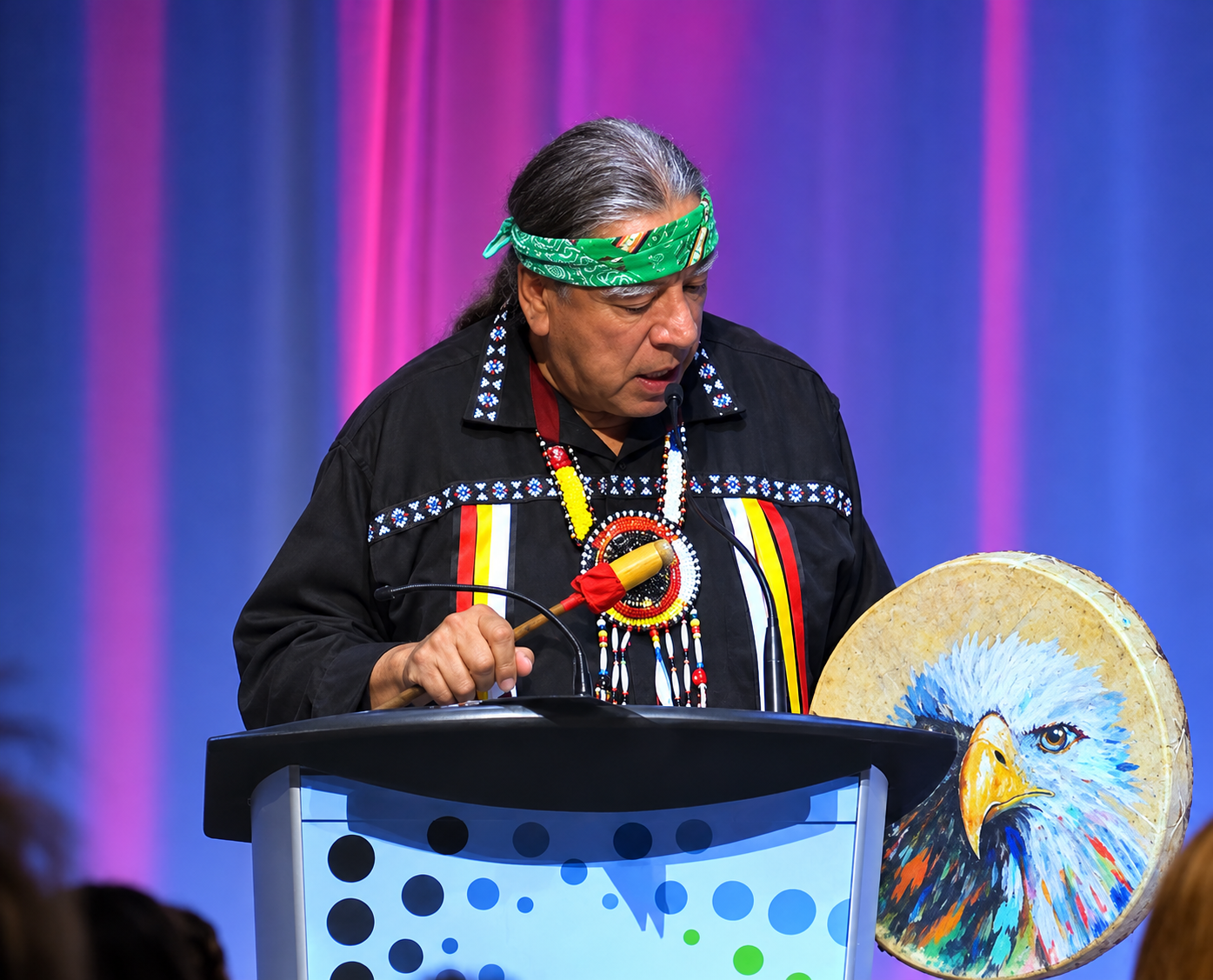
These choices were part of the broader conversation at the fifth annual Atlantic Indigenous-Led Energy Symposium (AILES), held in Saint John in September.
Organized by the North Shore Mi’kmaq Tribal Council, the event brought together nearly 500 people, including First Nations leaders, government and industry representatives, Knowledge Keepers and youth. This year’s theme was “From Tradition to Transformation: Indigenous Knowledge Guiding Our Energy Future.”
The symposium highlighted the Seven Generations principle: learning from the past and making decisions with future generations in mind.
Initiatives like AILES create opportunities for Indigenous participation, leadership and influence in energy development. But dialogue alone does not guarantee equal partnership or respect for Indigenous rights, knowledge and priorities.
Moreover, economic benefits must be weighed against long-term consequences, how risks are distributed, and who ultimately bears the costs.
These questions are especially urgent for nuclear energy, whose radioactive waste can remain hazardous for thousands of years, long after its economic benefits have faded.
Moving at the speed of trust
A strong sense of urgency ran through the symposium, considering New Brunswick faces questions about electricity demand, affordability, infrastructure and energy transition.
Much of the conversation focused on the need to move: build infrastructure, develop projects, create jobs, attract investment and increase energy supply.
The language surrounding this changing relationship between Indigenous Nations, governments and industry is also evolving. Terms such as moving at the speed of trust, early engagement, equity participation, depoliticizing projects and shared prosperity increasingly describe the desired approach.
When applied, these can represent meaningful improvements. Early engagement and equity participation can give Indigenous Nations greater influence over projects and a greater share of the economic benefits associated with development on their territories.
But economic opportunity alone should not determine which energy projects move forward, particularly when it comes to nuclear power.
When nuclear interests shape the energy narrative
Nuclear energy was not the central subject of AILES. The symposium covered a much broader range of issues, including renewable energy, microgrids, storage, transmission, energy sovereignty, youth engagement and economic development.
Yet nuclear power was explicitly included among the technologies and infrastructure discussed, and the nuclear industry was prominently represented.
NB Power, owner of the Point Lepreau nuclear plant, was the organizing sponsor, which according to the AILES website, has a price tag of $40,000. AtkinsRéalis, the dominant player in Canada’s nuclear sector, was the Platinum Sponsor, with its $25,000 sponsorship supporting the Gala Dinner.
Their notable participation is relevant to understanding the broader interests and perspectives represented at a conference focused on defining an “Indigenous-led” energy future.
AILES sponsorship materials make clear that sponsorship is about more than financial support. Sponsors are offered opportunities to engage with Indigenous leaders and decision-makers, showcase projects and services, build relationships with governments and utilities and, at the organizing-sponsor level, help “shape the narrative and conversations” of the symposium.
This does not make AILES a nuclear-energy conference. However, the nuclear industry’s significant presence raises important questions about whose interests are shaping the narrative and influencing how an “Indigenous-led” energy future is defined in New Brunswick.
What does nuclear power mean for the next seven generations
There are Indigenous voices in New Brunswick, including the Peskotomuhkati Nation, that have explicitly challenged nuclear development and raised concerns about radioactive waste, water, Indigenous consent and the responsibilities owed to future generations.
At the same time, other Indigenous communities and organizations see participation in major energy projects as a pathway to economic development and self-determination.
These perspectives are not contradictory simply because they differ. Indigenous Nations are not monolithic, and an Indigenous-led energy future cannot be reduced to support for or opposition to a particular technology.
That being said, the Seven Generations principle calls us to consider the benefits a project may bring today, as well as the responsibilities and consequences it leaves to future generations.
Radioactive waste is a central part of this question. Used nuclear fuel is currently stored at reactor sites, and Canada’s long-term plan is to bury it in a deep geological repository, leaving future generations to bear the risks and responsibilities of managing this waste for thousands of years.
Can this truly be considered a reasonable solution?
Our challenge is, therefore, how an energy project can meet today’s needs while ensuring that its long-term risks and responsibilities are addressed without unfairly burdening future generations.
The fact is that nuclear energy does not meet these criteria.
If we are serious about our commitment to the next seven generations, then shared prosperity must also mean shared responsibility. Who bears the risks and costs of a project? Who is accountable for its environmental impacts? And what happens when the economic benefits are gone, but the environmental consequences remain?
What future are we building?
Indigenous-led energy development should mean that Indigenous Peoples have a meaningful role in deciding which projects proceed on their territories, and under what conditions.
Indigenous knowledge can bring different perspectives about our relationship with energy, the land and one another. These perspectives can remind us that the land is not simply a resource to be extracted for economic gain, but a living system that sustains all life and carries responsibilities across generations.
Knowledge built over thousands of years of observing, living with and caring for the land can offer valuable insights on how we meet our needs while protecting the ecosystems we depend on.
This shared knowledge can challenge us to ask not only how much energy we can produce, but how much we truly need, who benefits from its production, and what costs we are asking the land and future generations to bear.
Mayara Gonçalves e Lima works with the Passamaquoddy Recognition Group Inc., focusing on nuclear energy. Their work combines environmental advocacy with efforts to ensure that the voice of the Passamaquoddy Nation is heard and respected in decisions that impact their land, waters, and future.